
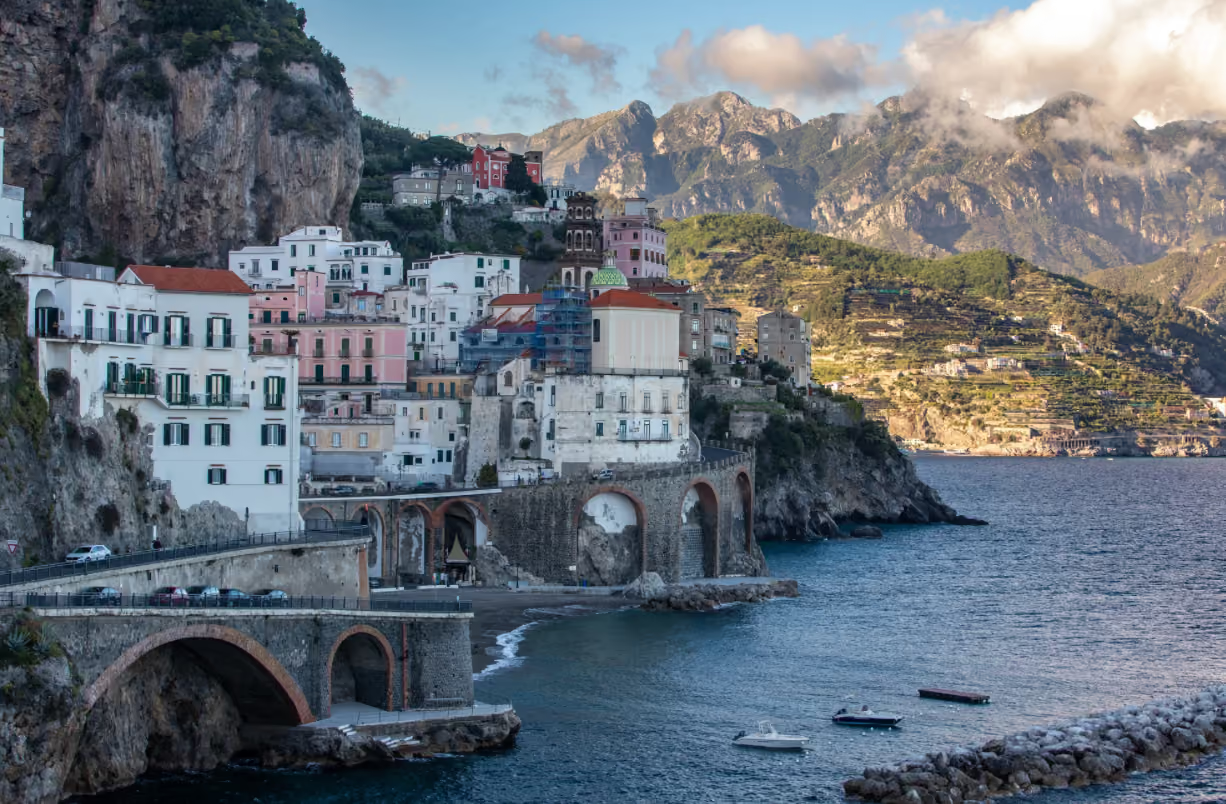


Main image courtesy of Jason Daniel Shaw.
Planning an Italy vacation for first timers can feel overwhelming. Between the art cities of the north, the sun-soaked coastlines of the south, and the endless list of towns everyone insists you "can't miss," it's easy to end up with a trip that's more stressful than magical. The good news: with a little focus, your first trip to Italy can be simple to plan and unforgettable to experience.
This guide breaks down everything a first-time visitor needs to know when you’re planning an a vacation to the beautiful country of Italy including:
- Where to go first (without being overwhelmed)
- The best time of year to visit
- How long to stay
- And tips to help you avoid the most common rookie mistakes
Why Italy Is the Perfect First International Trip
Lots of seasoned travelers recommend Italy to new vacationers
Italy is one of the most popular travel destinations in the world, and for good reason. It offers an unmatched combination of history, food, art, and natural beauty, all packed into a country roughly the size of Arizona. You can go from snow-capped mountains to turquoise coastline in a few hours by train.
For first timers, Italy is also refreshingly manageable. The train system connects major cities quickly and affordably, English is widely spoken in tourist areas, and the food is difficult to get wrong. You don't need to speak Italian or have a detailed itinerary to have an amazing trip — you just need a smart plan.
What Part of Italy Is Best to Visit for the First Time?
This is the question almost every first-time visitor asks, and the honest answer is: it depends on what you want from your trip. That said, most first-time travelers get the best experience by focusing on central Italy, particularly the triangle formed by Rome, Florence, and Venice, sometimes with a few days added on the Amalfi Coast or in Tuscany.
Here's why this region works so well for beginners:
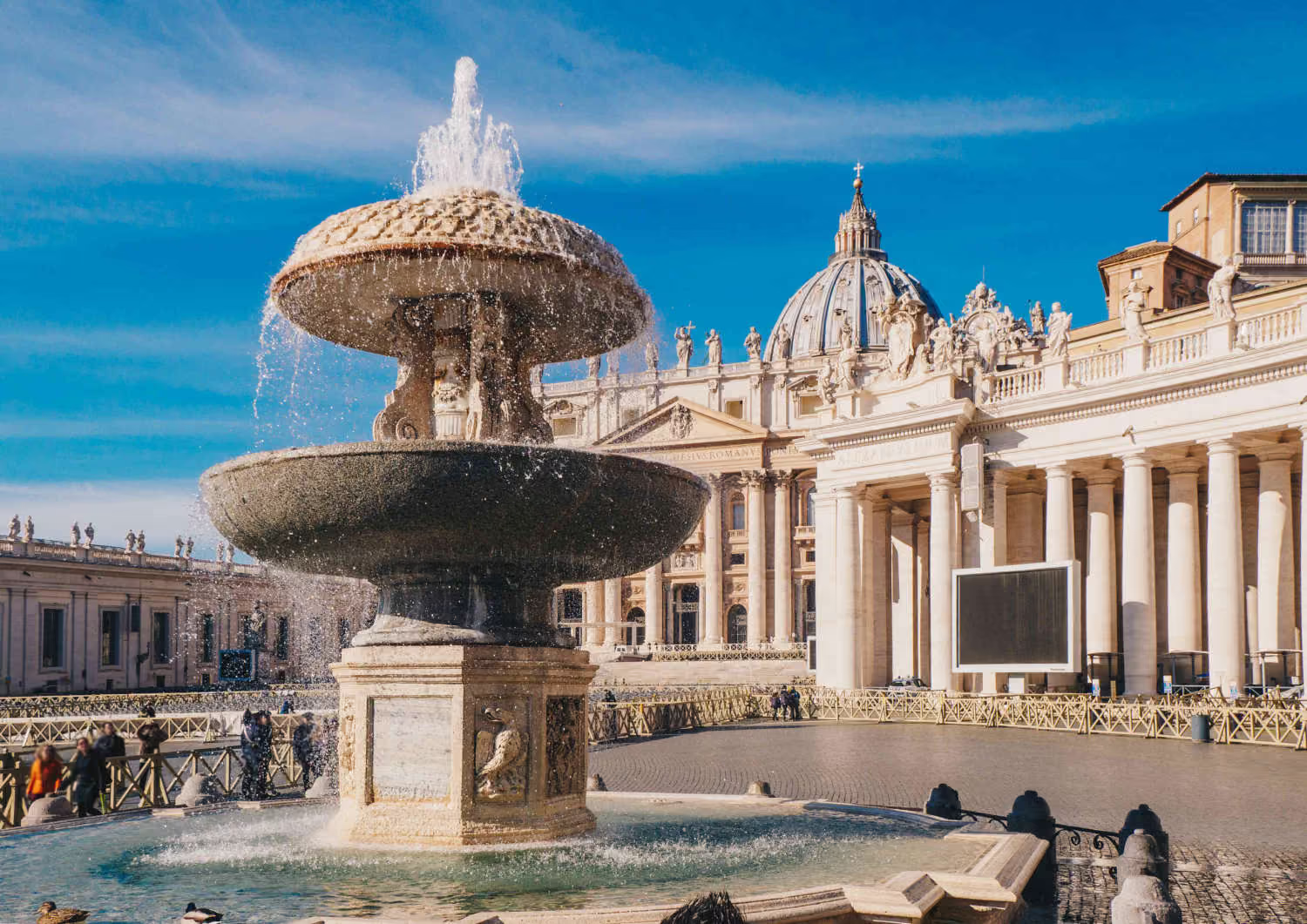
- Rome gives you ancient history — the Colosseum, the Roman Forum, the Pantheon, and Vatican City — all within walking distance of each other.
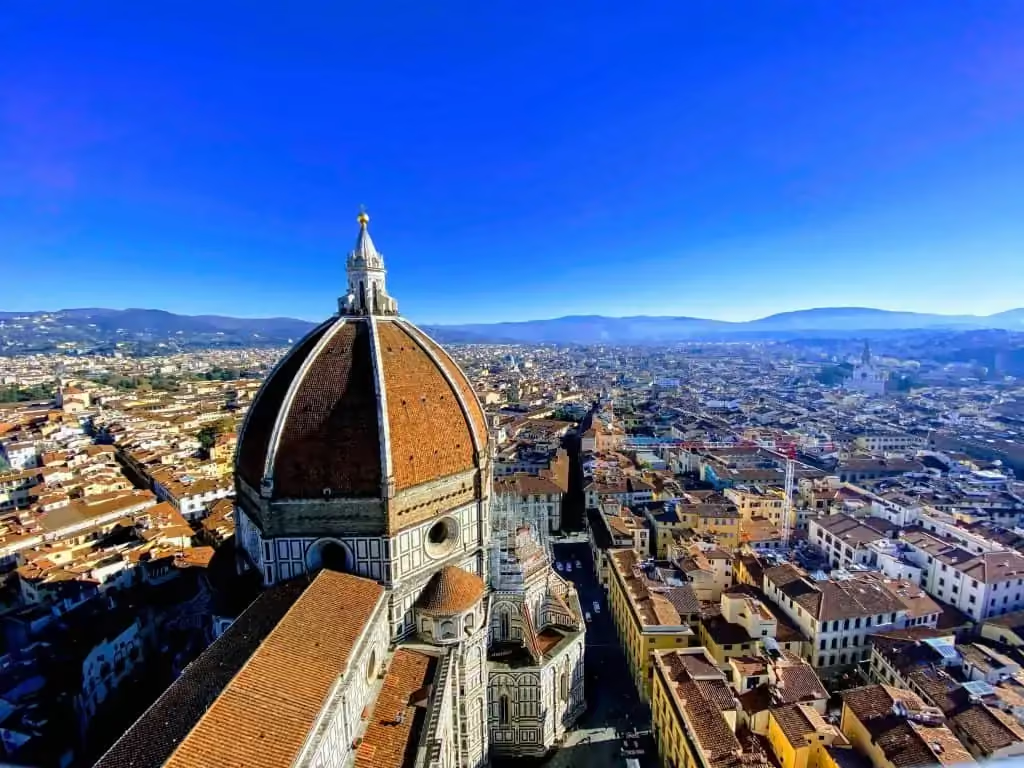
- Florence is the heart of the Renaissance, home to world-class art, the Uffizi Gallery, and easy access to the Tuscan countryside.
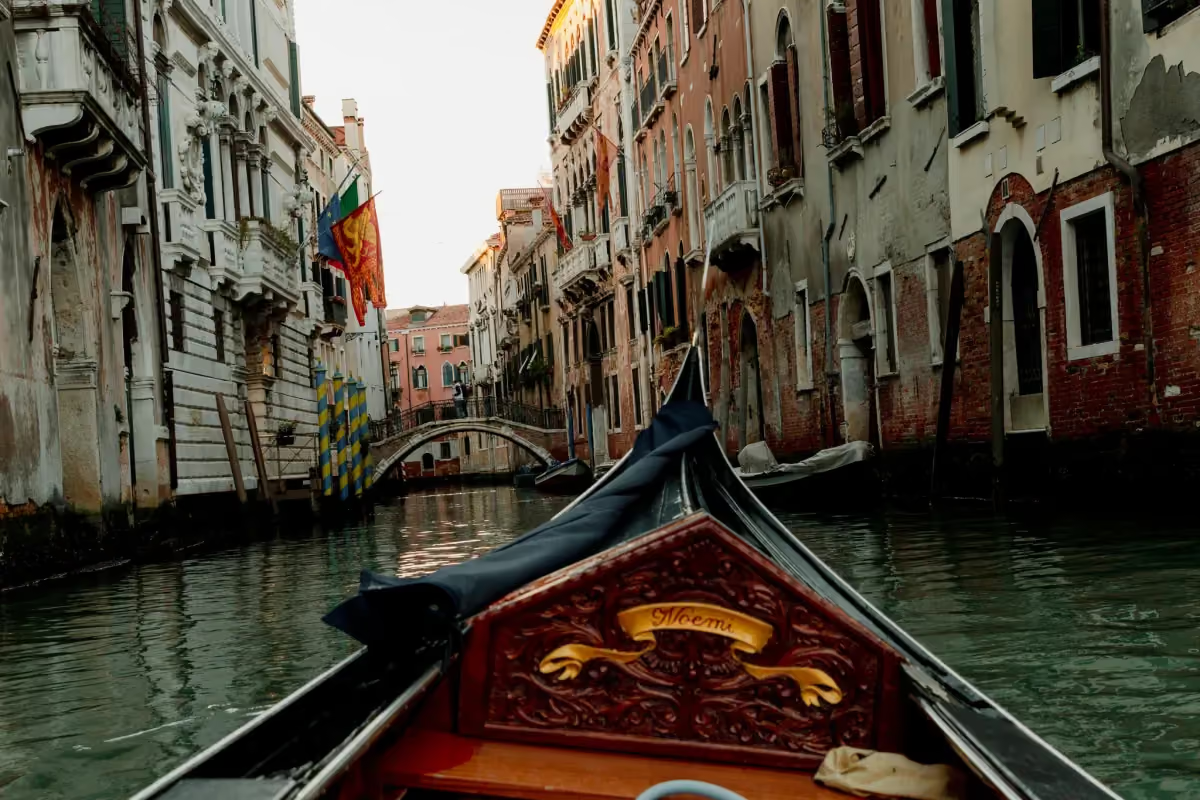
- Venice offers an experience unlike anywhere else on earth, with canals instead of streets and no cars at all.
These three cities are connected by a fast, reliable train line, so you can cover all of them in 10 to 14 days without exhausting yourself with long travel days.
If you have extra time, consider adding:
- Cinque Terre or the Amalfi Coast for dramatic coastal scenery
- Tuscany's countryside (Siena, San Gimignano, Chianti) for wine and rolling hills
- Naples as a gateway to Pompeii and the Amalfi Coast
First-time visitors often make the mistake of trying to see too much. A common regret among returning travelers is having spent too little time in each place. It's far better to deeply enjoy three or four locations than to rush through eight.
What Is the Nicest Month to Visit Italy?
The nicest month to visit Italy for most first-time travelers is May or September. These shoulder-season months hit the sweet spot: warm, pleasant weather, longer daylight hours, and noticeably smaller crowds than the peak summer months.
Here's a quick breakdown by season:
April–May (Spring) Mild temperatures, blooming flowers, and manageable crowds make spring one of the best times to visit. Rome and Florence are especially enjoyable before the summer heat and tour groups arrive in full force.
June–August (Summer) This is peak season, and for good reason — beach towns like the Amalfi Coast and Cinque Terre are at their best. However, expect high temperatures, packed attractions, and higher prices. August in particular sees many Italians on vacation themselves, which can mean closed local shops, especially in mid-month.
September–October (Fall) Fall is arguably the nicest time to visit Italy overall. The summer crowds thin out, temperatures stay comfortable, and its grape harvest season in wine regions like Tuscany and Piedmont.
November–March (Winter) Winter brings the lowest prices and thinnest crowds, along with a magical, quiet version of cities like Venice and Rome. It's colder and some coastal towns scale back services, but it's a great option for budget-conscious travelers who don't mind cooler weather.
Bottom line: if your dates are flexible, aim for late April through early June or September through mid-October. You'll get comfortable weather, fewer crowds, and a more relaxed overall experience than the busy summer months.
How Many Days Do You Need for a First Italy Trip?
Most first-time visitors do well with 10 to 14 days. This is enough time to comfortably experience Rome, Florence, and Venice, plus one additional region like the Amalfi Coast or Tuscany, without feeling rushed.
If you only have a week, it's better to focus on two cities rather than three. A rushed itinerary that checks boxes tends to leave people more exhausted than inspired.
A simple two-week framework looks like this:
- Days 1–4: Rome
- Days 5–7: Florence (with a day trip to Siena or the Tuscan countryside)
- Days 8–9: Cinque Terre or the Amalfi Coast
- Days 10–13: Venice
- Day 14: Departure
Where to Stay in Italy: Choosing the Right Neighborhoods
Choosing where you stay during your Italian vacation is something you should definitely consider!
Picking the right neighborhood can make or break the experience of an Italy vacation for first timers. It's tempting to book the cheapest hotel you can find, but location matters far more in Italian cities, where most sightseeing happens on foot.
In Rome, first-time visitors generally do best staying near the historic center — areas like Monti, Trastevere, or Prati. Monti offers a trendy, local feel within walking distance of the Colosseum. Trastevere is charming and lively at night, with cobblestone streets and excellent restaurants, though it can be noisy on weekends. Prati is quieter and family-friendly, close to the Vatican, and well connected by metro.
In Florence, staying inside the historic center means you can walk to nearly every major sight, including the Duomo, the Uffizi, and the Ponte Vecchio. The Santa Croce and San Lorenzo areas offer a good mix of central location and reasonable prices, while the Oltrarno district, just across the river, has a more local, artisan feel with slightly lower rates.
In Venice, where you stay matters even more, since navigating the canals with luggage isn't easy. San Marco is central but expensive and crowded. Cannaregio and Dorsoduro are quieter, more residential districts that still offer easy access to major sights while feeling more authentic and less touristy. Staying near a vaporetto stop is essential, since it will be your main mode of transportation beyond walking.
A general rule for first-time visitors: prioritize walkability over luxury. A smaller, simpler hotel or apartment in the heart of the action will almost always serve you better than a larger property on the outskirts that requires a taxi or long walk for every outing. Booking accommodations with good reviews for noise level is also worth checking, since older buildings and busy piazzas can mean thin walls and lively evenings.
If you prefer a quieter, more local pace, consider booking at least one or two nights in a smaller town outside the main circuit, such as Orvieto, Lucca, or Bologna. These towns offer a slower rhythm, warm hospitality, and a chance to see everyday Italian life away from the busiest tourist trails, rounding out a first trip that already includes the big, iconic destinations.
What to Pack for Your First Italy Vacation
Packing right can make a noticeable difference in comfort, especially since most of your days will involve a lot of walking on uneven, cobblestone streets. A few packing priorities stand out for first-time visitors.
Footwear is the single most important item. Choose broken-in, comfortable walking shoes rather than brand-new sneakers or anything with a slick sole — cobblestones get slippery, especially when wet. Sandals are fine for beach days on the coast but aren't practical for city sightseeing.
Layers matter more than heavy items, since Italian weather can shift throughout the day, especially in spring and fall. A light jacket or cardigan, a scarf, and a few breathable layers will cover most situations better than one bulky coat.
Modest clothing for churches is worth packing regardless of season. Many of Italy's most beautiful churches, including St. Peter's Basilica, enforce dress codes that require covered shoulders and knees for both men and women. A lightweight scarf or shawl is an easy way to comply without changing your whole outfit.

A universal adapter is essential, since Italy uses a different plug type and voltage than North America. Many newer hotels have USB outlets, but it's safer not to rely on that.

A day bag with a zipper or crossbody strap helps protect against pickpocketing, which is more common in crowded tourist areas and on public transportation than in quieter neighborhoods.

Finally, pack light. Cobblestone streets, occasional stairs at train stations, and small hotel elevators (or none at all) make oversized luggage more of a burden than a convenience. A well-organized carry-on or one mid-size checked bag is usually enough for a two-week trip.
How Much Italian Do You Actually Need to Know?
Short answer: knowing a handful of key phrases is more than enough for the vast majority of first-time trips. Hotels, restaurants, and shops in Rome, Florence, and Venice deal with international tourism constantly, and you'll find English spoken comfortably in almost every situation you're likely to encounter — plus no shortage of translation apps and English-language signage to fill in the gaps.
Where this changes is if your trip is less city-focused. If you're headed toward smaller towns and the countryside — the Tuscan hill towns, rural Umbria, off-the-main-circuit villages — English becomes far less reliable, and knowing more Italian genuinely helps.
Here's the part most guides skip: even then, more Italian won't make things seamless. Italy became a unified country relatively late, and a lot of regions still carry stronger day-to-day ties to their own regional language, traditions, and identity than to a single national "Italian" one. In practice, that means locals in these areas will understand standard Italian just fine — it's taught in schools and used in official life everywhere — but it's not necessarily what they speak with each other or think in. So learning more Italian before your trip will absolutely help you get around and navigate day-to-day logistics. It just won't turn into fluent, easy conversation with locals the way it might in a country with a more centralized linguistic history.
If you want to build up some Italian before you go, we tested the major language apps so you don't have to guess which one's worth your money.
Common Mistakes First-Time Italy Travelers Make
Avoid these common mistakes and you’ll have an unforgettable time in Italy!
Even seasoned travelers can stumble on their first Italy trip. Here are the most frequent missteps:
- Trying to see too much. Italy rewards slow travel. Fewer stops, and more time in each, always wins.
- Not booking major attractions in advance. The Colosseum, Vatican Museums, and Uffizi Gallery all sell out, especially in peak season. Book tickets online at least a few weeks ahead.
- Skipping smaller towns entirely. The famous cities are wonderful, but towns like Siena, Lucca, or Orvieto offer a quieter, more authentic slice of Italian life.
- Underestimating walking. Italian cities are best explored on foot, often over cobblestones. Comfortable shoes matter more than stylish ones.
- Not validating train tickets. Regional trains in Italy often require you to validate paper tickets at machines before boarding, or risk a fine.
- Assuming all restaurants are open all day. Many Italian restaurants close between lunch and dinner, typically from around 3 to 7 p.m. Plan meals accordingly.
Budgeting for an Italy Vacation
Costs vary widely depending on season, region, and travel style, but a mid-range first-time Italy vacation for two people typically runs somewhere between $150 and $300 per day for accommodation, food, and local transportation, not including flights.
A few money-saving tips:
- Travel in shoulder season for lower hotel prices.
- Eat where locals eat, away from major tourist landmarks.
- Use regional trains instead of taxis between cities.
- Book major attraction tickets online to avoid line-skipping fees at the gate.
Getting Around Italy
Italy's train network is one of the best reasons to visit for a first trip. High-speed trains connect major cities in just a few hours, and tickets can be booked in advance through Trenitalia or Italo.
Within cities, walking is usually the best way to explore, supplemented by the metro in Rome and Milan, or the vaporetto (water bus) in Venice. Renting a car is only worth it if you plan to explore the countryside, such as Tuscany or Umbria, since driving and parking in city centers can be difficult and often restricted.
Final Tips for a Smooth First Trip
- Learn a few basic Italian phrases. Locals appreciate the effort, even if you're not fluent.
- Carry cash. While cards are widely accepted, small towns and cafes sometimes prefer cash.
- Dress a little sharper than casual. Italians tend to dress well, and some churches require covered shoulders and knees to enter.
- Slow down. Italy isn't a country to rush through. Leave room in your itinerary for wandering, long lunches, and doing nothing in particular.
Final Thoughts on Planning an Italy Vacation for First-Timers
Planning an Italian vacation doesn't have to be complicated. Focus on a manageable region like Rome, Florence, and Venice, travel during the shoulder season months of May or September for the best weather and smaller crowds, and give yourself enough time in each place to actually enjoy it rather than just check it off a list.
Italy has a way of rewarding travelers who slow down. Plan the basics, stay flexible with the rest, and you'll come home already planning your next trip back.