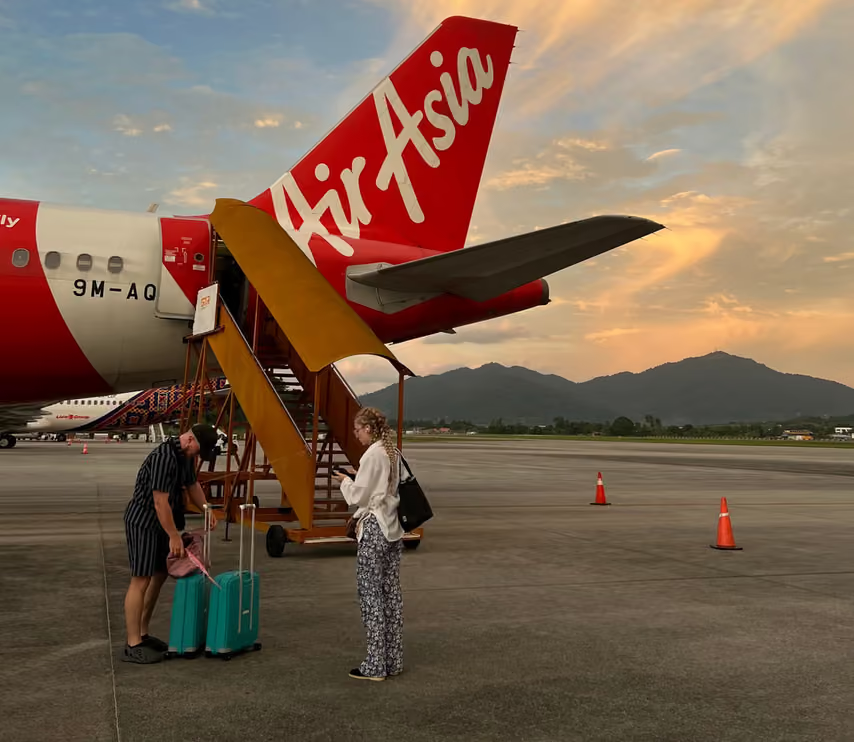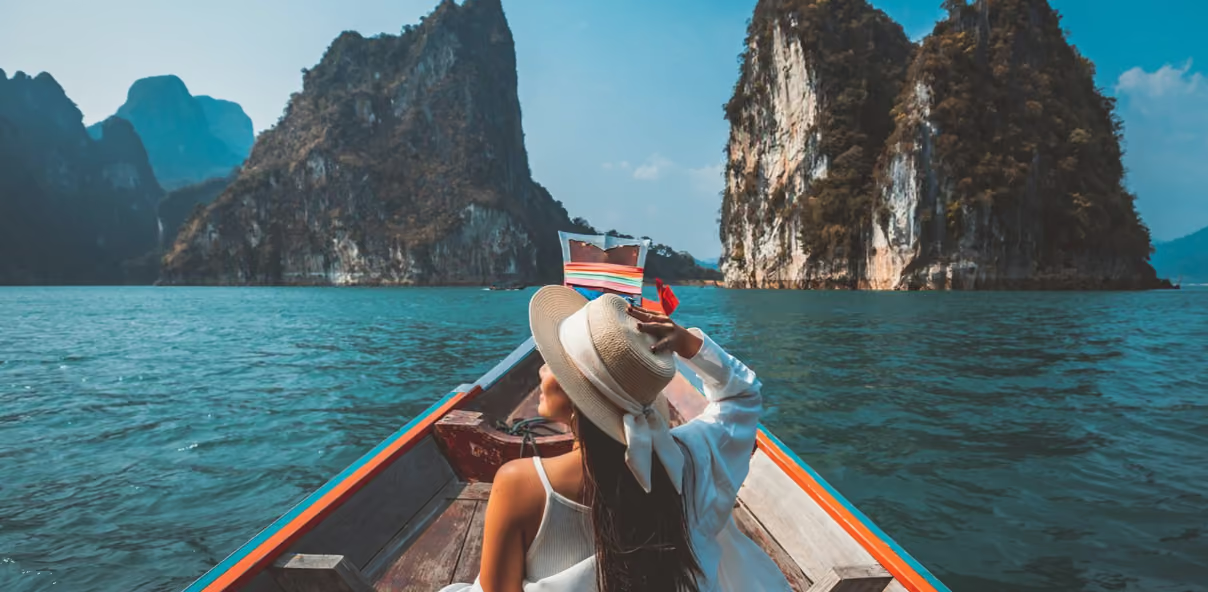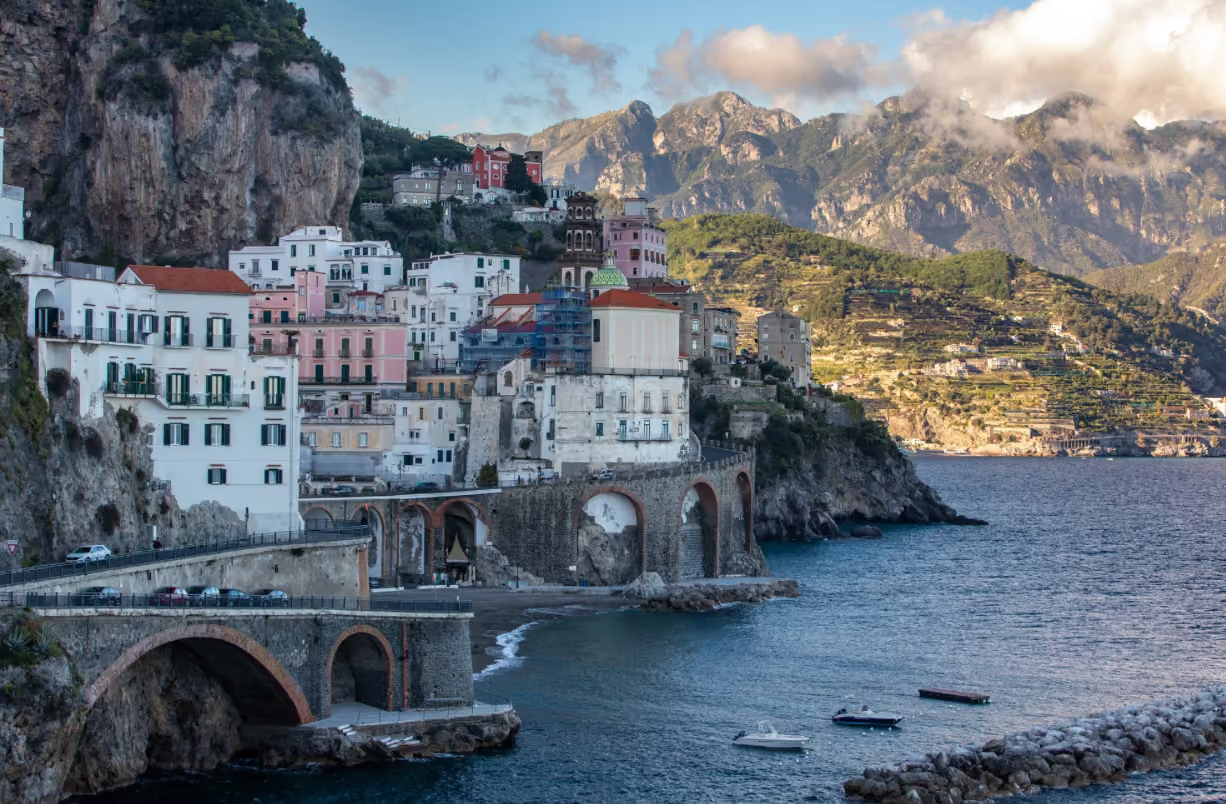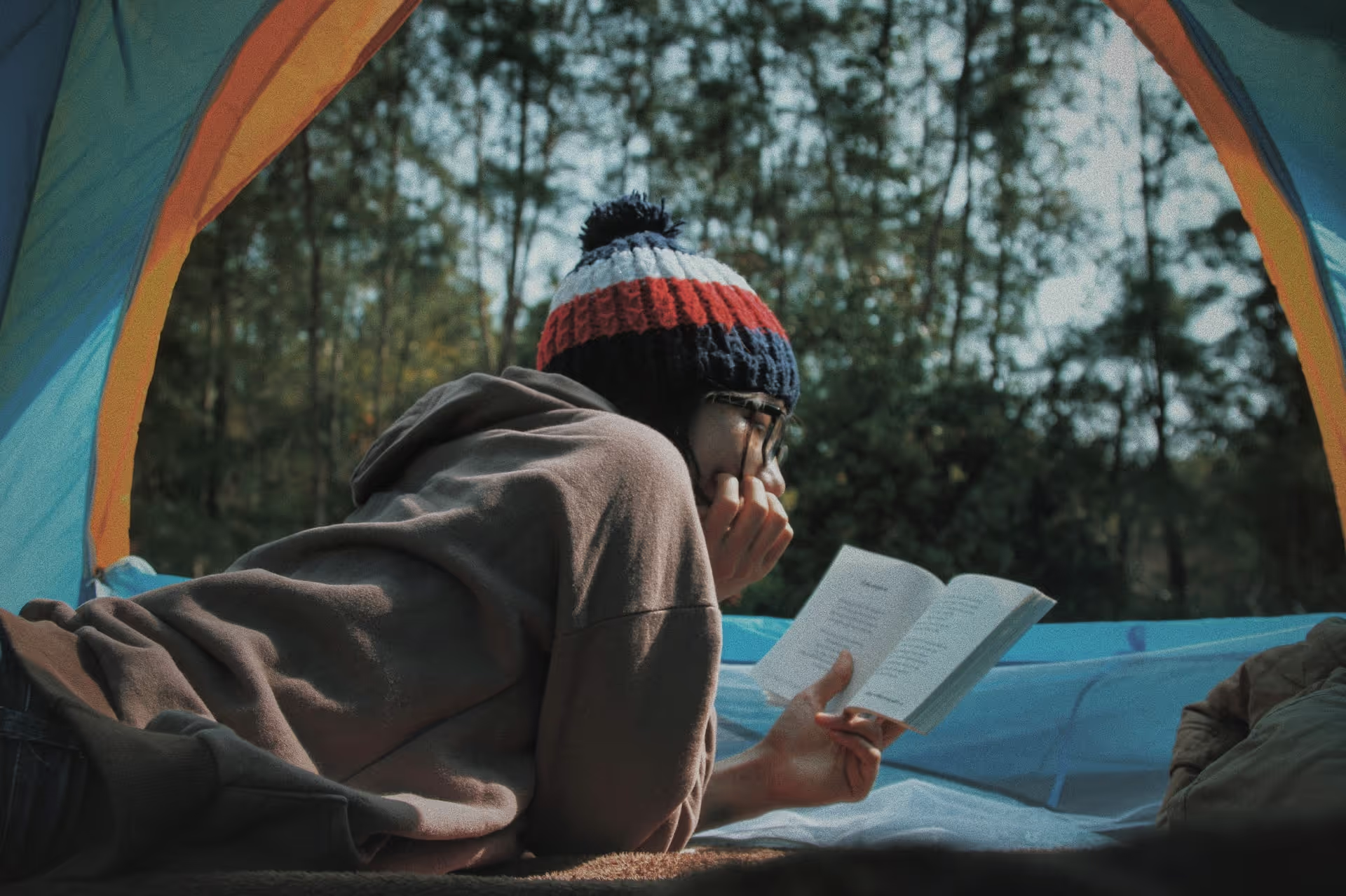



Main image courtesy of Q4Launch.
Gen Z vacations don't look like the trips their parents took. Gone are the days of guidebooks, all-inclusive resorts, and ticking off the same landmark photo as everyone else. Today's young travelers — roughly those born between 1997 and 2012 — are rewriting the rules of tourism, and they're doing it with a phone in one hand and a budgeting app in the other.
This generation isn't traveling less because of economic uncertainty. If anything, they're traveling smarter. Surveys show a majority of Gen Z travelers plan to go abroad more this year, even as many say they won't necessarily spend more on flights. They're stretching every dollar, pound, or peso toward experiences that actually mean something to them — and in the process, they're changing what the entire travel industry looks like.
So what exactly defines a Gen Z vacation, what trends are driving it, and where are these travelers actually going? Here's a closer look.
What Are Gen Z Travel Trends?
These are the trends that are defining how this generation travels

1. Social Media Is the New Travel Agent
Short-form platforms like TikTok have become the dominant source of trip ideas, with recent research showing TikTok as the top inspiration source for young travelers, followed closely by YouTube and Instagram. Many young travelers also follow and trust travel influencers, treating their recommendations almost like word-of-mouth from a friend rather than paid marketing.
That said, an interesting counter-trend has emerged alongside the algorithm-driven discovery: a growing number of Gen Z travelers are turning back to human travel advisors. The logic is simple — TikTok's algorithm is built to maximize engagement, not accuracy, so once the destination is chosen, some Gen Zers want a real person to make sure the logistics, timing, and details are right.
2. Value Over Luxury
Gen Z vacations tend to prioritize experiences over accommodation. Rather than splurging on five-star hotels, many young travelers choose modest, budget-friendly stays specifically so they can spend more on the things they'll actually remember once they're home — a boat trip, a cooking class, a concert, a private tour, a beach club day pass. It's less about bargain-hunting for its own sake and more a deliberate trade-off: spend less on where you sleep, more on what you do while you're awake.
This isn't the same as simply being frugal. Travel advisors who work with Gen Z clients describe a generation that sees more value in what they experience than in the glamour of where they stay. For Gen Z, a good vacation isn't measured by thread count; it's measured by stories.
3. Wellness Over Wild Nights
Where millennials often built vacations around nightlife and party tourism, Gen Z leans toward "feel-good travel." Many young travelers report that a good night's sleep matters more than a big night out, and "dry holidays" have become a genuine, popularized trend rather than a niche choice.
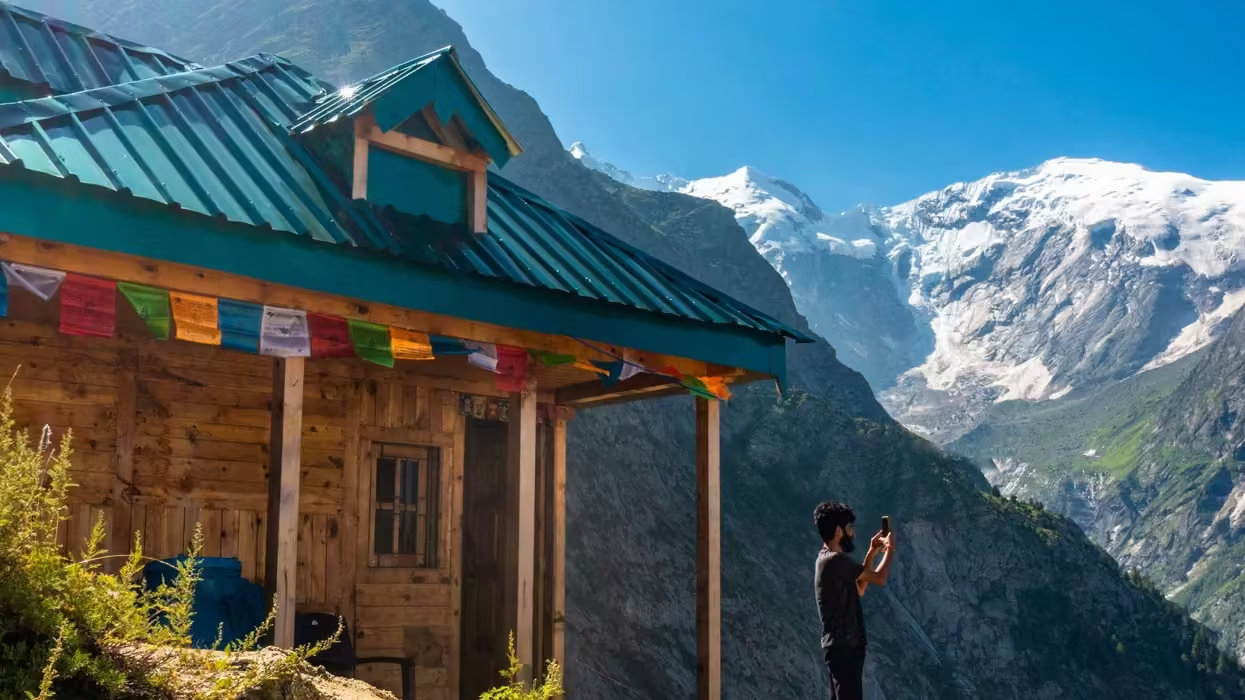
This wellness focus extends into daytime choices too: wild swims, sunrise hikes from a mountain hut, meditation retreats, spa days, and slow mornings over jam-packed sightseeing schedules. Instead of collapsing into bed at 3 a.m. after a night of partying, the Gen Z approach favors daytime adventure and genuine rest.
4. Solo Travel Has Gone Mainstream
Solo travel is no longer a niche pursuit for the ultra-adventurous — it's one of the defining Gen Z vacation trends. A striking share of young travelers in the 18-to-30 age bracket now travel solo rather than waiting for a friend or partner to join them, and destinations known for being safe, walkable, and social — South Korea, Japan, New Zealand, and parts of Europe — have benefited enormously from this shift.
Solo trips also tend to double as social experiences rather than isolating ones, using hostels, group tours, and even social apps built for travelers to build a temporary community on the road.
5. Short, Intense City Breaks
Rather than the classic two-week trip, a growing number of Gen Z vacations are compact one- to three-night city breaks: fly in, walk everywhere, pack in as much culture and atmosphere as possible, then head home or on to the next stop. These trips prioritize walkable, visually striking cities where street food, thrift shops, neighborhood cafés, and street art matter more than checking off major monuments one by one.
6. "Undiscovered" and Off-the-Beaten-Path Destinations
Overtourism, rising prices at famous hotspots, and a general desire to avoid posting the exact same photo as everyone else have pushed a huge share of Gen Z and millennial travelers toward lesser-known destinations.
Gen Z travelers consistently say they want destinations that feel real and local rather than overly polished for tourists, which is part of why smaller cities and lesser-known regions are gaining ground even as classic hotspots remain popular.
7. Micro-Retirements
One of the more talked-about trends of the past year is the "micro-retirement" — an extended, multi-week or multi-month break taken specifically to travel, recharge, and avoid burnout, without waiting for traditional retirement age. Rather than banking all of their vacation time for one trip a year, some Gen Zers are choosing to step away from work entirely for a stretch, treating rest and travel as something to build into a career rather than defer to the end of it.
8. Sustainability as a Baseline, Not a Bonus
Environmental consciousness isn't an afterthought for most Gen Z travelers. Many are willing to pay more for eco-conscious accommodation, seek out low-impact adventures, and favor destinations and operators that visibly align with their values.
Where to Actually Go
Enough with the trend talk. Here's where to point the plane
Southeast Asia: Thailand & Bali
Thailand is still the easiest yes in Southeast Asia, and there's a reason it keeps winning. A realistic starter trip: 3 nights in Bangkok (skip the tourist strip around Khao San Road and base yourself in Ari or Thonglor instead — better cafés, better food, still walkable to BTS stations), then a night train up to Chiang Mai for 3 more nights of temples, night markets, and the wellness stuff — Thai massage, a half-day meditation session, a cooking class that doubles as your dinner. Accommodation for that stretch runs $15–35/night for a solid hostel or budget guesthouse, less if you're splitting a private room.
Bali is the better call if you want fewer moving parts and more "settle in and work from a café for a week" energy. Canggu is the digital-nomad hub (surf, co-working spaces, smoothie bowls), Ubud is the slower, rice-terrace version. Either way, a scooter rental (roughly $5–8/day) will save you more money than any other single decision you make there.
Japan & South Korea
These aren't budget destinations in the way Southeast Asia is, but they're worth the trade-off for how far a rail pass stretches. In Tokyo, skip straight past Shibuya crossing photos and base part of your trip in Shimokitazawa — thrift shops, vinyl bars, a fraction of the crowds, and it's one train stop from the neon-and-noise version of the city if you still want that for a day.
In Seoul, Seongsu-dong is doing the same job — converted warehouses, indie cafés, and it's currently where a huge share of the "only in Seoul" TikTok content is actually filmed.
Do the math on rail passes before you book flights, not after: a 7-day JR Pass or a Korail Pass can be the difference between $40 day trips and $150 day trips if you're moving between cities.
South & Central America
This is the fastest-growing region for exactly your demographic, and it's underbuilt in most "Gen Z travel" content — which makes it a good move if you want to be early. Medellín and Mexico City are the two easiest first-timer picks: walkable neighborhoods (Poblado in Medellín, Roma Norte or Condesa in Mexico City), strong digital-nomad infrastructure if you're extending the trip, and both sit comfortably in the $25–50/night range for a nice private room, less for a hostel bed.
Buenos Aires is the pick if you want a bigger-city, more European-feeling base with genuinely excellent food for the price. Oaxaca is the smaller, slower alternative if Mexico City feels too big — this is your "undiscovered" pick in the region right now.
Off-the-Beaten-Path: Mongolia, Nepal, Cambodia
If the "undiscovered" trend is actually the draw for you, these are the real answer, not just the aspirational one.
Nepal (a Kathmandu base with a shorter trek added on, not necessarily the full Everest Base Camp commitment) gives you dramatic landscape for genuinely low cost.
Cambodia — Siem Reap for Angkor Wat, Phnom Penh if you want city time — runs even cheaper than Thailand next door.
Mongolia is the furthest reach on this list and the one that requires the most planning (tour operator, not solo backpacking, unless you're very experienced), but it's the one nobody else in your feed has done yet.
Solo-Friendly Bases
If you're traveling alone and want the friction-free version: Tokyo, Seoul, Reykjavik, Queenstown/Auckland, and Marrakech consistently show up as the cities where solo travel just works — safe to walk at night, easy infrastructure for meeting people, and forgiving if your itinerary changes on day two.
How to Actually Pull This Off (Without Blowing Your Budget)
No More Trying to Piece Together a Plan Based on Someone Else's Highlight Reel. Here's The Full Vacation Playbook for Gen Z Travelers
Travel is one of those things everyone says they want to do, but it can often feel like such a big project or investment that it sometimes keeps people from getting started at all. I don't know about you, but my social media seems like it's showing more and more stories about how the best time to travel is just now -- warnings not to wait to travel until you're too old to enjoy it, your knees hurt to much to climb the Spanish steps, you can't soak up as many hours of midnight sun.
But life is expensive, so how do you fit in a luxury purchase like this? How do you make investing in travel something that works with the rest of your budget, not something that means eating nothing but ramen for the next three months?
We've got you.
Figure out your tier first.
Where you land changes everything else about how you book:
A realistic 7-day trip at the $$ tier: $800–1,400 for Southeast Asia including flights from a US hub in shoulder season; $1,500–2,200 for Japan or Korea; $1,000–1,700 for most of South/Central America.
Use flexible search, then lock in the specifics.
Go broad to specific with your planning. Google Flights' "Explore" map and Skyscanner's "Everywhere" search are still the fastest way to find a fare drop before you've committed to a destination. Once you've got a region, set a price alert and give it a week or two before booking — shoulder-season fares in particular move fast in both directions.
Package deals aren't just for your parents.
If you're time-strapped or planning your first solo international trip, a bundled flight-and-hotel package can genuinely beat booking separately, and it removes a layer of planning stress. We broke down the best vacation package sites if you want to compare that route before deciding to DIY the whole thing.
Let AI draft it, then actually change it.
Okay yes, ew, I know. It's an unfortunate feature of modern search that AI is just part of it. And while there are issues with that setup, there are at least a couple of the tools out there that are better suited to the broadest, top-level phase of trip planning. Tools like ChatGPT or Google's AI trip planning (which lives inside Search) can provide a rough day-to-day skeleton of what your trip could look like and even pull some additions to the itinerary that might be perfect for you but don't commonly appear on recommended destinations in the area you're headed to. Just don't accept the first draft AI gives you as gospel. It needs checked and edited. Or you might just find yourself stranded somewhere dealing with human concerns no chatbot would think to consider when planning a trip.
Go solo without a plan for every hour.
Booking a hostel with a common area or one group activity on day one does more for meeting people than any app. You don't need the whole trip planned — you need day one covered.
Time it around the crowds, not the calendar.
Shifting a trip by even 3–4 weeks out of peak season can mean 20–30% lower prices and noticeably thinner crowds at the exact same landmarks.
Build in one slow day.
Whether that's a full alcohol-free stretch or just one day with nothing booked, this is the difference between coming home wrecked and coming home actually rested.
Check for the dupe.
Dupes aren't just for designer fashion and makeup. If your dream city is overrun or overpriced, there's almost always a nearby alternative that'll give you a similar experience for less -- Oaxaca instead of Mexico City, Da Nang instead of Bangkok, Porto instead of Lisbon.
So where's your next trip taking you?
There's no single right destination or price point here — just a mindset. Value over luxury. Experiences over landmarks. Rest built in, not tacked on at the end. Whether that's a solo weekend in Lisbon, a slower week in Bali, or a multi-month stretch backpacking through Southeast Asia, the through-line is intentionality — deciding, on your own terms, what the trip is actually for.
You're not waiting for retirement, a partner, or permission. Just go.