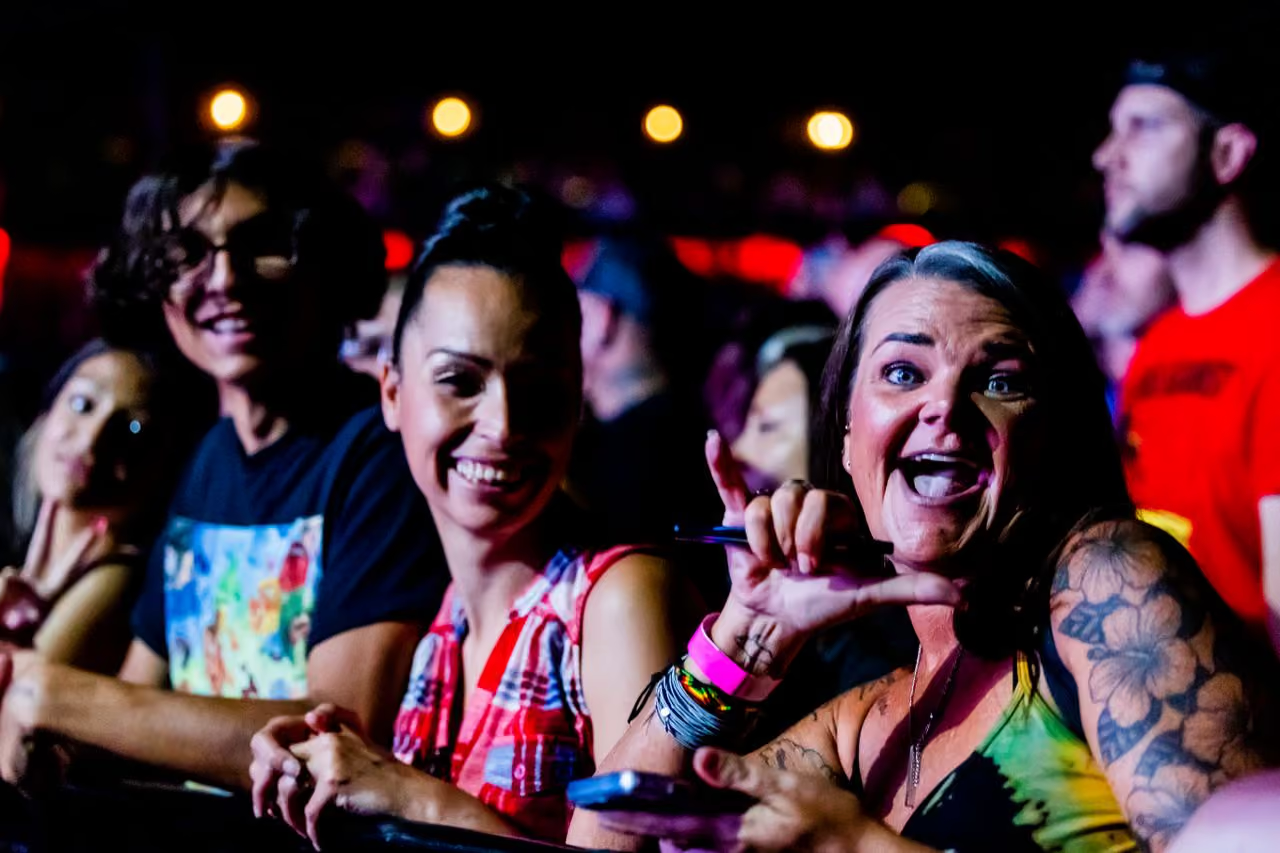


You're scrolling festival lineup announcements, feeling that old pull toward a three-day pass, and then it hits you: wait, am I too old for this now? Maybe it's the thought of a porta-potty line at 2 a.m., or a passing glance at your festival photos from six years ago, or just a vague sense that this is a "younger person's" activity you've aged out of.
You haven't. But the version of festival-going that works for you probably needs to change, and that's a very different problem than being too old.
TLDR; This is the same old anxiety about being where you "should" be in life in a trenchcoat.
Festival marketing and festival social media skew young by design — it's an easy visual, not an actual age ceiling. The real headcount at most major festivals spans a much wider range than the Instagram grid suggests, and the industry knows it: VIP viewing areas, glamping upgrades, and shaded rest zones didn't get built for 19-year-olds. They got built because a meaningful chunk of the crowd wanted somewhere to sit down that wasn't the dirt.
The "aging out" feeling is less about your actual age and more about a mismatch between how you used to do festivals (four days, general admission floor, no sleep, no campsite, running on vibes and the goodwill of your new friends) and what you now have the bandwidth for. So it's not really about whether you belong at the festival or you're suddenly too old for a community that has always felt like your place. It's just about what kind of time and energy you want to dedicate to it during this particular season, now that not being sober all weekend sounds less like "shake it off, drive home the next morning" and more like being out of commish for the next month as you recover from a world-ending hangover.
What Should Change (and What Doesn't Have To)
The camping situation. If tent camping in a field with strangers used to be part of the fun and now sounds like a nightmare, that's a logistics fix, not a retirement notice. Most major festivals now offer upgraded camping tiers — real bathrooms, actual showers, sometimes AC — at a price point that's genuinely worth it once you're not doing this on a college budget.
Pacing yourself. You don't need to see every set. Committing to fewer artists and building in actual rest blocks changes a festival from an endurance test into something you can enjoy without needing three recovery days afterward.
Who you go with. If your old festival crew has scattered or their idea of a good time no longer matches yours, that's genuinely one of the bigger shifts nobody talks about. Going with a smaller group, or even solo, at a festival with a strong community vibe can end up being less lonely than dragging along friends who want a completely different experience than you do.
Your gear. Allow me to present *ahem* your new best friends...
What doesn't have to change: the actual reason you liked festivals in the first place. Discovering a new artist in a crowd of strangers, the specific energy of a sunset set, running into people you haven't seen in years — none of that has an age limit attached to it.
Festivals That Fit Where You Are Now
If mega-festivals feel like too much regardless of upgrades, the genre and format matter more than you'd think.
For a slower pace and better seating: Newport Folk Festival and most major jazz festivals (New Orleans Jazz Fest, Monterey Jazz Festival) tend to skew older, run smaller, and build in far more shade and seating than a mega-fest. Fewer stages means less FOMO about missing something across the grounds.
For a food-and-music hybrid: BottleRock Napa leans heavily into wine and culinary programming alongside the music lineup, which changes the whole day's pacing — you're not sprinting between stages, you're grazing.
For a wellness-forward crowd: Festivals like Lightning in a Bottle build in yoga, workshops, and quieter zones as a core part of the format, not an afterthought, which tends to attract a crowd that's there for the full experience rather than just the headliners.
If you still want big-name headliners without the marathon format: One-day festival passes or single-day tickets at larger events (many mega-festivals sell these separately from the full multi-day pass) let you get the headliner experience without committing to the endurance test.
If the big-festival energy is still what you're after, going with a smaller group and pre-planning your set schedule — rather than wandering and hoping — tends to make the biggest difference in how drained you feel by day three.
Budgeting for the Upgraded Version
The math changes once you're paying for comfort instead of just admission. A rough breakdown:
Upgraded camping alone can run anywhere from $200–600+ on top of a standard ticket depending on the festival, but for a lot of people it's the single upgrade that makes the difference between "fun trip" and "recovering from a fun trip for a week."
The Actual Sign You've Outgrown Something
If you genuinely don't want to go anymore -- not "don't want to deal with the parking" but actually don't know that the music, the crowd, the experience really sounds fun to you anymore -- that's just a preference changing, which is completely normal and not really what this article is about. But if what you're picturing when you imagine going is still fun, and the thing holding you back is logistics (sleep, cost, recovery time), that's solvable. Solve the logistics before you write off the whole thing.
The Bottom Line
You're not too old for a festival. You might be too old for the version of festival-going you did at 22, and that's a completely different, much easier problem to solve.