
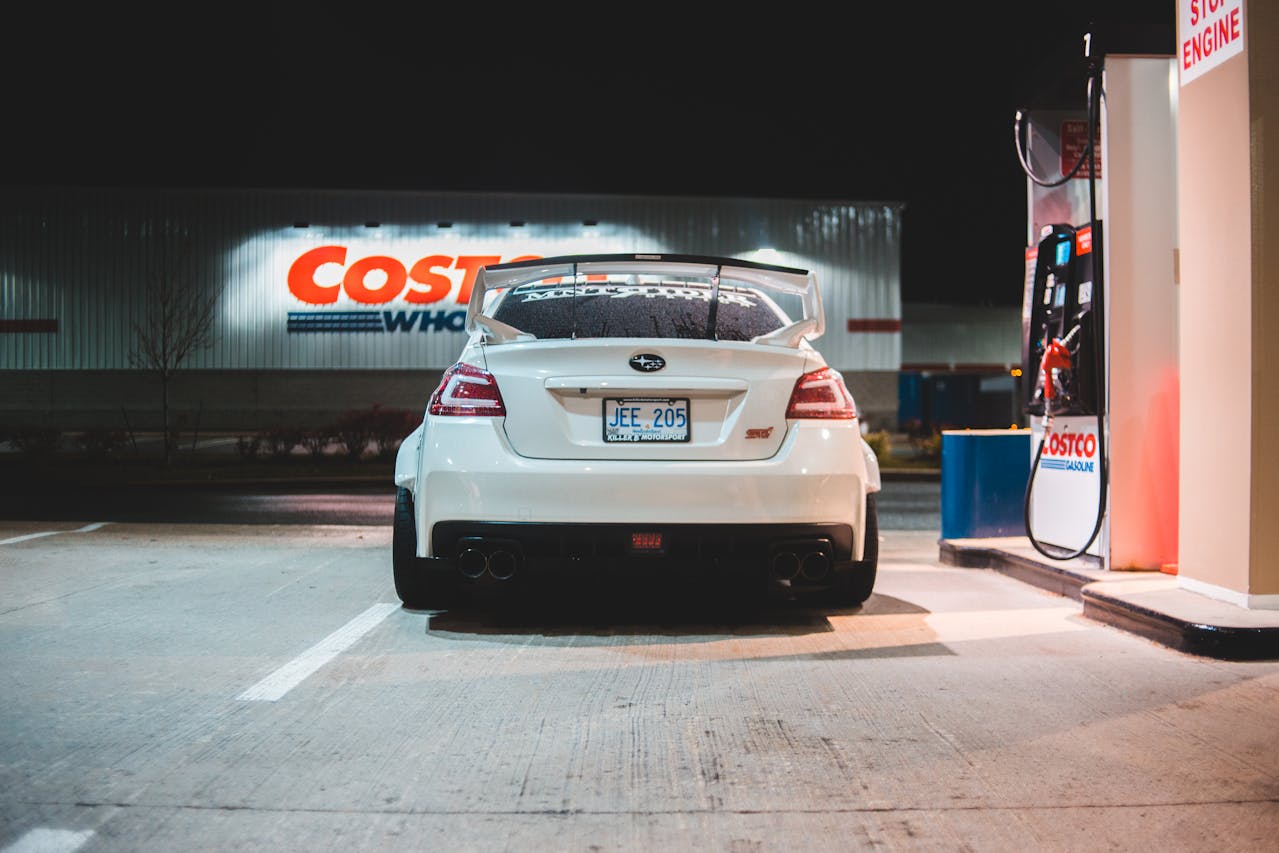


The Costco conversation always goes the same way. Someone mentions they're thinking of getting a membership, and immediately people pop out of the woodwork to say "oh, it's only worth it if you have a family!" The implication is that buying in bulk only makes sense when you have mouths to feed, square footage to store things, and a partner to split that 48-pack of Perrier with.
But that's wrong, or at least, it's much more complicated than that. Costco membership can be great even for apartment dwellers, single people, and other small households.
When my mom got me a Costco membership as a Christmas gift last year, I wasn't 100% sure how I would use it yet. But the longer I've had it, the more I've come to love it. So I want to break down all of my favorite things about being a cardholding Costco member + what I wish I'd known from day one.
Yes, Costco was built around bulk buying.
And yes, some of what they sell is genuinely only practical if you're feeding multiple people.
But a significant chunk of the Costco value proposition has nothing to do with quantity at all. And the parts that do require bulk buying are more manageable for a solo household than most people assume, if you approach them correctly.
You don't have to take my word for it though. Let's crunch the numbers.
What a Costco membership actually costs
I always figured a Costco membership was pretty expensive, but it's actually a lot more affordable than I had imagined. The upfront cost of joining is less than I spend on streaming services in a month.
A Gold Star membership is $65/year as of 2026 — that's $5.42/month.
The Executive membership is $130/year and offers 2% cash back on Costco purchases (which only makes sense if you're spending over $3,250/year at Costco).
For most solo shoppers, the Gold Star is the right call to start.
So to justify the membership, you need to save more than $5.42/month over what you'd pay at a regular grocery store or Target. Buying a single Kirkland-brand item — their olive oil, almond butter, coffee, etc. — typically saves $3–6 over a comparable product elsewhere. You're basically breaking even on your first two grocery items per month. Everything after that is savings.
The "bulk buying kills solo shoppers" myth — and why it's mostly wrong
The conventional argument against Costco for single people is food waste: you buy a giant container of something, can't use it all before it expires, and the savings evaporate. This is a real risk for some products. But not all of them. Here's why.
First, not everything at Costco is perishable. Paper goods, cleaning supplies, shelf-stable pantry items, personal care products... none of these go bad in a way that matters. A 30-pack of paper towels lasts a solo person 6+ months and costs significantly less per unit than buying a 6-pack at a regular store every few weeks.
Second, your freezer is your best friend here. Costco's meat section sells in bulk, but the best move is to portion and freeze immediately when you get home. Buying a Kirkland chicken breast package, portioning it into individual bags, and freezing it is typically 40–60% cheaper per pound than buying one breast at a time from a grocery store.
Third, some Costco items are actually sized for one. Their fresh meals and prepared foods — including the legendary $4.99 rotisserie chicken — are designed to be used across multiple meals by one person.
The $4.99 rotisserie chicken is the clearest illustration of this. Costco sells it at or below cost — they deliberately lose money on it, or at best break even, because it brings members through the door and keeps them renewing. It's a $5 chicken that would cost $9–12 anywhere else, subsidized by a membership model that creates aligned incentives. That's either good business or good values, depending on how you look at it. It's probably both.
Gas: the membership justifier most people forget to mention
Here's the thing about Costco gas that doesn't get enough airtime in the "is it worth it for a single person?" conversation: you don't need to buy anything inside the warehouse for the membership to pay for itself.
Costco gas is consistently 10–25 cents per gallon cheaper than nearby stations — sometimes more during price spikes. For a solo adult driving a typical commute or errands schedule, filling up 10 gallons per week at 15 cents cheaper per gallon adds up to $78 saved in a year on gas alone. That's already more than the $65 membership fee, before you've bought a single item inside.
If you have a car and a Costco is within reasonable driving distance, gas savings alone justify the membership for most people. Everything in the warehouse is then pure additional value.
The Costco Anywhere Visa by Citi: a genuinely good entry-level card
Here's something that turns Costco from a good value into a great one for a solo adult building their financial life: the Costco Anywhere Visa card.
The card has no annual fee beyond your Costco membership and earns 4% cashback on eligible gas (up to $7,000/year, then 1%), 3% on restaurants and eligible travel, 2% on all Costco purchases, and 1% on everything else. That 3% on restaurants is notably competitive for a no-annual-fee card — most entry-level cards don't match it. And pairing 4% gas cashback with Costco's already-discounted gas prices compounds your savings meaningfully.
For someone in their 20s or early 30s who eats out regularly, drives, and is starting to think about points and cashback without wanting to manage a complicated rewards ecosystem, this card is worth a serious look. [We've broken down the best credit cards for young adults and recent grads here — the Costco Citi card competes well in the no-fee cashback category.]
Full disclosure: the Costco Anywhere Visa was my first credit card, and it's been an easy one to start with. The cashback categories are simple, the rewards actually show up, and I haven't had to think much about it — which is exactly what you want from a first card.
Beyond the warehouse floor: services worth knowing about
The warehouse is what most people think of, but some of Costco's strongest values for young adults aren't on the main floor at all.
Many Costco warehouses have an optical department — eye exams and prescription glasses at prices that consistently undercut LensCrafters and similar chains. If you're paying out of pocket for vision care or have thin vision coverage, this alone can save $100–200 per year. Some locations also have hearing aid centers with competitive pricing and licensed audiologists on staff.
On travel: Costco Travel is genuinely underrated. They offer packaged vacation deals, rental cars, and cruises — and their pricing is often better than booking directly, with perks like early check-in or resort credits added in. If you're planning any kind of trip, it's worth checking Costco Travel before you book anywhere else.
Auto and home insurance: Costco partners with insurers to offer member discounts on auto and home insurance through their partnership programs. Worth getting a quote if you're up for renewal.
Pharmacy: Costco's pharmacy consistently ranks among the cheapest for generic prescriptions — and you don't need a membership to use the pharmacy in most states. That said, having a membership makes the trip worth combining.
A company worth supporting
There's a version of the Costco conversation that goes beyond the math, and it's worth having.
Costco consistently ranks among the best employers in American retail. They start employees above minimum wage, offer health insurance to part-time workers, and have historically low turnover for an industry known for churn. Their management philosophy — the idea that treating employees well is good for business, not a concession to it — isn't marketing. It shows up in the numbers: Costco's employee satisfaction scores and tenure rates are genuinely unusual for big box retail.
The Kirkland Signature model is also worth appreciating for what it represents. Rather than building brand prestige into the price, Costco commissions products from the same manufacturers who supply name brands, strips out the marketing overhead, and passes the savings directly to members. It's a fundamentally different business model from most retailers, and it works — not just financially, but as a value system.
Costco also operates with an unusual degree of transparency about its margins. The company caps its markup on any item at 15% (14% for Kirkland products), which is essentially unheard of in retail. Most grocery stores operate at 25–50% markups. Costco's entire business model depends on the membership fee rather than extracting margin from individual products — which means their incentive is structurally aligned with yours. They make money when you renew. They renew when you feel you got value. It's a rare example of a business where the incentive is actually to deliver on the promise.
You don't have to care about any of that to justify the membership on pure math. But if you're thinking about where you want to spend money and what companies you want to support, Costco makes a more coherent case than most.
What genuinely doesn't work for solo living
Fresh produce in large quantities is the biggest risk. A 2-pound clamshell of strawberries or a 5-pound bag of salad mix can go bad before a single person uses it all. Stick to produce you can freeze or that has a long fridge life — apples, carrots, celery, citrus. Skip the fresh berries and bagged greens unless you're cooking a lot that week.
Baked goods need the freezer strategy. A 6-pack of muffins or a full loaf of sourdough — great quality, good price, but freeze half immediately when you get home or you'll lose the savings to staleness.
How to make it work without a car or extra storage
Costco offers same-day delivery through Instacart and ships many items directly through Costco.com. The per-unit savings are slightly lower after delivery fees, but for non-perishables — paper goods, pantry staples, personal care — it still works out.
On storage: a solo Costco strategy doesn't require a basement. Paper goods go under the sink. Pantry staples go in the pantry. The one investment that dramatically expands your Costco value as a single person is a chest freezer — they run $150–200 at Costco itself, pay for themselves in 6–12 months of frozen protein savings, and fit in most apartments.
Splitting a membership
You can add one household member for free — designed for a partner or roommate. But two friends shopping together on one card is entirely within Costco's rules as long as the cardholder is present. Split the $65 fee and you're down to $32.50/year, at which point the break-even point is basically automatic.
The bottom line... is Costco worth it for you?
The "Costco is only for families" narrative is a relic. With a clear shopping strategy, a freezer, and a membership that pays for itself on gas savings alone, Costco can save a solo shopper $400–800/year over standard grocery and retail pricing. Add the Citi card's cashback, the food court, the travel deals, and the services — and it's one of the more straightforward value decisions a young adult can make.
The key mindset shift: Costco is not a place to buy a lot of everything. It's a place to buy a year's worth of some things, and to get the occasional $1.50 hot dog on the way out.

















.avif)