All of the products + pages we link to on Adultist are independently selected by our writers. Just so you know, we may earn commission or other compensation when you choose to shop from some of the links on our site at no extra cost to you.
Here's a thing nobody tells you about moving into a dorm: the list of things you supposedly need is enormous, the list of things you actually need is much shorter, and the things you'll most regret not having are the ones that seem boring until you desperately need them at 11pm on a Tuesday.
A dorm room is roughly 150 to 200 square feet shared between two people. Space is real. Every item you bring should earn its floor space. And unlike a first apartment — where you can run to Target when you realize you're missing something — move-in day is one shot. Your family is there, the car is loaded, and there's no coming back for it later.
This is the list we wish we'd had: what to buy before you arrive, what to wait on until you've seen your actual room, and what's genuinely a waste of money and space.
PS -- This is written with dorm rooms in mind specifically. If you're headed to a student apartment, you'll want the full first-apartment shopping list instead.
1
Check your school's prohibited items list before buying anything
Candles, certain appliances, extension cords without surge protection — every school has a slightly different list. Look it up before you order. Buying a toaster oven only to have it confiscated on move-in day is a real thing that happens.
2
Twin XL is not the same as twin
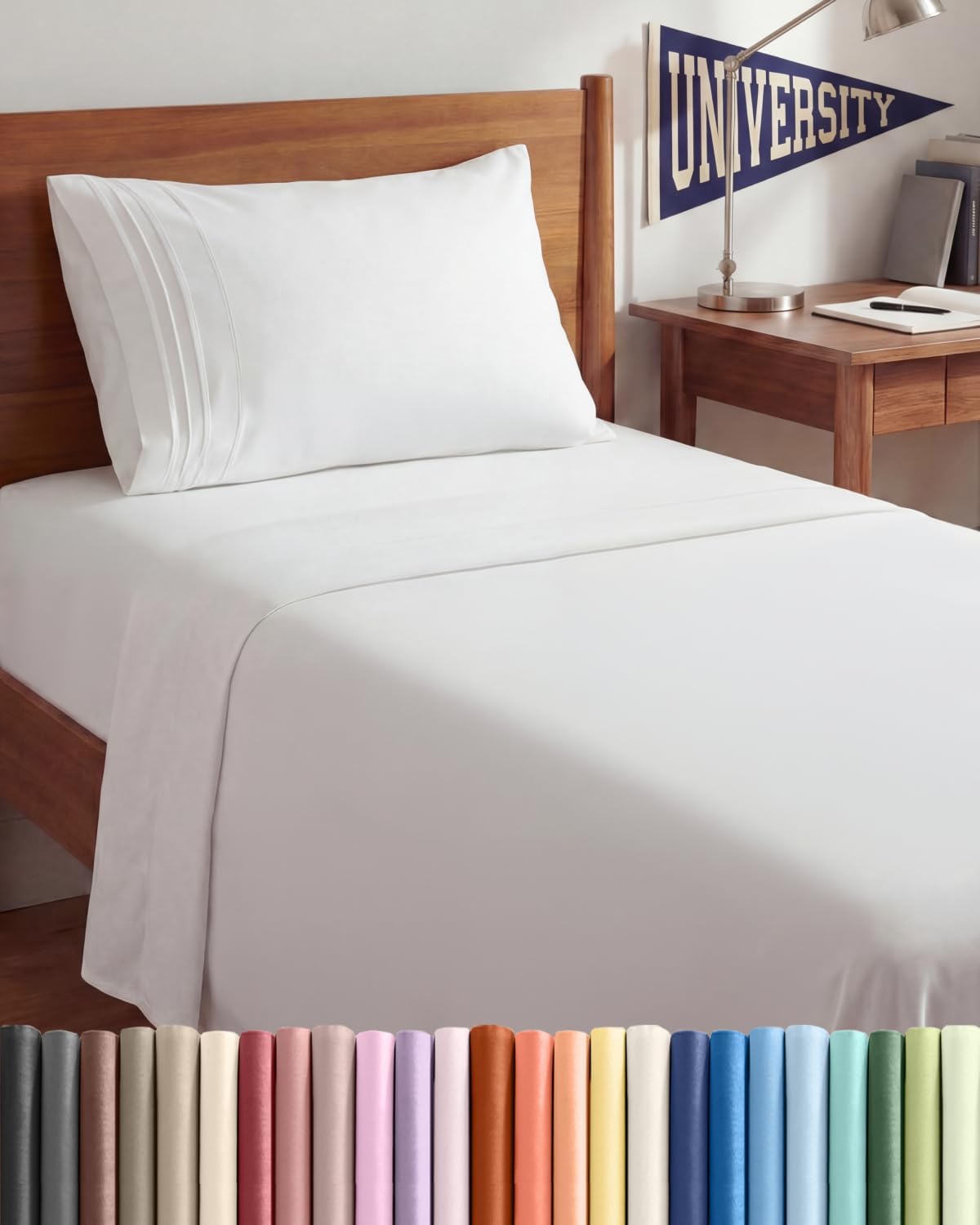
Most dorm mattresses are twin XL — five inches longer than a standard twin. Standard sheets technically fit but pull off constantly. Buy twin XL sheets specifically. Check before you order.
3
Wait on anything that depends on your room layout
Rugs, full-length mirrors, furniture, extra shelving — wait until you've seen the actual room. Dorm layouts vary enormously and something that looks perfect online can be wrong for your specific space. Buy the essentials, then assess.
Bedding + Sleep
The dorm mattress situation is not good. Institutions buy mattresses for durability and price, not comfort, and whatever is in your room when you arrive has been there for years. The single highest-impact purchase you can make before arriving is a mattress topper — it transforms the sleep situation for about $35.
Two sets of sheets is mandatory. You will not always get to laundry the moment you want to. One set in use, one set clean. This is a lesson everyone learns the hard way if they only pack one set.
Twin XL is the standard but confirm your school's mattress size before ordering.
Buy before you arrive
✓
Mattress topper
The single most impactful dorm purchase. Dorm mattresses are institutional. A 2-inch memory foam or gel topper changes everything.
✓
Twin XL sheets — 2 sets
Not standard twin. Two sets so one can be in the wash. This rule will save you more than once.
✓
Comforter or duvet
Dorms can be cold. Down alternative is machine washable and easier to deal with than a real duvet in a shared laundry situation.
✓
Pillow (2 if you can fit them)
One to sleep on, one for studying in bed. Bring from home if you have one you like.
✓
Mattress protector
Waterproof. Not glamorous. Extremely worth having.
⏳
Bed risers
Check if your dorm bed is already loftable. Many are adjustable. Buy these once you've seen the room.
Skip for now
A matching bedding set with throw pillows and a bed skirt. You will put those decorative pillows on the floor every night and step on them every morning. Save the aesthetic coordination for when you've seen the room.
Your desk is where you'll do approximately 40% of your living in a dorm — homework, late-night snacking, video calls home, and everything in between. The dorm desk itself is usually fine. What it lacks is light, organization, and enough power outlets.
A desk lamp is non-negotiable — overhead dorm lighting is fluorescent and depressing. A surge protector power strip is both required by most schools and essential given that dorm rooms have exactly two outlets for two people's worth of devices.
Buy before you arrive
✓
Desk lamp
Get one with adjustable brightness. Dorm overhead lighting is genuinely bad. This matters for your focus and your sleep hygiene.
✓
Surge protector power strip
Most schools specifically require surge protection — a basic extension cord may be prohibited. Get one with USB-A and USB-C ports built in.
✓
Noise-cancelling headphones or earbuds
Non-negotiable for studying in a shared space. You will use these every single day.
✓
Desk organizer
Small desk + shared room = things disappear fast. Even a basic cup holder for pens makes a difference.
⏳
Laptop stand + external keyboard
Buy in week 1 after you know your desk setup. Good for posture during long study sessions.
⏳
Blue light glasses
Optional but genuinely helpful if you're sensitive to screen fatigue. Buy when you need them.
Skip for now
A printer. You almost certainly won't need one — every campus has printing labs and most assignments are submitted digitally. Buy one if you discover you specifically need it, not preemptively.
A dorm closet is roughly the size of a phone booth. The dresser, if there is one, has four small drawers. Every inch of storage requires optimization. The things that help most are vertical — over-door organizers, hooks, hanging shelves — because floor space is what you don't have.
Slim velvet hangers instead of plastic ones immediately double your closet space. A collapsible hamper that folds flat when empty is worth more in a dorm than a proper hamper.
Buy before you arrive
✓
Slim velvet hangers (pack of 50+)
Plastic hangers take up 3x the closet rod space. Swap immediately on arrival.
✓
Over-door organizer
Shoes, accessories, snacks, supplies. The back of your door is the most underused storage real estate in a dorm.
✓
Collapsible laundry hamper
Folds flat when empty. Regular hampers take up floor space you can't afford.
✓
Under-bed storage bins
The space under a dorm bed is your extra closet. Low-profile bins with lids for off-season clothes, extra supplies, etc.
⏳
Hanging closet organizer / shelf dividers
Buy in week 1 once you've assessed the closet situation.
Skip for now
A full dresser, a bookshelf, or any large standalone furniture. Wait until you've seen your room. Many dorms have built-in furniture — bringing your own is often redundant and creates a spatial nightmare.
Shared bathrooms are the defining dorm experience nobody warns you about. The shower caddy is not optional — it's how you transport everything you need to and from the bathroom without making two trips or leaving your products in a communal space. Flip flops are also not optional. They just aren't.
Microfiber towels dry faster than cotton in a dorm environment where you're not always getting laundry done on a schedule. Worth considering as an alternative.
Buy before you arrive
✓
Shower caddy
The hanging kind or a portable carry caddy. You need to be able to take everything to and from the bathroom in one trip.
✓
Shower flip flops
Shared shower floors. No further explanation needed.
✓
Bath towels (2–3) + hand towels
At least two bath towels so one can be in the wash. Microfiber dries faster if laundry timing is unpredictable.
✓
Robe or towel wrap
For the walk to and from the bathroom. Non-negotiable in a shared floor situation.
✓
Over-door hooks for bathroom gear
Hang your towel and robe from your room door — dorm rooms often have no dedicated hook space.
✓
Shower-safe toiletry organizer
If your caddy doesn't have enough compartments, a separate hanging organizer for razors, face wash, etc.
Skip for now
A hair dryer stand, an elaborate skincare shelf, or anything that assumes you have counter space. Most shared bathrooms have none. Bring only what fits in your caddy — add later if you find private storage.
Check your school's appliance policy before buying anything for this section. Most dorms allow a mini fridge and a microwave — some provide them, some have shared ones on each floor, some let you bring your own. Toasters, hot plates, and anything with an open coil are commonly prohibited.
The honest list is short: a way to make hot water (electric kettle is usually allowed, is versatile, and heats faster than a microwave), storage for snacks, and something to eat off of. A reusable water bottle that keeps water cold matters more than most people anticipate — campus is bigger than high school and you'll be walking constantly.
Buy before you arrive
✓
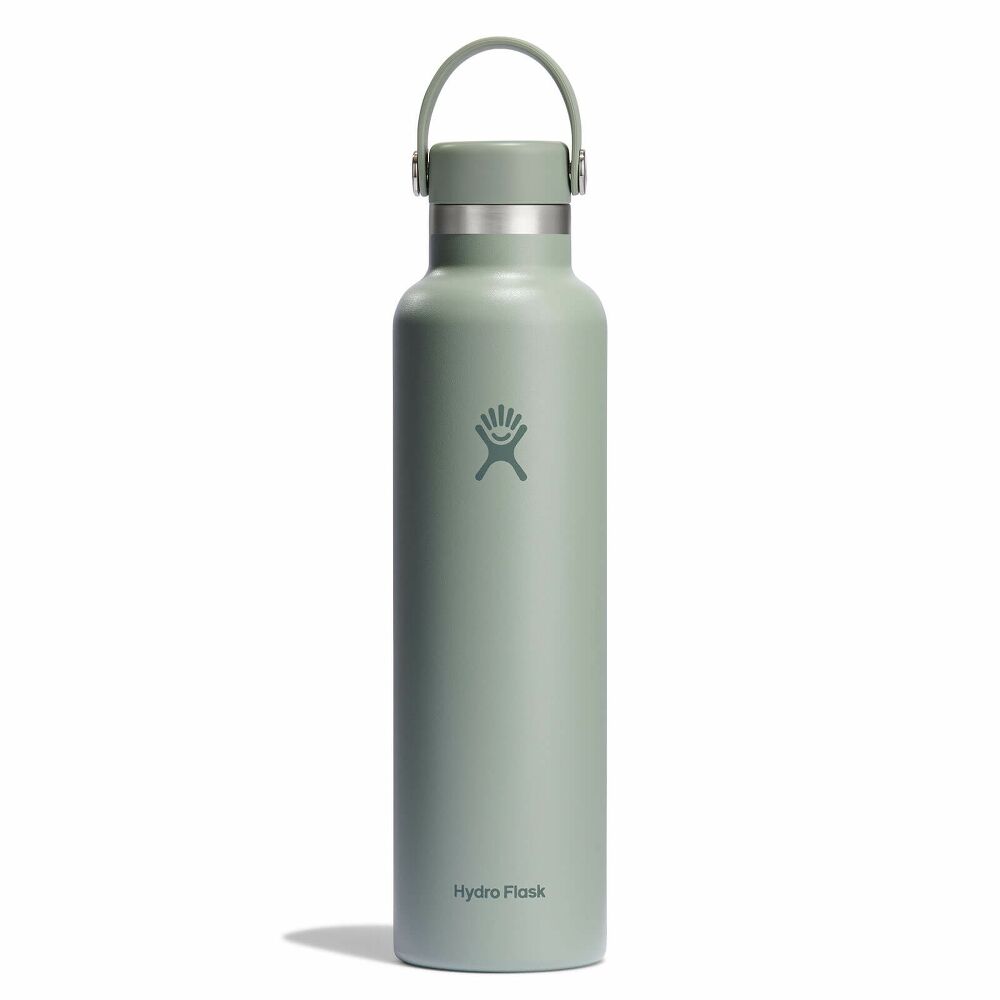
Reusable water bottle
You will walk more than you expect. Cold water matters. Get one that actually keeps drinks cold — an insulated bottle makes a real difference across a long campus day.
✓
Snack storage containers
Airtight. Keeps food fresh and keeps pests out. Dorm rooms with unsealed snacks are pest magnets.
✓
Plates, bowls, mugs, utensils
A small set — 2 of each is plenty. Reusable beats disposable both financially and in terms of guilt.
⏳
Mini fridge
Check if your school provides one or has shared fridges before buying. Coordinate with your roommate — you don't need two.
⏳
Microwave
Same as fridge — check what's provided and coordinate with your roommate.
⏳
Electric kettle or personal blender
Check your school's allowed appliance list. Kettles are almost universally permitted and more versatile than people expect (instant noodles, tea, oatmeal, pour-over coffee).
Skip for now
A coffee maker, a toaster, a hot plate, a rice cooker. Most of these are prohibited. Even where they're allowed, you probably won't use them as much as you think in year one. The dining hall exists. The campus coffee shop exists. See what your actual habits are before buying appliances.
A dorm room is a cinder block box with fluorescent lighting and someone else's furniture. What you do with it is entirely up to you — and the difference between a room that feels like a cell and one that feels like yours is usually about $50 and a couple of Command strips.
The key word is Command strips. You cannot put holes in dorm walls. Everything goes up with Command strips, Command hooks, or Command velcro. Buy a lot of them. They are the most useful single item in a dorm room.
LED strip lights — specifically the Govee kind that sync with music or change scenes — have become the defining dorm aesthetic item of the past few years. They do actually transform a room from "institution" to "home" and the effect is immediate.
Buy in week 1
✓
Command strips + Command hooks (mega pack)
The single most-used item in a dorm room. You will go through more than you expect. Buy the big pack.
✓
LED strip lights
Stick to the back of your desk, under your lofted bed, or along the ceiling edge. Instant room transformation. Get ones with an app and scene modes.
✓
Throw blanket
For the desk chair, the bed, the floor — wherever you end up sitting. Makes any space feel more human.
✓
Wall art / tapestry / photos
Command strip everything. A tapestry covers a lot of bare cinder block in one move. Printed photos from home are underrated.
⏳
Rug
Buy when you're ready — after you've seen the floor situation and the layout. Size matters and it's hard to know the right size before you're in the room.
⏳
Small plant
Something low-maintenance like a pothos or succulents. Makes a room feel alive in a way that's hard to replicate otherwise. Buy once you've settled in.
Skip for now
Candles — almost universally prohibited. String lights with open bulbs — check the policy. Anything that requires mounting hardware or damages walls. You will lose your housing deposit.
Two outlets for two people's worth of devices is the defining electrical constraint of dorm life. A surge protector isn't just a convenience — it's required by most schools and it's the thing that makes the room functional. Get one with at least 6 outlets plus USB-A and USB-C ports built in.
Cable management isn't glamorous but a desk covered in tangled cords is somehow worse than it sounds when you're trying to study. Cord clips along the desk edge take five minutes and make the space feel significantly cleaner.
Buy before you arrive
✓
Surge protector power strip (6+ outlets, USB ports)
Required by most schools. Get one with surge protection specifically — basic extension cords may be prohibited. USB-A and USB-C ports built in saves adapter hassle.
✓
Extension cord (check allowed length)
For when the power strip can't quite reach where you need it. Most schools specify maximum length — typically 6 feet.
✓
Cord organizer clips
Stick to the desk edge. Takes five minutes to set up and makes the whole space feel cleaner.
⏳
USB hub / dock
If your laptop has limited ports. Buy once you've set up your desk and know what you need.
Skip for now
A TV. Your laptop is your TV. A large monitor — unless you know you need it for your major. A gaming setup that takes up the entire desk. You're sharing that desk space with someone else's sightline.
The dining hall is your kitchen. The campus laundromat is your laundry room. Both require a little more preparation than they sound like.
Laundry pods over liquid detergent — easier to transport, no spills, exact portion every time. Mesh laundry bags protect delicates and keep small items from disappearing in communal washers. Clorox wipes are your primary cleaning tool for the first year — fast, effective, and handle every surface in a dorm room.
Buy before you arrive
✓
Laundry pods
Easier to transport to the laundry room than liquid. No spills, no measuring. Get a travel container or zip-lock bags for smaller loads.
✓
Mesh laundry bags (2)
For delicates, socks, and anything small that tends to disappear in a communal dryer.
✓
Clorox wipes
Your primary cleaning tool. Desk, doorknobs, bathroom sink, keyboard — use constantly, especially during cold and flu season.
✓
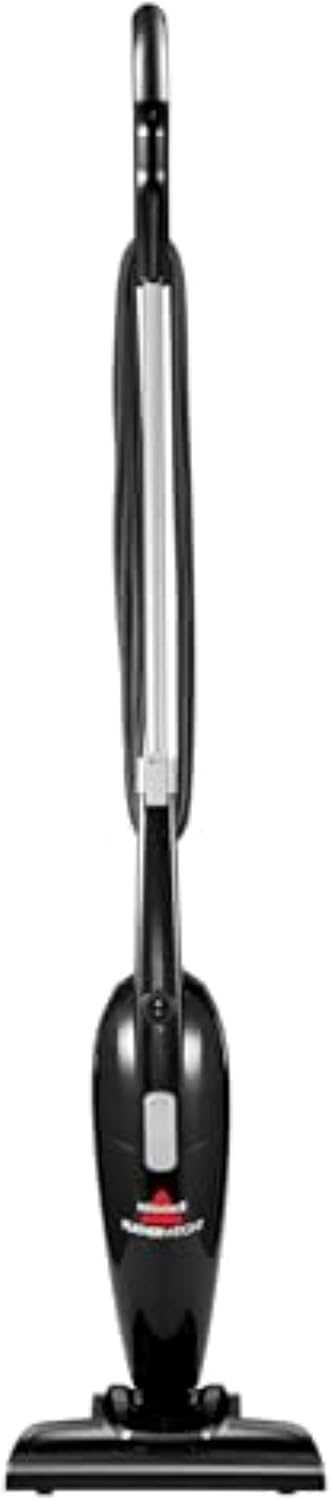
Small vacuum or dustbuster
Crumbs happen. A handheld vacuum takes up almost no space and handles dorm messes completely.
✓
Dryer sheets or dryer balls
For when the communal dryers run hot. Also useful for keeping your drawer and closet smelling fresh.
✓
Febreze or fabric spray
A small room with a shared closet gets musty. A quick spray between laundry days is worth having.
Skip for now
A mop, a full broom and dustpan set, a bucket. Your floor is either carpet or hard floor — a dustbuster handles carpet and a Swiffer-style wipe handles hard floors. Full cleaning equipment is overkill for 150 square feet.
These are the items that won't appear on any official packing list but that you'll be glad you have.
Buy before you arrive
✓
Door stopper
The universal signal that you're open to meeting people. Prop your door open the first few weeks of school. It's how you make friends in the dorm.
✓
First aid kit (basic)
Band-aids, pain reliever, antacids, cold medicine. The campus health center has limited hours. You will need something at 2am eventually.
✓
Command strips — mega pack
Listed in the vibe section, also listed here because you will use more than you expect across every section of this list. Buy the big pack.
✓
Quarters (or a Venmo balance) for laundry
Most laundromats now take an app but some still take quarters only. Have both ready before you need them urgently.
✓
Power bank
For long days on campus. When your phone dies between classes and the nearest outlet is across campus, you'll want this.
✓
Umbrella
Campus is bigger than your old commute. You will get rained on. A compact one lives in your bag permanently.
Skip for now
A safe, a mini whiteboard, a bulletin board, a welcome mat, a full toolkit. These all sound practical and are almost never used. Buy the obvious stuff and see what you actually miss.
What Your School Probably Provides (Check Before You Buy)
This list varies by school and even by dorm building — check your housing packet before ordering any of these:
Desk, desk chair, bed frame, dresser, and some form of closet storage
A mattress (you still want a topper — but don't buy a mattress)
Mirrors in shared bathrooms
Shared laundry machines on each floor
Shared microwave and/or mini fridge on each floor (some dorms)
Recycling and trash service
Things that are almost never provided: bedding, towels, shower supplies, any appliances for your room, lighting beyond the overhead fixture, anything decorative.
A Move-In Day Checklist Within the Checklist
Before you touch anything else on move-in day — have these already packed and accessible, not buried in boxes:
Shower caddy stocked and ready to go
Towel and robe accessible
Clorox wipes (wipe down every surface before you unpack onto it)
Power strip plugged in first
Twin XL sheets — so the bed is made before you're too tired to care
That's a lot of shopping for one little dorm room.
Once you've gotten the basics, you can start to have some fun with it and find ways to make your dorm feel like home.
Dorm Room Move-In Checklist Bundle — printable, organized by category
Let's be honest, a massive shopping list like this is mostly helpful for ✨research✨ and you'll need something a little more compact for move-in day. That's why we made the dorm bundle -- a printable checklist for your major must-pack dorm items, plus guides for important roommate convos, student admin you'll need to keep track of, and more.
The non-negotiables are: a twin XL mattress topper, twin XL sheets (two sets), a shower caddy and flip flops, a surge protector power strip, a desk lamp, a laundry hamper, and Clorox wipes. Everything beyond that is comfort and personalization — see your room first before buying anything that depends on layout.
What size sheets do dorms use?
Most dorm beds use twin XL mattresses — five inches longer than a standard twin. Standard twin sheets technically fit but pull off constantly. Confirm your school's mattress size in your housing materials and buy twin XL specifically.
What should you not bring to a dorm?
Most schools prohibit candles, halogen lamps, toaster ovens, hot plates, and extension cords without surge protection. Beyond the rules: skip large furniture, a TV, a printer, and anything that assumes you have more space than you do. Check your school's specific prohibited items list — it varies.
How much should you budget for dorm supplies?
A reasonable budget for essentials is $200 to $350 if you're starting from scratch. Bedding is the biggest single expense — mattress topper, sheets, comforter, and pillow will run $80 to $150. Add a surge protector, shower caddy, hangers, and laundry supplies and you're around $300 total. Room decor is on top of that and entirely optional.
Should you coordinate with your roommate before buying things?
Yes — especially for the big shared items. Most dorms don't need two mini fridges or two microwaves. Reach out to your assigned roommate before move-in to figure out who's bringing what. It saves money and saves space.