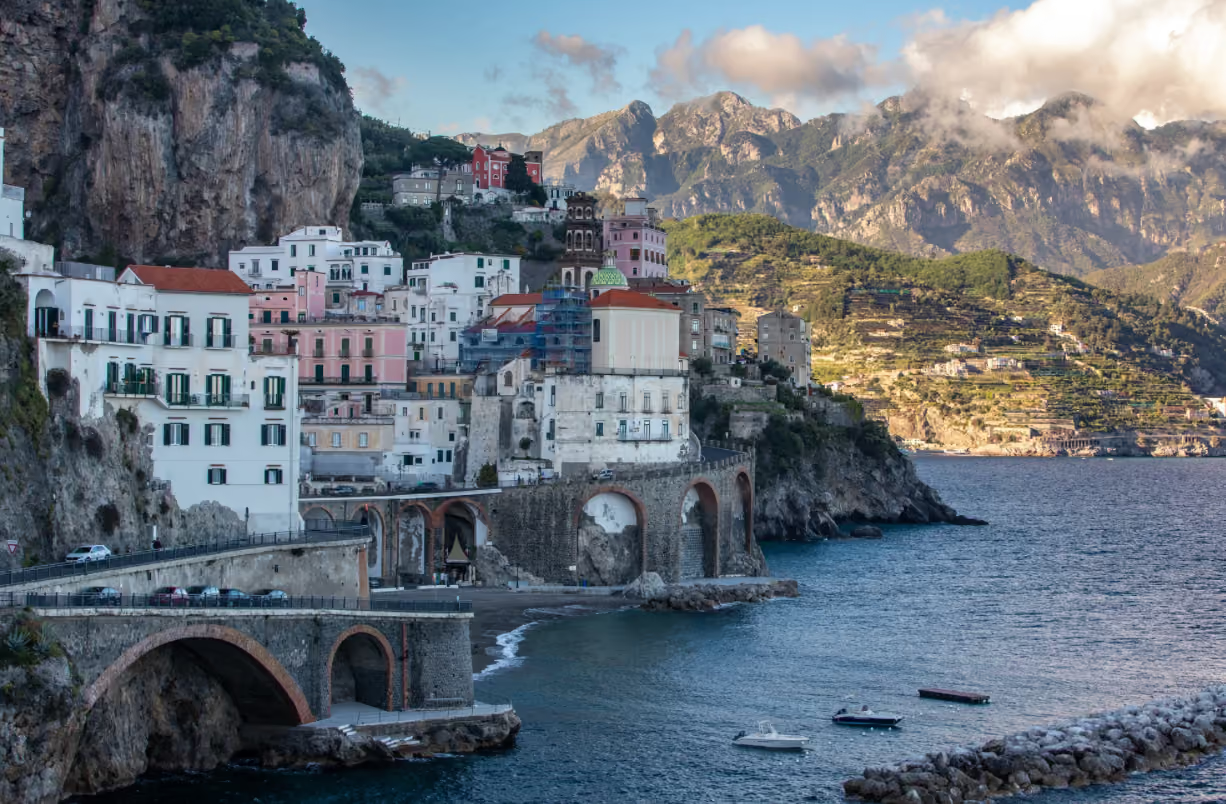



Europe is not one trip. It's dozens of completely different ones stacked on top of each other, and that's exactly what makes picking a first destination so paralyzing. Everyone has an opinion, every city has a "must-see" reputation, and somehow the sheer number of good options makes it harder to book anything at all.
Here's what this guide actually covers:
- What makes a European destination genuinely good for a first-timer
- Why some of the "obvious" picks might not be the right start
- Five destinations worth building your first trip around
- How to string a few of them together without exhausting yourself
What Actually Makes a Good First Europe Destination
The same things that make any destination beginner-friendly apply here — walkability, decent public transit, some English in tourist areas — but Europe adds a couple of its own wrinkles worth knowing before you book.
Compact geography. Unlike a lot of the world, European countries are often small enough that a train ride of a few hours moves you between completely different cultures, languages, and landscapes. That makes it easy to build a trip around one or two countries without racking up long travel days.
The Schengen Area. Most of mainland Europe operates under a shared border agreement — the Schengen Area — meaning once you're in, you can move between many countries without a passport check.
The Cities Everyone Recommends (And Why We Suggest You Wait on Them)
Paris, Rome, and Santorini show up on nearly every "best of Europe" list, and for good reason — they're extraordinary. Seriously.
But they're also, for a first-timer specifically, some of the most exhausting options you can choose. Peak-season Paris means aggressive tourist-targeted scams near major landmarks and a metro system that can feel more than a little overwhelming if you've never navigated one before. Rome without a guided tour turns the Colosseum into a crowded ruin with no context, and the area around the Trevi Fountain can look more like the floor at a metal concert than one of the most iconic artistic monuments in the world. Santorini in July? Means sharing that life-changing caldera view with cruise-ship crowds by the thousands and paying premium prices for ordinary food unless you know exactly where to go for the good stuff.
None of this means skip them forever -- it just means they can be kind of a lot if this is your first go-around.
They're bucket list destinations for a lot of people, but just might not give you enough breathing room to actually enjoy your trip if you make them the first stop. Whereas they're much more rewarding as a second or third European trip, once you've built up some instinct for navigating unfamiliar cities, communicating in different languages, and the culture shock isn't so, well, shocking.
If you've already got your heart set on Italy specifically, we've got a full first-timer's guide that shows you how to do it right even as a beginner.
5 Destinations to Build Your First Europe Trip Around
Okay, so we're skipping some of the bucket list destinations... this time, anyway. But that's okay. That's great, even. These slightly less-traveled European destinations are incredible in their own rights, and you'll get some valuable experience under your belt so that when you return for that once-in-a-lifetime Paris trip, you won't find yourself crying in a corner as you desperately try to decipher the metro while your translation app glitches, annoyed locals getting held up behind you, turnstile beeping, everything aggressively French, and, and *shudder*
1. Lisbon, Portugal
Lisbon is the closest thing Europe has to a "correct answer" for a first trip. It's walkable, sunny, affordable by Western European standards, and warm without being overwhelming — the kind of city wherev getting slightly lost down a tiled side street feels like part of the plan rather than a mistake. We've gone deeper on why it's such a strong solo pick too, though it works just as well traveling with a partner or friends.
Best time to go: April–June or September–October
2. Prague, Czech Republic
Prague gives you the fairytale-medieval-city photos without the price tag of Western Europe. Cobblestone Old Town, a castle on a hill, and one of the more affordable major cities on the continent — a rare combination. It's also flat and compact enough to cover almost entirely on foot, which matters more than people expect on a first trip abroad.
Best time to go: May or September, to dodge both summer crowds and winter cold
3. Amsterdam, Netherlands
Amsterdam might be the single easiest city in Europe to navigate for an English-speaking first-timer — near-universal English fluency, a bike-and-canal layout that makes sense within a day, and a compact city center where most major sights are walkable from each other. It's also a genuinely excellent home base for day trips: Haarlem, Utrecht, and the tulip fields (in season) are all under an hour by train.
Best time to go: April–May for tulip season, or June–August for long daylight hours
4. Edinburgh, Scotland
If your image of "first Europe trip" involves castles and dramatic skylines more than beaches, Edinburgh delivers without the intensity of a bigger capital. The Old Town is startlingly walkable — a medieval castle looms over the whole city, cobblestone streets wind uphill in every direction, and you can cover most major sights in two or three unhurried days. English-speaking, low language-barrier stress, and an easy add-on to a London-based itinerary if you're flying into a bigger hub anyway.
Best time to go: May–September for the best weather, or December for the Christmas markets
5. Ljubljana, Slovenia
This is the pick for anyone who wants a "we found this before everyone else did" story. Slovenia's capital is small, green, and startlingly pretty — a dragon-guarded bridge, a hilltop castle, a river lined with outdoor cafés — at a fraction of the crowd level or cost of its more famous neighbors. It's also an excellent base for day trips to Lake Bled, one of the most photographed lakes in Europe and still relatively under-visited by US travelers.
Best time to go: May–June or September, when the weather's mild and the crowds haven't caught on yet
I'm already going to be there, so... why not string those destinations into the ultimate European adventure?!
For a first Europe trip, resist the urge to chain together four or five countries. A single-country trip with 2–3 stops, or two adjacent countries connected by a short flight or train, covers more ground in comfort than trying to touch everywhere at once.
A realistic starting framework: 7–10 days, 2 cities.
Lisbon + a day trip to Sintra.
Prague + a train out to Český Krumlov.
Amsterdam + Utrecht.
Enough to feel like you've actually experienced a place instead of just passing through it, but no overwhelming travel plans or timelines.
Where Will Your First Europe Trip Take You?
There's no wrong answer here, just a better and worse fit for a first trip specifically. Start with somewhere that lets you build confidence — walkable, warm toward first-timers, forgiving when your itinerary inevitably changes on day two — and save the bucket-list icons for the trip after this one, when you'll actually be ready to enjoy them the way they deserve.