

Main image courtesy of NDTV.
So, you’ve decided to travel alone. Once you do, something shifts. The trip becomes real, the nerves kick in, and a voice in your head starts listing everything that could go wrong. What if you get lost? What if you're lonely? What if you're just not the kind of person who does this?
Here's the thing — almost nobody feels like that person before their first solo trip. They become that person by going.
Solo travel has exploded among young adults for good reason. It's the fastest way to learn how you actually operate when no one else is setting the pace. No group compromises, no waiting on others, no splitting your time between what you want and what everyone else can agree on. Just you, a destination, and a surprising amount of figuring it out as you go.
This guide covers everything you need to know to make your first solo trip actually happen:
- Where to go when you want to travel alone for the first time
- How to stay safe abroad
- How to handle the moments when things don't go to plan
- And so much more!
Choosing Your First Destination When You Want to Travel Alone
What are your best options when you’re looking to travel by yourself for the first time?
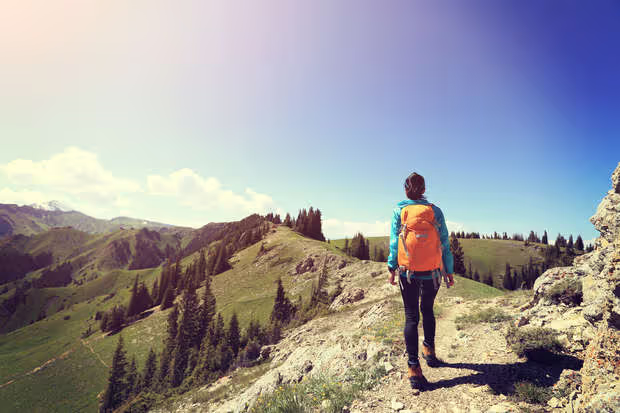
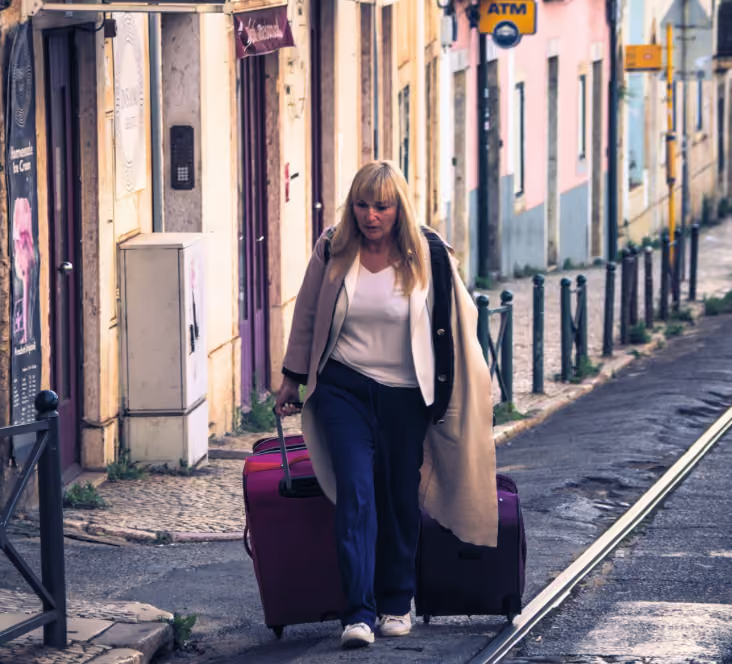
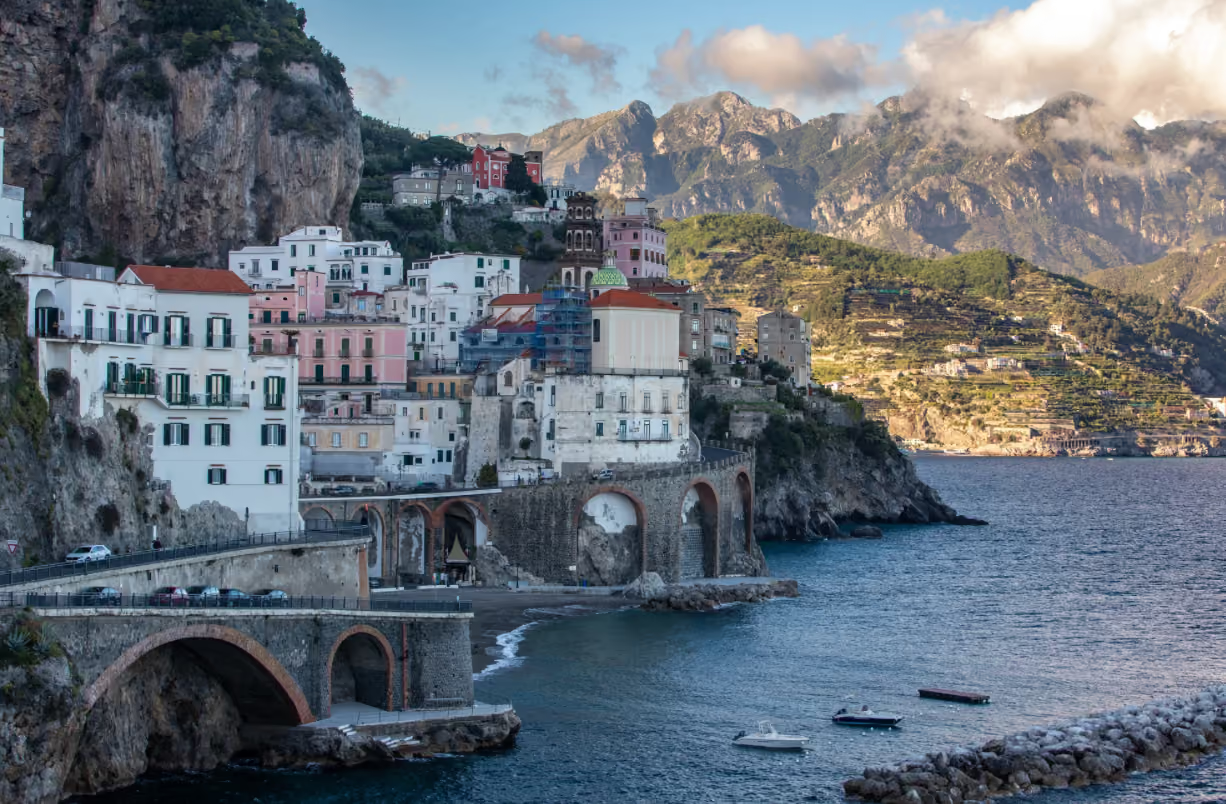
It makes sense to start where the infrastructure works, getting around is intuitive, locals are used to tourists, and a wrong turn doesn't become a crisis when you’re traveling alone for the first time. Cities like Lisbon, Bangkok, Tokyo, Amsterdam, and Melbourne consistently top solo travel lists because they tick these boxes — they're easy to navigate, rich with things to do alone, and have enough other travelers around that meeting people requires almost no effort.
If you want to stay closer to home for your first time out, that's a completely valid call. A city you've never explored in your own country still counts. The point is the experience of being solely responsible for yourself — not the passport stamps.
Think Honestly About Your Comfort Zone
There's a difference between a destination that stretches you and one that overwhelms you before you've found your footing. Backpacking rural Southeast Asia on your first ever solo trip is doable — plenty of people do it — but if you've never navigated a foreign city alone, never dealt with a language barrier, and never sorted your own accommodation on the fly, stacking all of those challenges at once is a lot.
Ask yourself a few honest questions. How do you handle uncertainty day-to-day? Are you comfortable when plans fall apart? Do you have any experience traveling independently, even domestically? Your answers don't determine where you can eventually go — they just help you decide where to start.
Keep in mind there are options in between a totally DIY, no safety style situation and taking a guided tour with a big group of people that leaves you no time to explore, reflect, or otherwise do what you want to do on your trip. Some vacation package sites even have options that cater to solo travelers, where you're traveling alone but their experts handle the logistics and support is on-call in case you need help. For some travelers, it's a happy medium.
Solo-Friendly Destinations Worth Considering
A few places consistently deliver for first-time solo travelers, each for different reasons:
- Japan — Exceptionally safe, easy to navigate even without speaking the language, and deeply rewarding for solo exploration. Japanese culture is quietly respectful of people doing things alone — eating solo, sightseeing solo, sitting in silence. No one makes you feel like you're missing someone.
- Portugal — Affordable, English-friendly, and warm in both climate and culture. Lisbon and Porto have thriving traveler communities without feeling overrun. Easy to meet people, easy to disappear into your own pace when you want to.
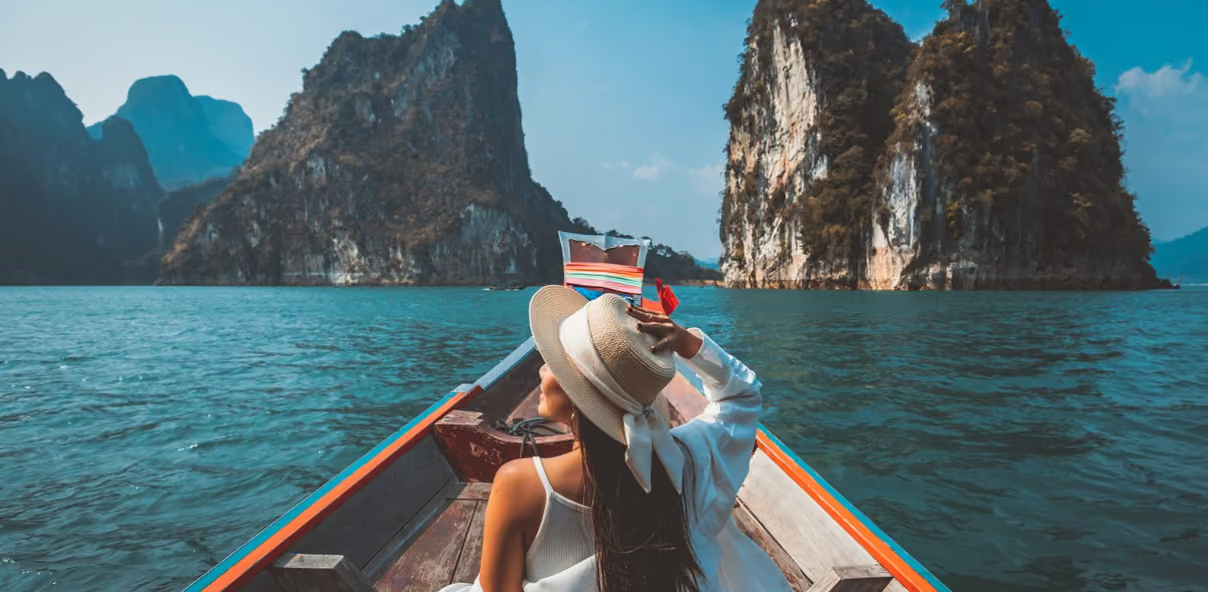
- Thailand — A long-time favorite for solo travelers on a budget. Bangkok is chaotic in the best way, and the infrastructure for independent travelers is so well-developed that you're rarely without options. The social scene — particularly in hostels and along the backpacker trail — makes loneliness genuinely hard to sustain.
- New Zealand — Ideal if outdoor adventure is your priority. Safe, English-speaking, and set up extremely well for independent travelers. The classic backpacker routes mean you'll meet the same people repeatedly as you move through the country.
- Spain — Late nights, easy socializing, incredible food, and a culture that makes solo dining feel completely natural. Barcelona and Seville are especially good entry points.
It’s Worth Keeping in Mind
The Language Question
Not speaking the local language is one of the most common reasons people talk themselves out of certain destinations. In most cases, it's less of a barrier than it seems. English is widely spoken in tourist-heavy areas across Europe, Southeast Asia, and beyond. Translation apps have made communication in remote areas dramatically easier than it was even five years ago. A little effort — learning basic greetings, thank yous, and how to ask for help — goes a long way both practically and in terms of how locals receive you.
Budget Is Part of the Decision
Solo travel costs more than group travel in one specific way: you're covering everything alone. No splitting accommodation, no sharing taxis, no dividing the cost of a hire car. That reality should factor into your destination choice, especially if you're working with a tight budget.
Southeast Asia, Central America, Eastern Europe, and parts of the Balkans offer some of the best value for solo travelers — low daily costs, cheap transport, and a well-worn backpacker infrastructure that makes stretching a budget straightforward.
Planning Your Trip and Working Out Logistics
Now you’ve got a destination, it’s time to plan and make it official!
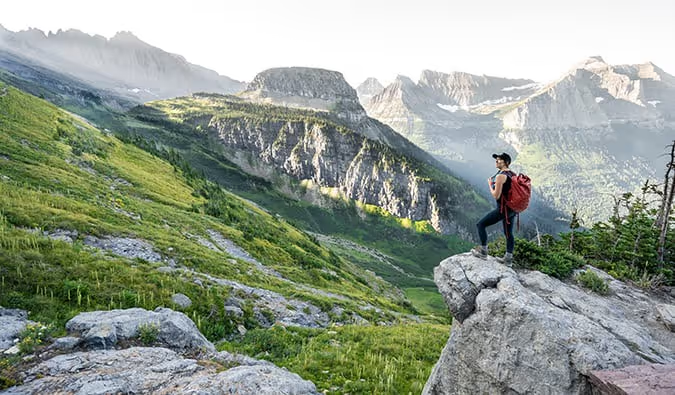
For a first solo trip, a loose framework works better than a detailed itinerary. That means having your flights booked, your first few nights of accommodation confirmed, a general sense of what you want to do and see, and a few backup options for transport between destinations. Beyond that, leave room to move at your own pace — to stay longer somewhere you love, leave earlier somewhere you don't, and say yes to things that weren't in any plan.
The parts worth nailing down in advance are the ones that are expensive or stressful to fix on the fly: flights, arrival transfers, and at least the first night's accommodation. Arriving somewhere new, jet-lagged and disoriented, without knowing where you're sleeping is an avoidable kind of miserable.
Booking Flights
Start with flexibility on dates if your schedule allows — even shifting a trip by a few days can cut flight costs significantly. Tools like Google Flights and Skyscanner let you view prices across a full month, making it easy to spot the cheapest windows. Book directly with the airline where possible; third-party booking sites can complicate things if you need to make changes or something goes wrong.
A few things first-time solo travelers often overlook:
- Layovers — A cheap flight with a tight connection in an unfamiliar airport is a gamble. Give yourself buffer time, especially on international routes where delays are common.
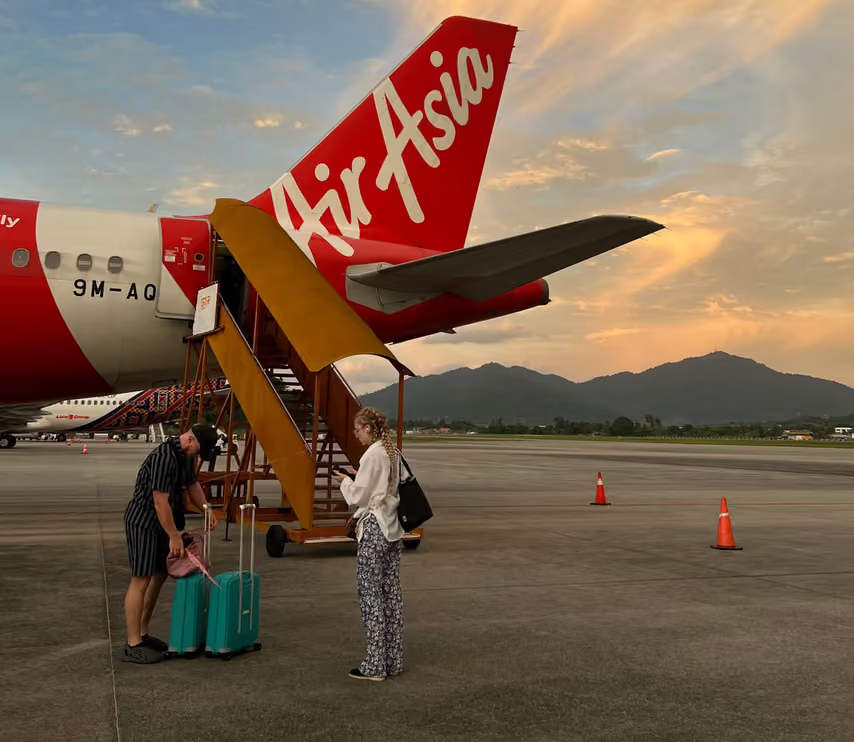
- Arrival time — Try to land during daylight hours, particularly in a city you've never visited. Navigating a new place at midnight after a long flight is harder than it needs to be.
- Airport to accommodation — Research this before you land. Know whether you're taking a train, bus, or taxi, roughly what it should cost, and where to get it. This single piece of preparation makes arriving somewhere new dramatically less stressful.
Things to keep in mind about accommodation
Where you stay shapes the entire social texture of your trip. For solo travelers, this decision matters more than it does when you're traveling with others.
Hostels are the default recommendation for first-time solo travelers, and for good reason. A good hostel is one of the easiest places in the world to meet people — shared dorms, communal kitchens, common rooms, and organized social events mean that loneliness requires actual effort.
Private rooms in guesthouses, boutique hotels, or Airbnbs give you more space and quiet, but you trade the built-in social environment. If meeting people matters to you, a private room in an isolated location can make the trip feel lonelier than it needs to.
Location matters more when you're alone. Staying centrally — close to transport, main attractions, and areas with foot traffic — makes everything easier.
Budgeting for one
The biggest financial reality of solo travel is the single supplement — the surcharge hotels, tour operators, and cruise lines add when one person occupies a room or spot designed for two. In practical terms, this means you're often paying what a couple would pay, just for yourself. It's one of the more quietly frustrating aspects of solo travel, and it's worth factoring into your planning rather than discovering it at checkout.
Beyond that, the daily costs of solo travel break down into five broad categories:
- Accommodation — your biggest variable expense
- Food and drink — highly controllable depending on your choices
- Transport — local getting-around costs, separate from flights
- Activities and entrance fees — museums, tours, experiences
- Miscellaneous — SIM cards, laundry, souvenirs, the unexpected
How much you spend across these categories depends almost entirely on where you are in the world and what kind of traveler you are. Southeast Asia and Eastern Europe offer dramatically lower daily costs than Western Europe or Australia. A budget backpacker and a comfort traveler can visit the same city and spend wildly different amounts without either doing it wrong.
Your solo travel packing list
If you're traveling with a friend or group and you forget to throw a power adapter in your suitcase, one of your companions probably has you covered. Going solo? You'll have to be even more careful not to forget commonly forgotten items like these. Make sure you've got your bases covered and make your life a lot easier with these travel essentials.
Our top picks on Amazon

Luggage
Carry-on
Shop on Amazon →

Organization
Packing cubes
Shop on Amazon →

Organization
Toiletry bag
Shop on Amazon →

Bags
Anti-theft crossbody
Shop on Amazon →

Safety
RFID-blocking wallet
Shop on Amazon →

Tech
Universal adapter
Shop on Amazon →

Tech
Portable charger
Shop on Amazon →

Tech
Noise-canceling earbuds
Shop on Amazon →

Tech
Phone mount
Shop on Amazon →
Additional logistics to consider
- Transportation
- Travel insurance
- Visas
- Vaccinations
- Digital backups
Staying Safe When You’re Traveling Alone
Stay safe with a few tips
Research your destination's safety landscape before you leave, not after you land. Your government's official travel advisory website is the starting point — these pages flag current political instability, health risks, high-crime areas, and any specific warnings for travelers. They tend toward caution, so a low-level advisory doesn't necessarily mean avoid; it means be informed.
A few things worth researching specifically:
- High-risk areas within the destination — most cities have neighborhoods that are fine in daylight and different at night, or areas that are simply best avoided altogether
- Common scams targeting tourists — these are destination-specific and often well-documented; knowing them in advance makes you essentially immune
- Local laws and customs — what's acceptable behavior at home may carry real consequences elsewhere, from dress codes at religious sites to laws around photography, alcohol, or public behavior
- Emergency numbers — the local equivalent of 911, the nearest embassy or consulate, and your travel insurance emergency line
Situational Awareness
Most travel safety comes down to one thing: paying attention. Not paranoid, hypervigilant attention — just the basic practice of being present and aware of your surroundings rather than buried in your phone.
A few habits that make a genuine difference:
- Look confident, even when you're not. People who look lost, distracted, or uncertain are more likely to be targeted by petty criminals and scammers. Walk with purpose, even if you're figuring it out as you go. Step into a café or shop to check your map rather than stopping in the middle of a busy street.
- Trust your instincts. If a situation feels off, leave. If someone's attention feels wrong, move away. The social awkwardness of being rude to a stranger is not worth overriding a genuine gut feeling. Your instincts are pattern recognition built on a lifetime of experience — they're worth listening to.
- Be aware of your surroundings when you arrive somewhere new. The first few hours in a new place — tired, disoriented, loaded with luggage — are when you're most vulnerable. Stay alert during arrivals, keep your bag close, and get to your accommodation before doing anything else.
- Avoid displaying expensive items unnecessarily. A visible camera, laptop, or phone in a high-theft area is an invitation. Keep valuables out of sight in crowded spaces, and consider whether you actually need to bring your most expensive gear on a particular day out.
- Know your exits. In bars, clubs, or crowded spaces, a quick mental note of where the exits are is a habit worth building.
If Something Goes Wrong
Despite every precaution, things sometimes go wrong. Knowing what to do in advance means you respond rather than panic.
- If you're robbed: Don't resist — possessions are replaceable, injuries aren't. Get to a safe location, contact your travel insurance provider, and file a police report. Most insurance claims require a police report number, so this step matters even if you have little faith in local police recovering anything.
- If you're sick: Contact your travel insurance provider first — they often have medical assistance lines that can direct you to approved local healthcare and handle billing directly, saving you from paying upfront and claiming back later.
- If you lose your passport: Contact your nearest embassy or consulate immediately. Most can issue emergency travel documents, but it takes time — usually a few days at minimum. This is exactly why having a digital copy stored separately is worth the five minutes it takes to set up.
- If you feel unsafe: Trust that feeling and act on it. Get to a public, well-lit space, find your accommodation or a hotel lobby, and contact someone. Embassies maintain 24-hour emergency lines for their citizens abroad — save the number before you leave.
Most solo travelers, when asked about safety after their trip, will tell you the same thing: the anxiety beforehand was bigger than the reality. That doesn't mean the risks aren't real. It means that with basic preparation and common sense, the gap between how dangerous solo travel feels and how dangerous it actually is tends to close considerably once you're on the ground.
What Are You Waiting for…it’s Time to Book Your Solo Travel Experience!
The hardest part of solo travel is the version of it that only exists in your head — the what-ifs, the worst cases, the quiet suspicion that you're not quite the type of person who does this sort of thing.
That version dissolves pretty quickly once you're actually on the ground. So pick the destination. Book the ticket. The rest has a way of working itself out — and you'll have a better time than you're currently imagining.