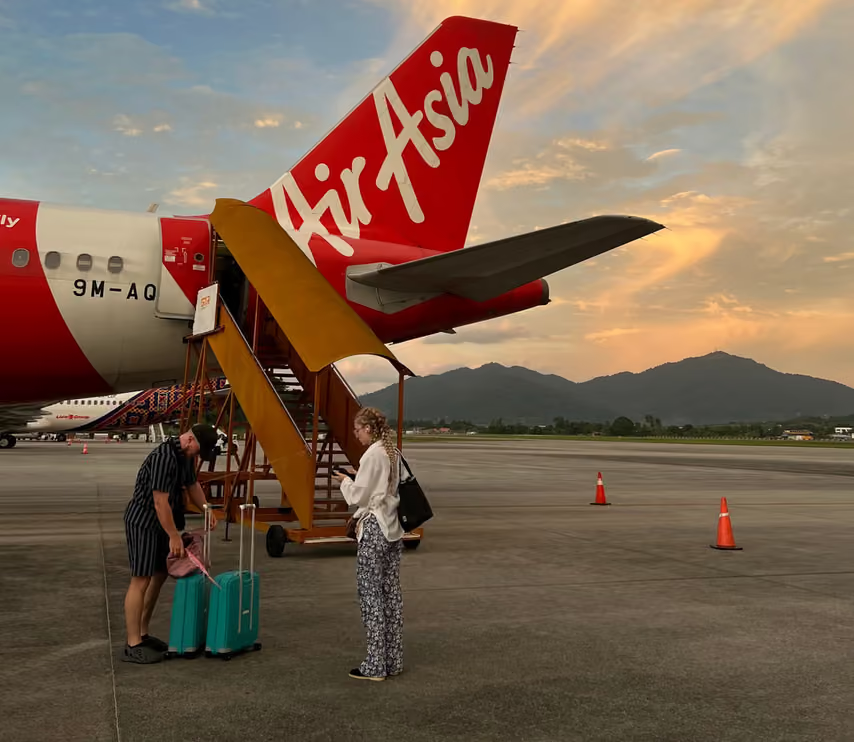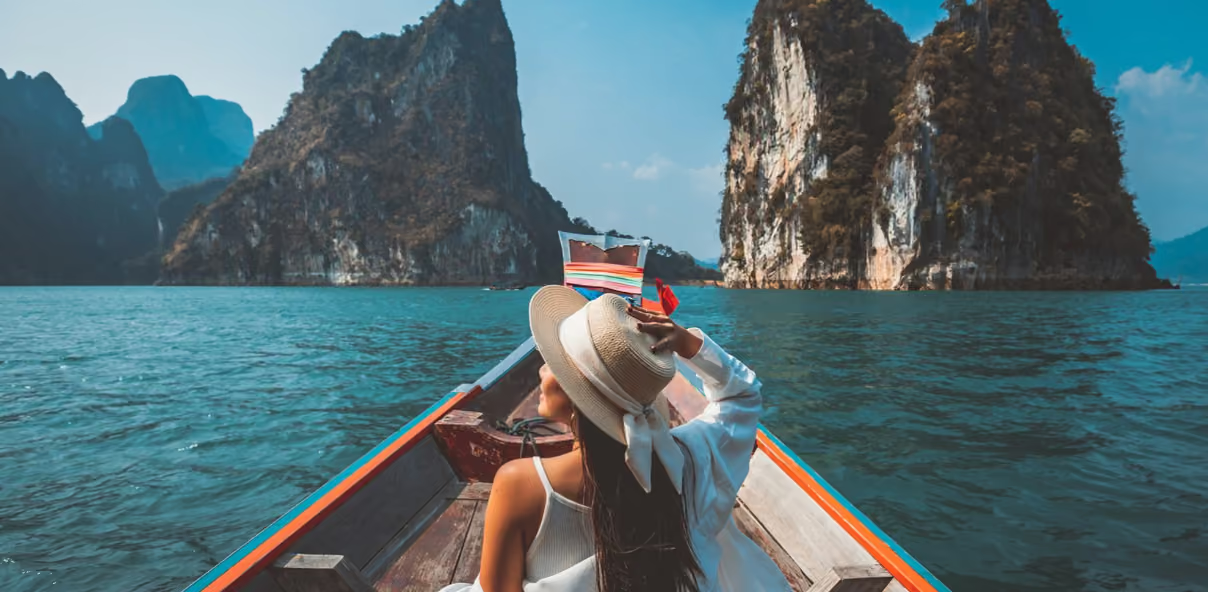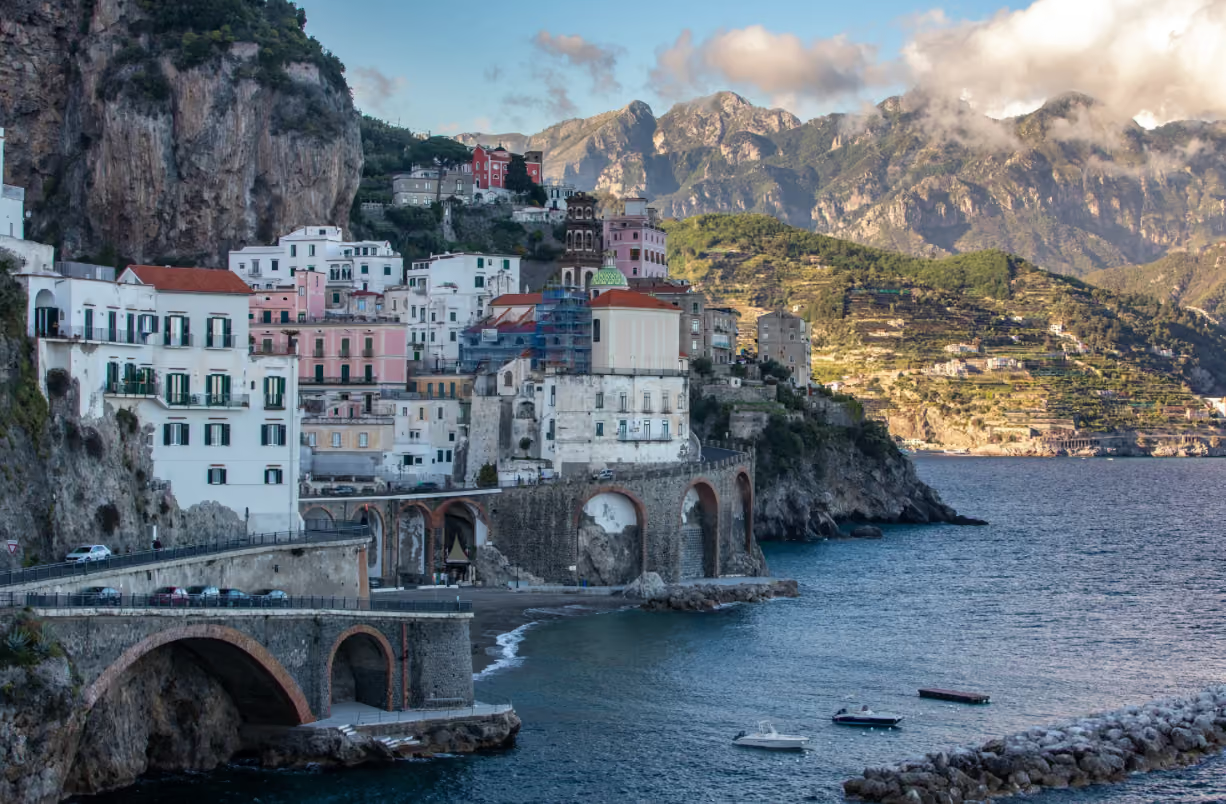
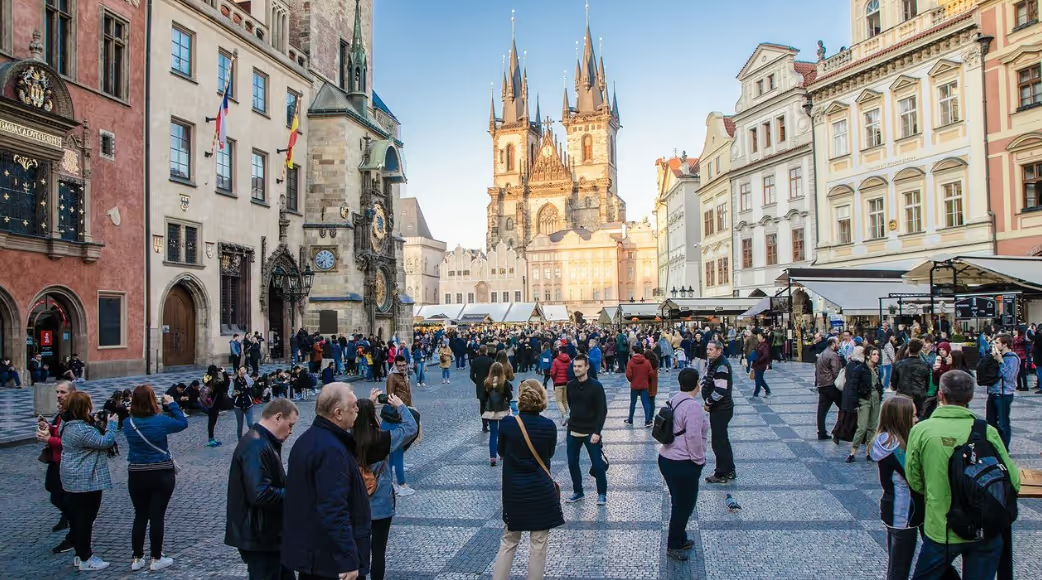


There's a cruel irony built into planning your first real trip: the less experience you have, the more overwhelming the options feel. Open any travel app and you're met with thousands of destinations, each one promising the trip of a lifetime. Everyone has a different opinion. So you open seventeen browser tabs, read six "best first trip" articles that all contradict each other, and somehow end up less decided than when you started.
Here's the thing: there's no universally perfect first destination. The right trip depends on who you are — how much novelty excites versus stresses you, whether you want to eat your way through a city or disappear into a national park, whether a language barrier sounds like an adventure or a nightmare.
That’s why we’ve put together this guide that will help you:
- Determine where to travel for the first time that’s right for you
- What makes a destination good for beginners
- Questions to ask before you book
- Where to go based on your traveler type
What Makes a Destination Good for First-Timers?
There are a few factors that ensure some destinations are better than others for beginners
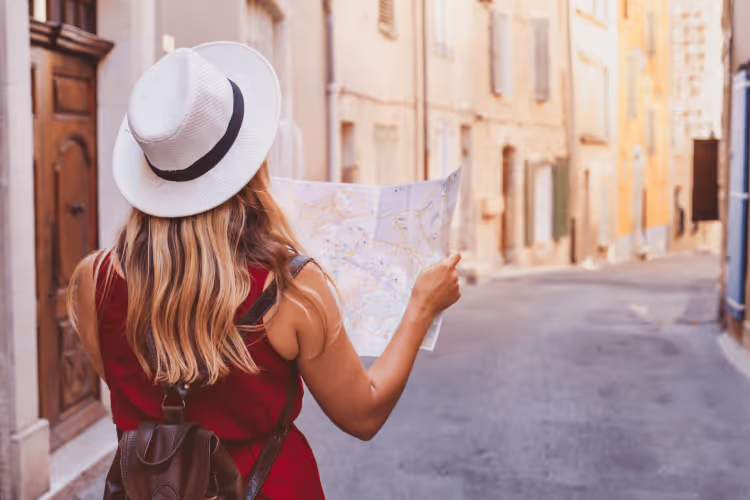
Not every great travel destination is a great first travel destination. Some places reward experience — they're best appreciated once you've already learned how to move through an unfamiliar city, how to read a crowd, how to recover gracefully when things go sideways. For a first trip, a different set of qualities matters.
Ease of navigation
The single biggest source of first-timer anxiety isn't crime or getting lost — it's the low-grade cognitive exhaustion of not being able to read your environment. When you can't decipher signage, can't ask for help in a shared language, and can't figure out how the transit system works, every small decision becomes a drain. The best first destinations reduce that friction. That might mean widespread English signage (Japan, despite the language barrier, is famous for its clear, tourist-oriented wayfinding). It might mean a walkable city center where you can navigate by landmarks. It might simply mean an intuitive metro system with color-coded lines and roman-alphabet station names.
None of this means you should only go somewhere English is spoken. It means you should go somewhere that won't make you feel helpless on day one.
Safety and traveler infrastructure
First-time travelers are, statistically, easier targets — not because destinations are dangerous, but because the tells are obvious. You're slower, more uncertain, more visibly consulting your phone. A destination with strong traveler infrastructure — tourist police, well-lit city centers, established scam awareness resources, a culture of hospitality toward visitors — absorbs that inexperience. You make the same rookie mistakes you'd make anywhere, but the consequences are minor.
This doesn't mean avoiding anywhere with a complicated safety reputation. It means being honest that your first trip probably isn't the moment to test your street smarts in an unfamiliar environment.
Variety
First trips rarely go exactly as planned. A museum is closed. It rains for two days. You arrive exhausted and spend the first 24 hours doing nothing. The best beginner destinations have enough depth that a derailed itinerary doesn't ruin the trip — there's always something else. Cities with great food scenes, walkable neighborhoods, accessible day trips, and a mix of indoor and outdoor options give you room to improvise. One-note destinations (a single beach, a single monument) leave you stranded when the plan falls apart.
Forgiving logistics
Connections matter more than people admit. A destination reachable on a direct flight from your home city is meaningfully less stressful than one requiring a stopover, a regional carrier, and a two-hour transfer bus. Not because the journey is too hard — but because every added step is another variable that can go wrong, and first-timers haven't yet built the instinct for recovering quickly. Similarly, destinations where accommodation, activities, and transport can be booked in English, in advance, through familiar platforms lower the barrier to actually pulling the trigger on the trip in the first place.
If you're weighing whether a vacation package makes sense, we've reviewed the best vacation package sites — some are significantly better value than others.
Questions to Ask Yourself Before You Book
Take the time to consider a few things while you’re weighing your options

Most travel advice skips straight to the destination list. That's backwards. The five minutes you spend answering a few honest questions about yourself will do more to narrow your options than any ranked listicle — and they'll save you from booking a trip that looks great on paper but feels wrong the moment you land.
Are you traveling solo or with others?
Solo travel is freeing and, for many people, transformative — but it also means every logistical call lands on you. There's no one to watch the bags while you sort out the transit card, no one to split a cab when the metro closes, no one to make a decision when you're too tired to think. If this is your first trip solo, lean toward destinations with strong solo traveler communities — places where it's genuinely easy to meet other travelers and where solo dining, solo touring, and solo nights out are completely normal.
If you're traveling with a partner, family, or group, consider destinations with enough variety to keep different people happy, and logistics simple enough that group coordination doesn't become a full-time job.
If you're leaning toward solo travel, we have a full guide on how to travel alone for the first time — destination selection, safety, and logistics covered.
What's your actual budget — and are you honest about it?
There's the budget you write down and the budget you actually spend. First-time travelers almost universally underspend on research and overspend on the ground — an unexpected dinner, a tour that wasn't in the plan, a nicer room after a rough travel day. Build in a buffer of at least 20 percent over whatever number you're starting with. Then ask: does your destination match that realistic number? Southeast Asia and Eastern Europe are genuinely affordable in ways that Western Europe and Japan require more careful management. A trip that stretches your finances thin turns every small splurge into a source of stress — which is the last thing you want on a first trip.
What actually excites you?
This sounds obvious, but many first-time travelers book based on what they think they should want — the Eiffel Tower, the Colosseum, the beaches of Bali — rather than what genuinely interests them. Be honest. If you'd rather spend three hours in a covered food market than three hours in a world-class museum, that's useful information. If the idea of hiking for a full day sounds like a nightmare, scratch the destinations whose main draw is outdoor adventure.
Travel is most rewarding when the thing the destination does best is also the thing you most want to do — and the mismatch, when it exists, is usually something people knew going in and ignored.
How much friction can you handle?
This is the question most people are too proud to answer honestly. Friction means: a language you don't speak, a transit system you can't immediately decode, a food culture that might challenge you, a level of chaos that requires constant adaptation. Some people find that friction thrilling — it's the whole point of going somewhere genuinely foreign. Others find it draining in a way that colors the entire trip.
Knowing which type you are determines whether you should start somewhere gently unfamiliar — a country that's culturally distinct but logistically smooth — or dive straight into the deep end. You can always increase the difficulty on your next trip. You can't undo a first trip that left you exhausted and swearing off travel.
How long do you have?
Length shapes everything. A long weekend calls for a single city, low ambition, and a lot of wandering. Ten days opens up a country or a region. Three weeks lets you build a real itinerary with room to slow down. The most common first-timer mistake isn't picking the wrong destination — it's cramming too many destinations into too little time. Two weeks in Italy visiting seven cities is, almost without exception, worse than two weeks in Italy visiting three. More time in fewer places lets you move past the surface, recover from jet lag, and actually feel what it's like to be somewhere rather than just passing through.
Top Picks by Traveler Type
Determine your traveler type, THEN see what destinations apply
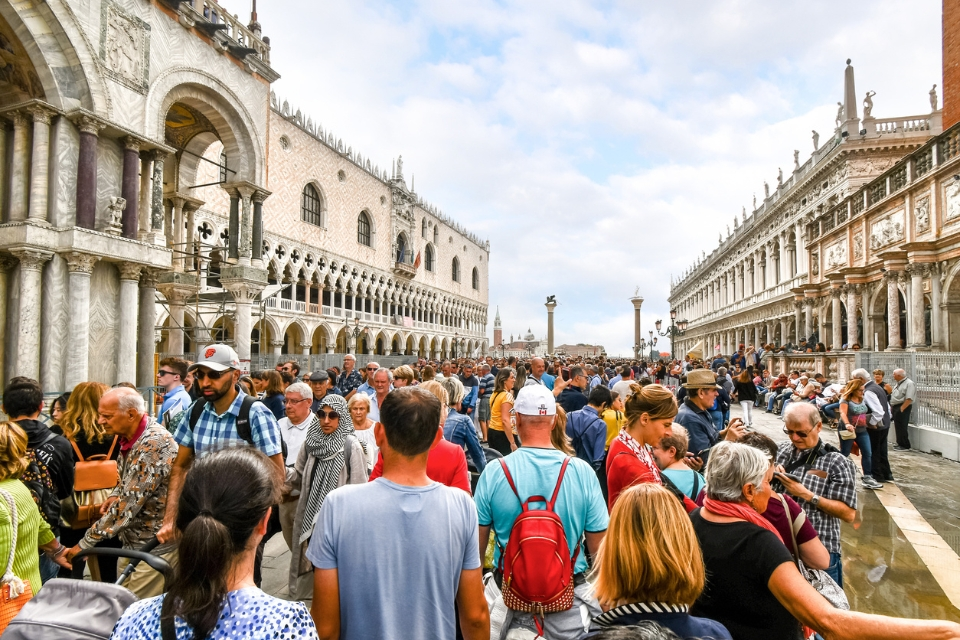
The Nervous First-Timer
Best picks: Portugal, Japan, New Zealand
- Portugal: widely spoken English, walkable cities, affordable by Western European standards, great food, warm locals
- Japan: bulletproof infrastructure, bilingual signage, virtually no crime, convenience stores that actually convenience — cultural distance is real but manageable
- New Zealand: English-speaking, famously friendly locals, excellent infrastructure, staggering landscapes that do the heavy lifting
For solo women specifically, our roundup of best solo trips for women covers safety and budget context per destination.
The Culture Seeker
Best picks: Italy, Mexico City, Morocco
- Italy: unmatched density of art, architecture, and food — pick one region and go deep rather than racing between cities
- Mexico City: world-class museum scene, extraordinary food culture at every price point, distinct neighborhoods, safety concerns concentrated well away from tourist areas
- Morocco: intense sensory immersion, unlike anywhere else — rewards travelers who do a little homework on how to navigate the medinas
The Nature Lover
Best picks: Costa Rica, Iceland, New Zealand
- Costa Rica: cloud forests, volcanoes, and Pacific coastline in one small country — excellent ecotourism infrastructure, remarkable wildlife
- Iceland: alien landscapes, northern lights, midnight sun — rent a car and drive the Ring Road, stopping whenever something looks incredible
- New Zealand: best-organized hiking infrastructure in the world, Great Walks accessible even to first-time backpackers
The Budget Traveler
Best picks: Vietnam, Portugal, Poland
- Vietnam: world-class street food priced for locals, comfortable accommodation at a fraction of Western prices, three weeks barely covers the country
- Poland: Eastern European prices, Western European history — Kraków's Old Town rivals anywhere on the continent, Auschwitz day trip is essential
- Portugal: bridges budget and quality better than almost anywhere in Western Europe
The City Person
Best picks: London, Barcelona, Tokyo
- London: English-language, intuitive transit, free world-class museums, neighborhoods that each feel like a different city — budget carefully, it's expensive
- Barcelona: Gaudí architecture, beaches, great food, extraordinarily walkable — adjust to the schedule (dinner at 9pm, nightlife at midnight)
- Tokyo: the most functional large city on earth, extraordinary food at every price point, endlessly surprising neighborhoods — first-timers are almost universally overwhelmed in the best possible way
Overrated Picks, At Least for Your First Trip (and Why)
All of these places are amazing spots you should visit someday, just perhaps not when you’re traveling for the first time.
Paris
Paris is one of the greatest cities in the world. It is also, in peak summer, one of the most exhausting places to be a first-time tourist. The city is expensive, the metro can feel hostile to newcomers, and a small but persistent industry exists around tourist-targeted scams near major landmarks.
Bali
Bali's Instagram reputation and its ground-level reality have drifted further apart than almost any destination on earth. The version most first-timers encounter is Kuta and Seminyak: traffic-clogged, aggressively tourist-oriented, and built almost entirely around the wants of Australian and European package tourists.
Rome
Rome belongs on this list not because it's a bad destination — it's magnificent — but because it's almost impossible to visit without making the classic first-timer mistakes that leave people exhausted and underwhelmed. The Colosseum without a guided tour is a crowded ruin with limited context. The Vatican in peak season is a logistical ordeal. The area around the Trevi Fountain at any hour resembles a mosh pit more than a baroque masterpiece.
Santorini
Santorini is perhaps the most extreme example of a destination that exists primarily as a photograph. The whitewashed buildings, the blue domes, the caldera views — they're real, and they're genuinely beautiful. The experience of being there in July or August, however, involves sharing those views with cruise ship day-trippers by the thousands, paying extraordinary prices for ordinary food and wine, and navigating an island whose infrastructure was not designed for the volume of visitors it now receives.
Where Are You Excited to Travel to for the First Time?
No destination is perfect. Every trip has a bad day, a missed train, a restaurant that's closed when you arrive. That's not failure — that's travel. The discomfort is where the good stories come from, and the recovery is where you find out you're more capable than you thought.
Pick one destination from this piece. Open a tab. Look at flights. The rest figures itself out on the road.