



Twenty years ago they swapped the Chilterns for the seafront, and it was the best decision they ever made. But if you are now searching for nursing homes in Eastbourne from your kitchen table in Buckinghamshire, or looking into the specialist dementia care West Sussex has to offer, you already know how complicated love at a distance can become. Thousands of home counties families are in exactly this position, supporting parents who retired to the south coast and now need more than an occasional visit can provide.
The good news is that finding excellent care two counties away is entirely possible. It simply asks for a slightly different approach, and this guide will walk you through it.
The Gap Between Visits
When you live around the corner from a parent, change creeps up gradually. When you live a two-hour drive away, it arrives all at once. Families supporting parents from a distance often describe the same experience: everything seemed fine on the phone, and then a visit reveals the post piling up, the fridge nearly empty, or medication muddled.
These moments are hard, but they are also useful. They are the pattern that tells you it is time to explore more support, while your loved one can still be part of every decision. Other signals worth noticing include night-time becoming a source of worry, a recent fall or hospital stay, or a husband or wife quietly exhausted from caring for their partner alone.
When Nursing Care Is the Right Fit
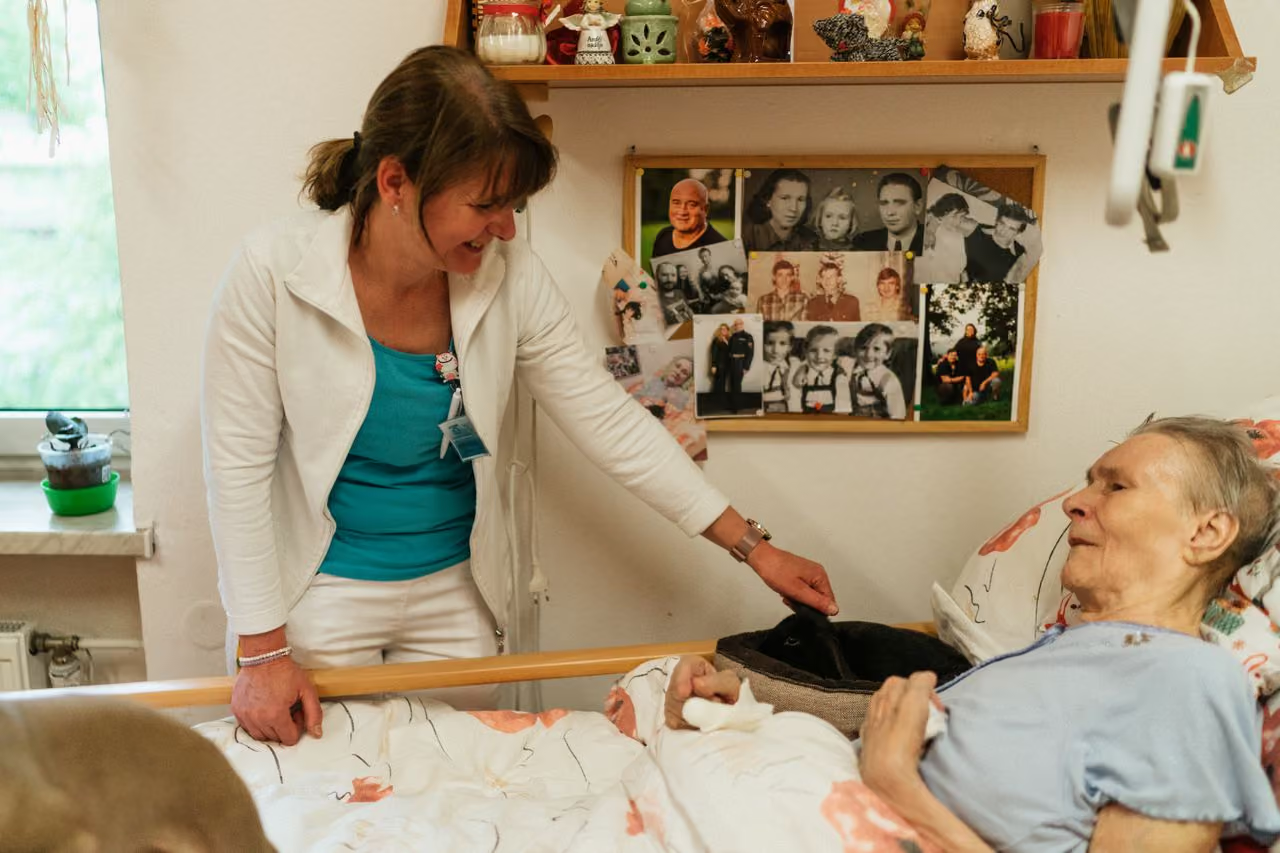
If your loved one has ongoing health needs, such as managing complex medication, recovering after a stroke, or living with a long-term condition, nursing care provides a depth of support that is difficult to arrange at home, however many carers visit each day.
With registered nurses on site 24 hours a day, nursing care provides reassurance that expert support is always available.
Compassionate care teams work closely with residents and their loved ones to help each person live with dignity, comfort and as much independence as possible within a safe and supportive community.
For a family two counties away, that round-the-clock expertise means something more personal too: you can stop being the emergency plan, and go back to simply being their daughter or son.
Understanding Specialist Dementia Care
With no two days ever feeling the same, living with dementia can sometimes feel confusing or challenging. Specialist dementia care teams provide round-the-clock support, helping each person to continue living a purposeful and fulfilling life. A key focus is creating a familiar and reassuring environment that helps people feel at ease, comfortable and better able to engage positively with daily life.
For families supporting a parent with dementia from a distance, this specialist environment often brings the greatest relief of all. The routines, the familiar faces and the thoughtfully designed spaces do the reassuring work that a weekly visit, however loving, cannot.
How to Research Coastal Care Homes From Buckinghamshire
You cannot pop into six homes on a Saturday morning when they are all a motorway away, so let the research tools do the first round of shortlisting for you.
Carehome.co.uk is an independent review website for relatives of residents living in a care home. Every review submitted is independently verified, providing insight into each home from the families who know it best. Homes receive an overall rating, and you can read the full reviews and individual scores behind it, giving you a genuine sense of what daily life is really like there. For long-distance families, these first-hand accounts are gold.
The Care Quality Commission (CQC) also publishes inspection reports for registered care homes in England, which you can read online for additional background. It is worth knowing that some newly opened homes may not yet have been inspected, so recent family reviews and your own visits remain the most telling guide.
Shortlist two or three homes, then plan a visiting day on the coast and see them back to back. The contrast between homes is often what makes the right one obvious.
What to Ask When You Visit
Make the questions reflect your situation as a family at a distance. Ask how the home keeps relatives informed between visits, whether the team helps arrange regular video calls, and how quickly you would hear if anything changed. Ask whether you can join your loved one for lunch when you do make the journey, and whether there is somewhere comfortable to spend a whole afternoon together.
Then ask the questions every family should. How would the team get to know your loved one in the first few weeks? What does an ordinary Tuesday afternoon look like? How often do the same team members provide their day-to-day care? Familiar faces matter enormously, especially for anyone living with dementia.
A Brief Word on Funding
Care fees vary with the level of support your loved one needs. The first practical step is a social care assessment from the council where they live, whether that is East Sussex County Council or West Sussex County Council, as it clarifies what help may be available whatever your circumstances. Where needs are primarily health-related, it is also worth asking about NHS Continuing Healthcare. A good home will talk you through fees openly and without pressure. And once the move is settled, many families also find themselves facing the emotional job of clearing out the family home they're leaving behind.

Love Travels Well
Distance makes this decision feel heavier, but it does not make it any less an act of love. The right community on the coast will give your loved one company at every mealtime, expert support through every night, and a life that is full between your visits rather than paused until you arrive. And it will welcome you warmly every time you come, because the best homes know that family is part of the care. Take your time, ask everything on your mind, and trust what you feel when you walk through the door.