
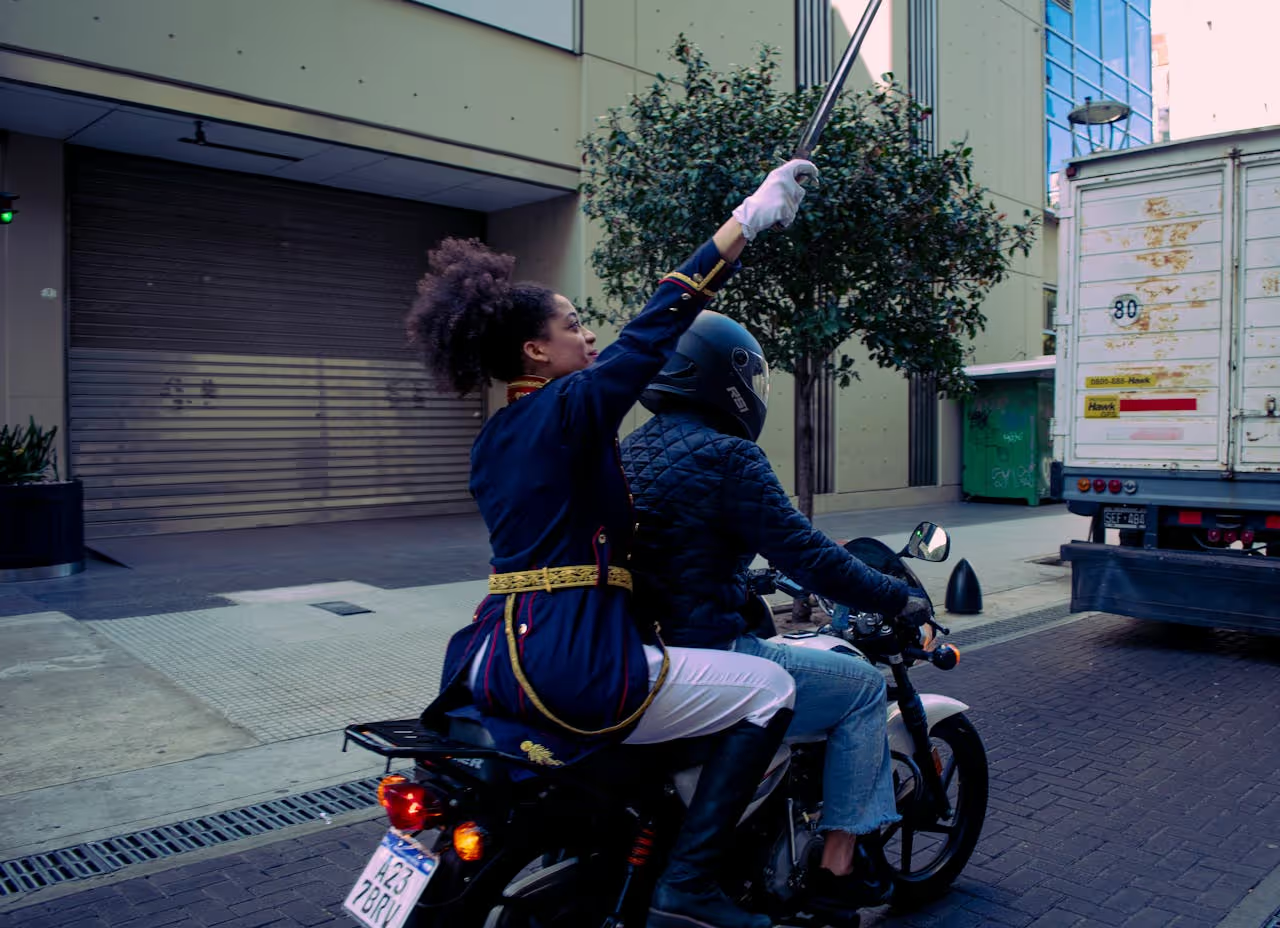


If you scan the headlines, it's easy to believe that chivalry is just another thing that these darn younger generations have stamped out with their hookup culture and their cell phones. That along with napkins and diamonds, the practice of chivalry has gone the way of affordable college and leaded gasoline. That the good, wholesome manners which once prevailed in the world of dating and courtship are long gone, and they're never coming back.
But not only do I think they're wrong, I think they're kind of missing the point.
Somewhere between the feminist critique of door-holding and the manosphere's insistence that women "don't appreciate nice guys anymore", we lost the actual thread of the argument. Chivalry is just the scapegoat. The question is not about who pays for dinner or who texts firsts. Not whether opening a car door is sweet or condescending.
It's about how we treat the people we claim to admire when modern dating has become faster paced, less rewarding, and more demanding than ever before. When the average cost of a date is approaching $200, being able to hand the waitress your AmEx is more defined by your paycheck than what kind of person you are or what you value. So the real question becomes: how should we put in the effort?
The idea of chivalry is as relevant as it's ever been. We're just having the wrong argument about it.
We're taking a look at all the angles, including:
- Chivalry's massive branding problem
- What "chivalry" looks like in the modern world + if it's still worthwhile
- How to embody the things that chivalry got right
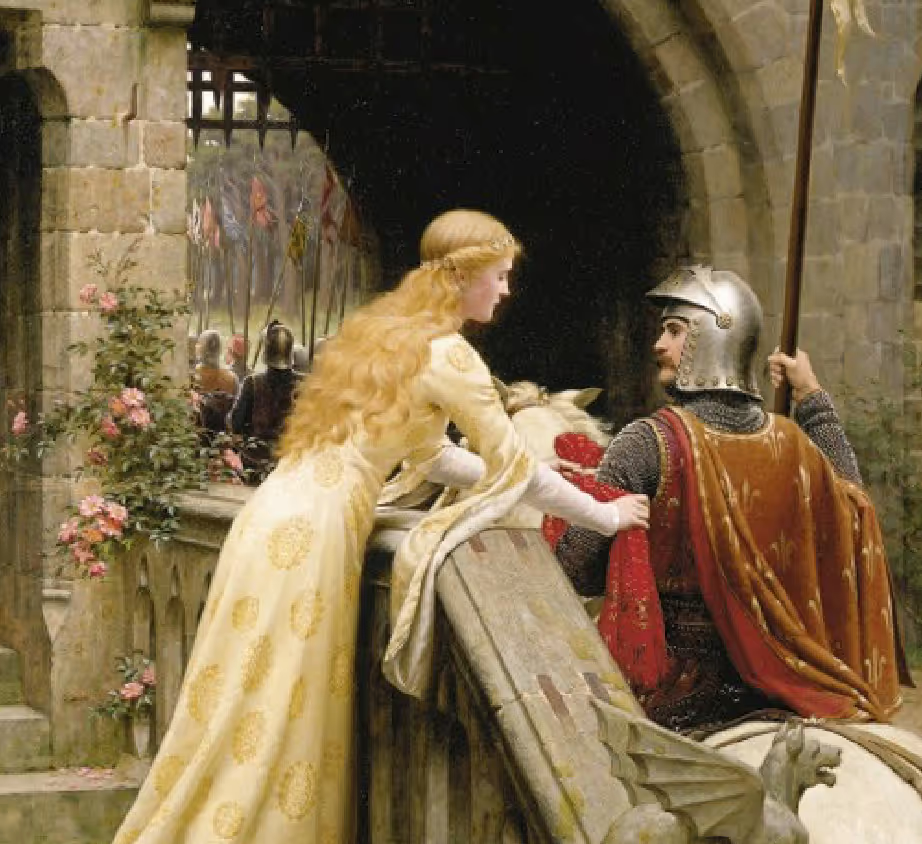
Chivalry is a nice-ish idea with a terrible branding problem.
Chivalry as a concept seems nice at first glance -- Courage! Honor! Protecting those who cannot protect themselves!
But if you look any closer it gets iffy quickly. Knights pledging fealty to ladies might be romantic, but the whole thing is predicated on women being treated as objects to be won and protected rather than people to be known. You don't have to spend long on the history before it starts to get uncomfortable. The people who argue that chivalry was always a little bit gross are not wrong. But that doesn't mean that every chivalric ideal is inherently wrong.
When we rethink one aspect of a larger whole and realize it's not okay, we have a tendency to throw out the whole thing.
When the specific gestures got questioned (and some of them deserved to be) a lot of people took that as permission to stop making gestures entirely. If I don't have to open the door, I don't have to do anything. If splitting the check is fine now, I'll just Venmo my half and go home.
But just like it's probably not worth boycotting an otherwise cogent and thoughtful show because they got one episode wrong or failing to acknowledge people who made mistakes ten years ago, got cancelled, and changed their ways are no longer the problematic person they once were, it's not worth throwing out the entire idea of "doing nice things to demonstrate care toward the people you like" just because the origins and applications of chivalry over the years have been less than cool.
The romantic gesture was replaced by nothing. And that is where it actually went wrong.

Sometimes it's okay to cherry-pick the best parts.
What the best version of chivalry was always doing -- underneath the doors and the pulled-out chairs and the walking on the street side of the sidewalk -- was communicating something. I value you. I see you, and I made a deliberate choice to do something for you. You matter that much to me.
And even if we're not saying it the same way, communicating that kind of positive regard is still necessary.
The specific form it takes has changed, and honestly, good. The new version is less about performance and more about paying attention.
It looks like actually planning something instead of "what do you want to do" every single time. It looks like remembering what someone told you last week and asking about it. Following up after a hard conversation to make sure things landed okay. Noticing when someone's uncomfortable and doing something about it instead of waiting for them to say it out loud.
It looks like: paying for the first date, probably, because that gesture still says something, although maybe it's saying something different. Not that you're the Provider™ or that you expect something back, but that you wanted this, you made it happen, and you're glad they're here. And then maybe it looks like the other person getting the next one because they feel the same way about you.

What we talk about when we talk about chivalry.
When people talk about wanting to "bring back chivalry," it's because they really are mourning something. Even if they're mostly using the language of specific gestures like picking up the tab, what they're really saying is that they miss the effort. They're lamenting the feeling that nobody's willing to put in effort anymore, that dating has become a series of low-investment encounters where the exit is always a few taps away and nothing requires actually investing in, emotionally or otherwise.
And honestly, yeah. That's part of why dating is so hard in your 20s, and it's part of why nearly half of US adults report dating is getting harder year after year.
When potential partners are theoretically infinite and easily replaceable, putting tons of effort, even an appropriate amount of effort, into every match just isn't feasible. Why invest in this person when the app will show you twenty more by Thursday? The swipe economy is designed to reduce stakes. Low barrier in, low investment, low risk of losing something.
The side effect: low investment becomes the norm, so people start to think that's just how things are.
We start to feel like there's no reason to behave better than the system asks us to because we'll just end up wasting time, wasting money, and getting our hearts broken by people who aren't putting the same energy in.
But this isn't how it always was, and it's not how it always has to be.
Don't get me wrong. Dating has always been nerve-wracking. It can be performative and vulnerable, uncertain and awkward and expensive in a whole bunch of different ways. But it used to require more effort as part of the process, like showing up somewhere in person, having conversations you couldn't exit out of to keep scrolling Reels, or even the social effort of convincing your room mate to set you up with her cute brother please, roomie, please.
Tinder launched in 2012. The average American now spends roughly two hours a day on dating apps.
The structure of our dating lives changed way faster than our social scripts did. We didn't have time to figure out a framework for any of this, a way to do this well, which is why everything feels so stuck. There's no digital chivalry. And that's why we need real-world chivalry more than ever, or at least the modern version. Chivalry 2.0.
The part of chivalry that's worth keeping is the polar opposite of swipe culture and microghosting and massive shady Telegram chats.
It's fundamentally about how we choose to value and respect the people around us.
It's the choice to be deliberate about someone when you could just as easily not be. To do something that takes actual thought, even though there's no guarantee you'll get so much as a thank you in return.
It's about choosing to treat the interaction like it matters because it matters to you, end of sentence. And letting that be enough on its own, regardless of what it means to the person you're pining after or anyone else. It's not about having loved and lost or loved and won, it's about having loved. Putting something good into your interaction with someone just because that's how you feel and for the simple pleasure of caring for another human being.
That's still what makes people feel seen. And its absence of it is still what makes people feel disposable.
There's no room for gendered standards of chivalry anymore.
The gendered part of this whole conversation is also worth addressing, mostly because it limits the conversation in a way it doesn't have to.
There's no particular reason that choosing to show up thoughtfully for someone should belong to one gender and not another. In fact, it's better for everyone if it's a baseline of decency that we all maintain. Loneliness isn't a gendered issue. We all long for human connection, and we're all most likely to turn to a partner to find it.
What people want from early romantic relationships is consistent and pretty clear: to feel noticed, pursued, and cared for. Those needs don't vary much by gender. We choose kindness in our long-term partners.
(What does vary is how they're expressed, which is exactly why paying attention to the specific person you're with matters more than following any script based on gender or anything else.)
Which means chivalry, or whatever we end up calling it, is something everyone can do. The question isn't "should men be chivalrous?" Nor is it whether chivalry is worthwhile or oppressive, nice but outdated or restrictive and harmful. It's about the standards of behavior we hold ourselves to when there's nothing directly in it for us.
When the only thing we have to give is our time or our attention, do we show up?
Are we deliberate? Do we choose them, and how? How much, at what cost?
Again, these question doesn't belong to any one gender. And neither does the answer.

Caveat: not everyone is in it for the right reason.
Okay, so all of this is coming from a place of valuing others and our relationships with them above almost all else. I'm making assumptions about people having good intentions, longing for connection and hitting a disconnect. And while I do think people are generally good, it's worth adding the footnote that not everyone is approaching the question of chivalry the same way or with these same intentions.
There's a version of "bring back chivalry" that isn't really about connection at all. It's about wanting someone to invest in you without having to match that investment. Expecting romantic gestures, without the corresponding responsibility to communicate, to be present, to show up in return. That's not chivalry. It's just entitlement hiding under the guise of romance.
And there's also a version of "chivalry is sexist" that isn't really about equality. It's about not wanting to be inconvenienced by someone else's feelings. The desire to avoid anything that might communicate care, because care creates expectations, and expectations create pressure or requirement commitment. That's not being an advocate for equality, it's just an excuse to do less than the bare minimum with a lazy attempt at reframing.
But regardless, the very fact there's still so much to say on the topic of chivalry proves that it's far from dead.
Chivalry isn't entirely an outdated system or the ultimate modern dating green flag. It's complicated, and at the same time, it's also pretty simple.
The real answer to how we should engage with the idea of chivalry in the year of our lord 202whatever is remarkably ordinary, just more demanding than either of the positions above could be bothered to uphold.
It's simply: pay attention to the person you're with. Do something that communicates they matter. Accept that relationships require deliberate effort and offer that effort before you're guaranteed a return.
That practice -- not the word, not the history, not the doors and the dinner bills -- is what people miss when they say chivalry is dead.
It isn't dead. It's just not showing up. And the question of whether it makes an appearance again is entirely up to you.