


Okay, so. The elephant in the dorm room. High school doesn't actually require you to know how to take notes.
You might even skate through your first couple semesters in college without sitting down and figuring out a strategy because you're knocking out gen eds and intro classes. But there will come a time at some point in your academic life where you look at the notes you took in lecture and think to yourself: oh no, these are useless.
Taking notes for college is a skill like any other. Good news? Like making friends or making the most of your time, you can learn it, even if you've never had to until now.
Whether you're gunning for a 4.0 or just trying to get your money's worth from your classes and prepare to step into a career, this is what you need to know.
I didn't know this stuff when I got to college. That's why my GPA my first semester was not so great. After I learned how to actually study? I graduated summa cum laude in my major. And if I can do it, you can too.
So don't spend the rest of the semester struggling. Here's how to make your notes count.
Common College Note Taking Mistakes
Before getting into methods, it's worth diagnosing the most common note-taking mistakes — because most people are doing at least one of them.
‼️ Trying to get it all.
You literally can't write everything down. Allow me to repeat: you can't write everything down. Not only will it land you with a massive wrist cramp within the first ten minutes of lecture, it's not even really valuable. It's tempting though -- particularly when you're starting out. How do you know which anecdotes are going to come back later? There's a real category of professors who like to formulate test questions based on material you can't find in the textbook or the slides, that you'd only get if your butt was in the chair in class. So how do you know what you'll need to know until you need to know it?!
It's nerve wracking. I get it. But learning to suss out what's important on the fly and how to jot down enough to trigger your memory without falling behind the discussion happening around you is probably the biggest learning curve in taking notes effectively. There are strategies to help, which we'll get to below. But this isn't a generic platitude. You've heard this one before because it's just a fact.
‼️ Transcribing instead of thinking.
The goal of taking notes is not to produce a transcript of the lecture. It's to capture the ideas in a form that will jog your memory so you can recall and think through the material later. If you're typing everything the professor says word for word (kudos, you've gotta have a crazy WPM, but) you're not really processing the material, which means the act of notetaking won't help it stick. And sure, taking notes usually isn't enough to lodge every idea in your long-term memory -- you'll still have to study a lot of it later. But it can be a valuable part of encoding those memories if you take notes the right way.
Plus -- coming back to the pesky question of where professors get their exam material: memorizing the material isn't usually enough for college exams. You need to know how to apply it. At the high school level, learning the names and dates was usually enough to ace an exam. College exams usually go a step further. You need to know the names and dates, but then you need to know the why behind what happened or be able to extrapolate from that information to interpret or solve new problems. Which demands a level of understanding that's quite a bit deeper, and if you start thinking that deeply about the material from the first time your pen hits the paper, you're just that much more prepared.
‼️ Highlighting everything.
Highlighting feels productive and produces almost no learning. Research on study strategies consistently shows highlighting is one of the least effective techniques for retention. If everything is highlighted, nothing is. So use it sparingly, if at all.
‼️ Skipping the review sesh.
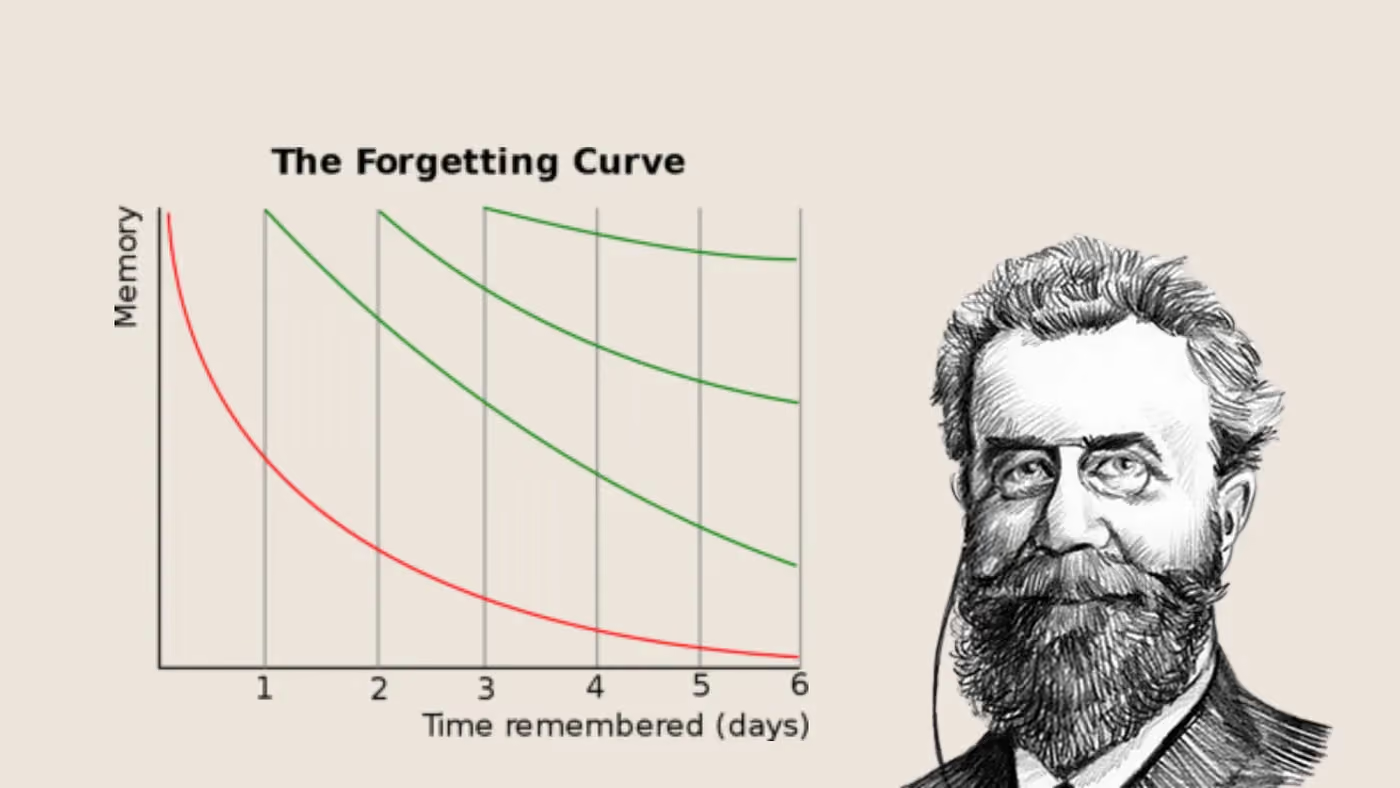
This is another biggie. The research on the forgetting curve -- first described by Hermann Ebbinghaus in the 1880s and replicated many times since -- shows that without review, people forget roughly 70% of new information within 24 hours. Yikes??? Notes you took in Tuesday's class and don't look at until the Sunday before the exam are not saving you nearly as much as you think they are. On the flip side, spaced repetition -- coming back to the subject repeatedly even if you don't spend that long on it during each session -- is one of the best ways to learn material for real.
Notetaking Methods Worth Knowing
You don't just have to whip out a notebook or laptop and start from scratch. People have been taking lecture notes for a long time, and there are some tried and true, research-backed strategies you should be aware of if you're trying to find a notetaking method that works for you.
A 'lil caveat: The best notetaking method is the one that works for you. So don't be afraid to cherry pick the best parts of systems like these to build a Frankenstein strategy that serves all your needs. You can throw a summary at the top and then build a mind map. Or label keywords but build an outline in the middle of the page. You can do something totally different. But start with these building blocks, and you should be able to come up with a system that isn't just wasting your time.
The Cornell Method
Developed by Walter Pauk at Cornell University in the 1950s, the Cornell method is the most research-supported structured note taking system for lecture-based learning. Why? Reviewing the notes you take is easy to skip or skimp on, particularly as the semester picks up. But the Cornell method bakes review right into the process.
The page is divided into three sections:
- Notes: The wide right column (about two-thirds of the page), where you take notes during class — as much or as little as you can capture.
- Cues: The narrow left column, which you leave blank during class and fill in afterward with questions, keywords, or prompts that your notes answer.
- Summary: The bottom of the page, where you write two to three sentences capturing the main idea of the page.
After all parts of the page are filled in, you can cover the right column and use the cues to quiz yourself. If you can answer or explain the cue without looking at your full notes, you know the material. If you can't, you know exactly where the knowledge gap is -- and your notes on the subject are right there for you to study.
A 2011 study in the Journal of College Reading and Learning found that students using structured note-taking methods including Cornell performed significantly better on recall tests than students using unstructured approaches, particularly on conceptual questions rather than factual ones. So the benefit wasn't just better notes. It was how much engaging with the material after class boosted scores.

The Outline Method
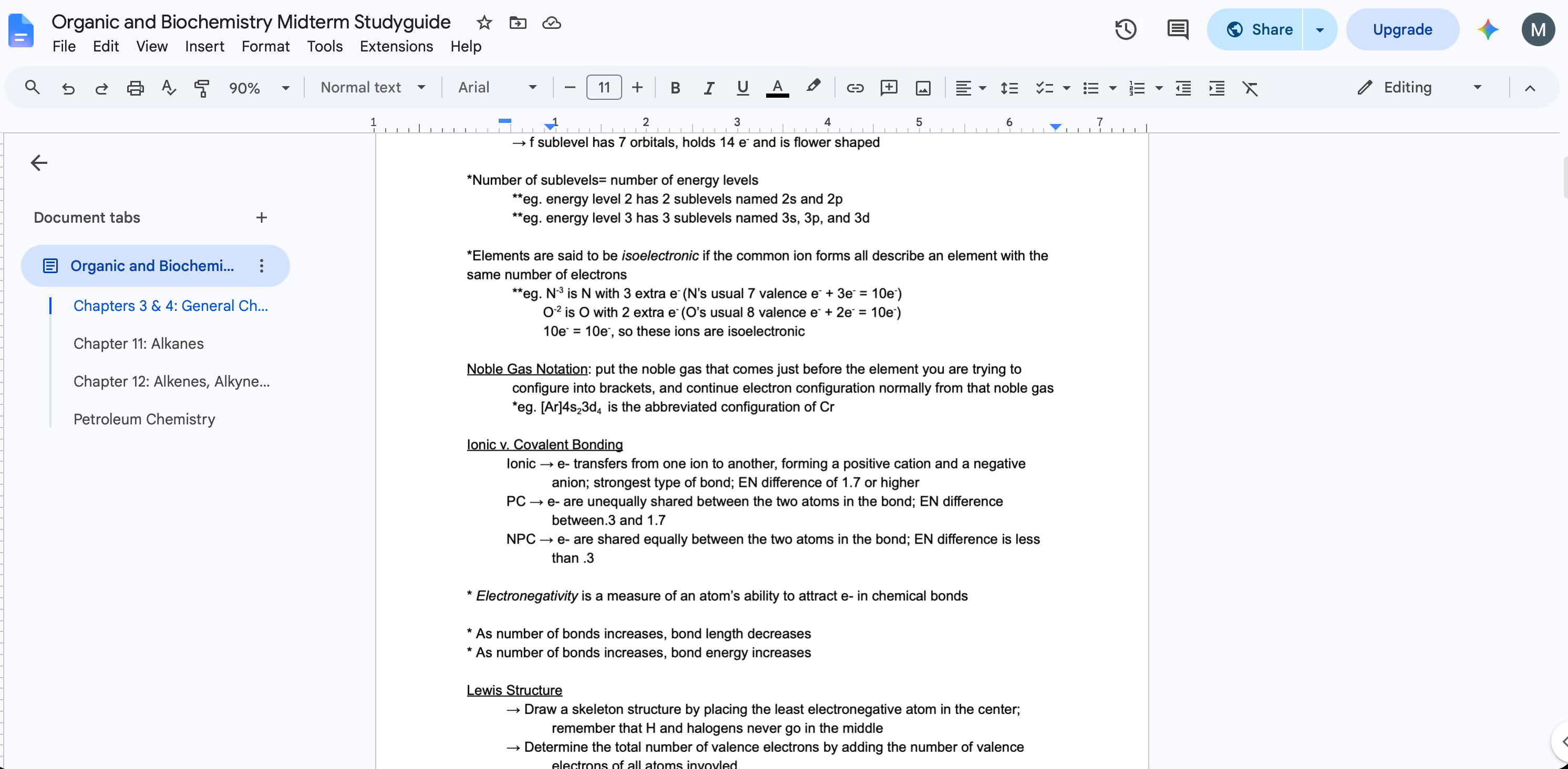
The outline method is the default approach for most people who were taught any note-taking structure at all. It's just... an outline. Hierarchical bullet points, with main ideas at the top level and supporting details indented beneath them. It's intuitive, fast, and works well when the lecture has a clear structure and you need to move fast.
The risk is that it can encourage passive transcription, which means it won't help you remember much on its own. You're organizing information as it comes rather than processing it. That said, people have been using this strategy forever, and you can work around that. The fix is to just to pause and ask whether the thing you're writing is a main idea or a supporting detail, which forces a moment of active categorization rather than pure recording. Or be disciplined about going back and highlighting key points, vocab, questions, whatever after class. Anything that forces you to actually think about what you put down on the page.
Mind Mapping
Mind mapping starts with a central concept written in the middle of the page, with related ideas branching outward and connecting back. It's nonlinear and visual, which makes it genuinely better than outlines for certain types of content — specifically content where the relationships between ideas matter as much as the ideas themselves.
A psychology lecture on cognitive biases, a biology lecture on ecosystem relationships, a philosophy discussion about how different ethical frameworks connect — these are all cases where a web of connections is more honest to the material than a hierarchy of bullet points.
The limitation is speed. Mind maps are harder to build in real time during a fast lecture because you're making spatial decisions about where each new idea goes while also trying to listen. Most people find mind mapping more useful as a review tool — reorganizing linear lecture notes into a map after class — than as a primary capture method.
The Charting Method
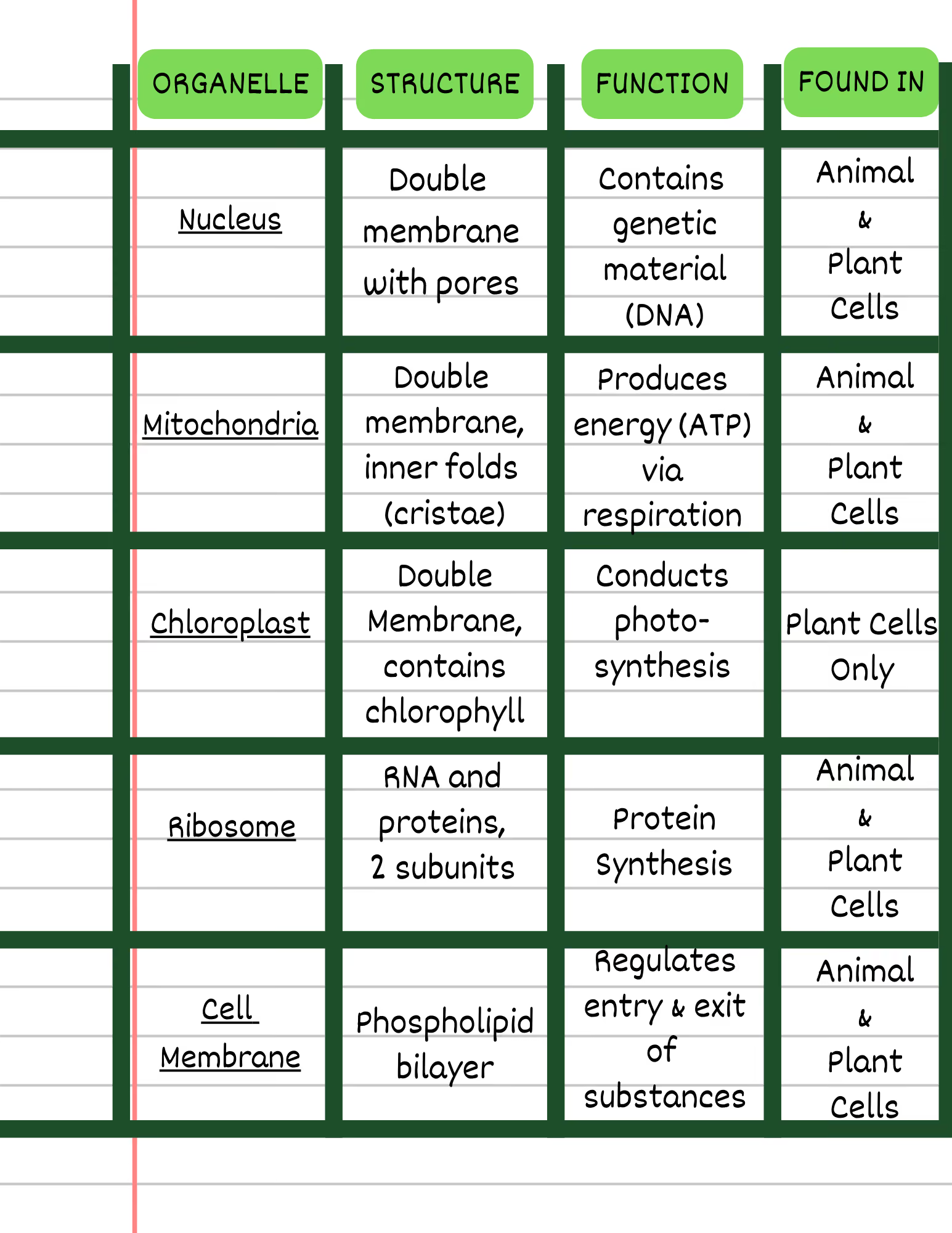
The charting method uses a table or grid structure — categories as columns, examples or instances as rows. It's highly specific and highly effective for a particular type of content: anything where you're comparing multiple things across the same set of attributes.
Chemistry comparing reaction types. Economics comparing market structures. History comparing different political systems or time periods. Art history comparing movements or artists. Any class where you'll need to keep straight how multiple things differ from each other along consistent dimensions.
The setup is more involved than other types of notes since you've gotta lay out the columns before you start, which means you also have to put in a little time before lecture to understand the structure of what you'll be covering so you're ready to jot information down in class. Pay attention to the first few minutes of lectures and the slide titles if you have them available in advance, and you'll usually have enough to set up the chart.
The Sentence Method
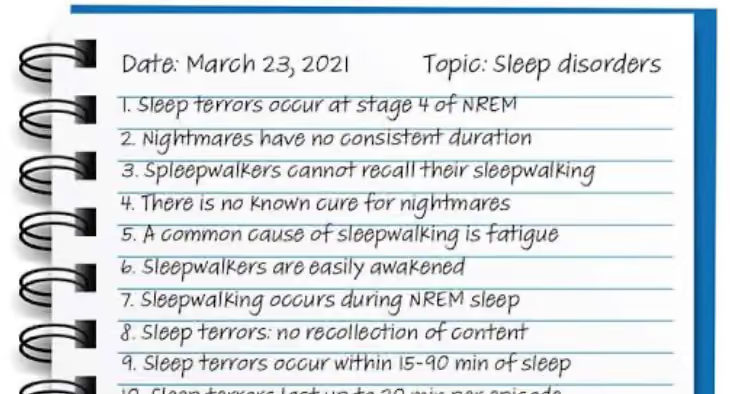
The sentence method is exactly what it sounds like: write each new thought as a numbered complete sentence. No hierarchy, no structure, just capture everything in sequence.
It's not elegant. It doesn't force you to synthesize the information or organize into cause/effect, chronological order, or any order at all. It produces notes that are harder to study from than structured methods above. It kind of feels like Bart Simpson at the chalkboard during the opening credits, and we all know those lessons aren't sticking.
Which I know sounds negative, but that doesn't mean there's never a place for it.
The sentence method genuinely can be the right choice in specific situations, like fast-paced lectures where you're falling behind, classes where you don't know the subject well enough yet to know what's important, or any situation where getting the information down is the priority and organization can happen later.
Just like with the outline method, the key here is the "later" part. To get the most out of sentence method notes, you'll need to do some processing your notes after class. Plan to spend time the same day reorganizing the raw capture into something more structured, typing handwritten notes into two docs (detailed notes + shorter summaries), writing study questions for yourself, just something.
Otherwise you'll have pages and pages of numbered sentences that are difficult to study from and whose organization reflects the order they were said in, not the order they make sense in.
Digital Notetaking Methods
A widely cited 2014 study by Mueller and Oppenheimer found that students who took notes by hand performed significantly better on conceptual questions than students who took notes on laptops, even when laptop users were told not to transcribe verbatim. The researchers concluded that the slower pace of handwriting forces more processing and summarization, which produces better retention. That writing by hand is more engaging than typing. (PS - follow-up studies haven't been as conclusive, but this one is pretty embedded in popular knowledge at this point).
Anyway.
The reality of the situation is that digital notetaking is more practical for a lot of students. Some professors move too fast for handwriting to keep up. Some classes involve technical diagrams or code that are genuinely easier to capture digitally. Some people type fast enough that the speed difference isn't meaningful. Which is why we're not going to write digital notes off as useless, we're going to talk about how to make sure your digital notes help you learn just as effectively as any other kind of notes.
The elements that made the structured notetaking methods above effective are going to follow through here, too. Actual learning is about figuring out how + what to jot down in class, organizing and thinking about it later, and coming back to it repeatedly. If there's a formula for learning, that's it, whether your method is digital or analog.
General Tips for Using a Laptop in Class
You don't have to go all digital notes or all handwritten. It's very, very common to use a combination of both. You can take rough notes on a laptop during class to keep up with the professor's pace, then rewrite important details by hand within the next 24 hours. The rewriting process is itself a form of active recall that significantly improves retention, and handwriting forces you to condense rather than copy typed notes word for word.
If you use a laptop: close every tab that isn't your notes, or at least create a separate desktop for them. Notification sounds off. This is not optional. The research on multitasking and learning is brutal. Switching attention between a lecture and anything else, even for the fraction of a second that little email ping invades your brain space, leads to significant comprehension and retention loss.
Tablet + stylus (iPad with Notability, GoodNotes, or similar)
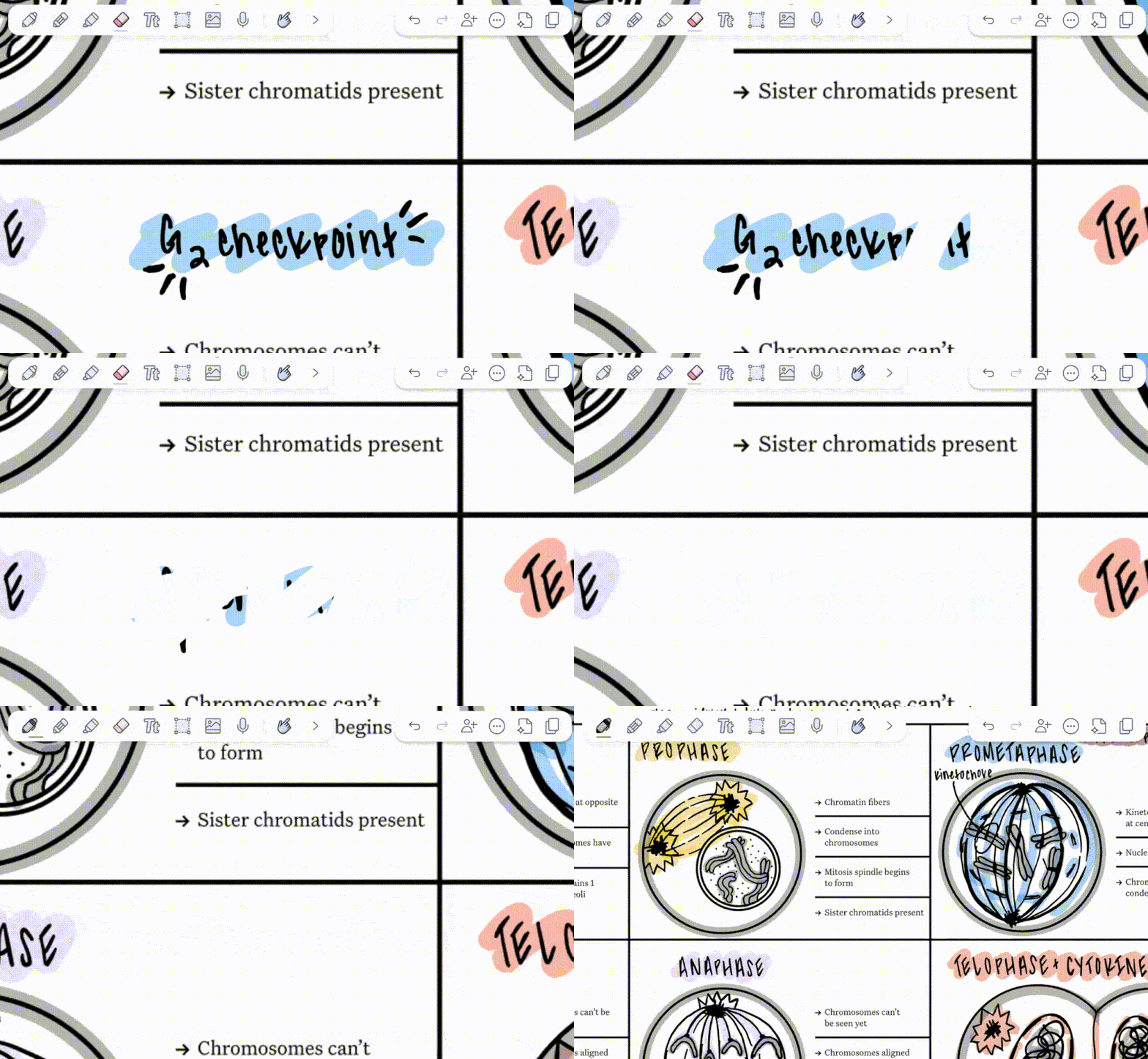
Taking handwritten notes on a tablet combines the retention benefits of handwriting with the convenience of digital — notes sync across devices, are searchable, can be annotated on top of lecture slides, and don't require carrying physical notebooks for every class. Awesome.
Notability and GoodNotes are the two most popular platforms for this. Both let you import PDFs (including lecture slides) and write directly on them. Both sync to the cloud. Notability has audio recording that syncs with your notes so you can tap a word and hear what was being said when you wrote it — genuinely useful for lectures that move fast. GoodNotes has slightly better organization and template options.
The limitation is price tag. College is already expensive. A tablet, a good stylus, and a notes app subscription are yet another expense. If you already have an iPad, adding a stylus and one of these apps is cheap and easy enough. But if you're buying a tablet specifically for notes, it's worth weighing against how useful it'll actually be.
Notion
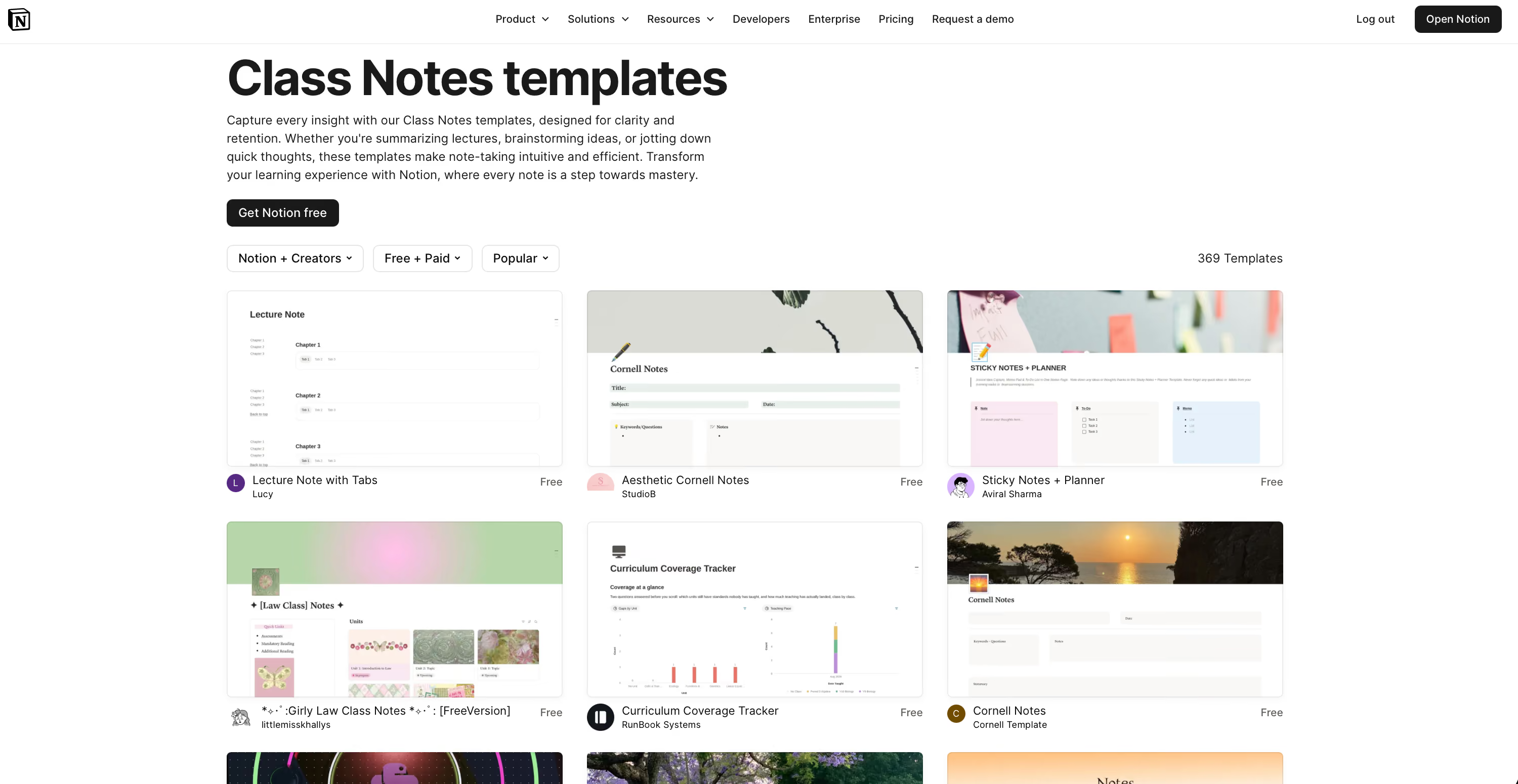
Notion has become the productivity platform of choice for a lot of people. If you spend an hour figuring out how it works, it's pretty intuitive and makes it easy to set up aesthetic notes you can access anywhere. The internet is full of elaborate Notion-based study systems, which certainly is an option. If this sort of thing is your vibe, you can also get pretty far with Notions free class notes templates -- also good for trying the platform out before you buy a $20 template from someone's online shop.
Just be careful because it's easy to get carried away. If you're the sort of person who will procrastinate writing an essay by scrolling through 500 fonts to find one you like marginally better than Arial, Notion is a minefield. Lots of people, including regular users, admit that sometimes they spend more time building elaborate systems than actually using them for their intended purpose.
Google Docs
Still generally good. Universal, free, syncs everywhere, real-time collaboration for group notes, and the learning curve is zero. It's all there. The limitations are mostly aesthetic and organizational rather than big issues with the functionality. It's a word processor, and organizing notes across an entire semester's worth of classes in Google Docs requires discipline and maybe a well-thought-out system of folders.
Save yourself headaches later and create a folder for each class at the start of the semester and name files consistently (date + topic). That way when it's time to study for midterms or write your final paper, you aren't staring at a Drive full of documents called "notes" and "notes2" and "class notes final." 🥲
Something people do not like about Docs these days: the potential use of AI. Whether it's just using the contents of your docs when you use the on-page AI features or to train Gemini (which to be fair, Google has said outright is not the case) -- it's raised red flags for a lot of people about the privacy and security of their files on the platform.
Word
Another plain old word processor Microsoft Word is fine for note-taking and familiar to most people, but the cloud sync and collaboration features are weaker than Google Docs unless you're on an institutional Microsoft 365 account, which many universities provide. Worth checking whether your school gives you free access, probably not worth paying for out of your own pocket.
Alternative Writing Software
For writers specifically, there are a lot of apps out there that are great for writing projects and also work great for college notes. Ulysses, iA Writer, and similar software offer a focused environment, some customization with themes or templates, and you can usually set up a page or chapter system within their default organization that makes keeping notes organized pretty intuitive.
They don't support a lot of tablet features like drawing or handwriting-to-text the way dedicated notes apps do, but they can still be useful for seminar notes if you're more comfortable with this type of software or you're taking notes that you'll eventually turn into papers.
Ellipsus deserves a mention as a Google Docs alternative with stronger customization, better writing-focused features, and a data policy that doesn't retroactively claim your content for AI training, which Google Docs's terms have become increasingly vague about. And don't worry, you can still use it to collaborate and view notes across devices.
Which one is best for digital notes?
Use whatever has the smallest learning curve for you and you'll actually open. The perfect system you spend a week building and then abandon is worse than Google Docs you use consistently for four years. Note taking tools are almost not about the functionality at all -- there are a million platforms that let you type out words and save them. So just figure out what structure works so well you don't even notice it, and stick with it.
The 24-Hour Rule
This is the single most impactful habit change available to most college students who are struggling with their notes and don't know why.
Review your notes within 24 hours of taking them. Not study them, just review them. Read through them, fill in anything that's unclear while the lecture is still fresh, add the Cornell cue column if you're using that method, write a summary. Ten to fifteen minutes, same day or the next morning while you're eating breakfast.
The forgetting curve research is consistent: without review, you will forget the majority of a lecture within 24 hours regardless of how good your notes are. With a brief review within that window, retention increases dramatically and the information moves from short-term to long-term memory in a way that makes exam studying significantly easier.
You know the students who seem weirdly chill before exams? Who study for two hours and do fine, while you study for six and still find yourself staring at the exam drawing a blank? This is their secret. They're almost always the ones who reviewed their notes consistently throughout the semester. They're not smarter. They don't even put in crazy hours studying every single topic every single day. They're just not trying to relearn everything from scratch the night before.
Different Notes for Different Folks
Different class formats call for different approaches. Part of the first few weeks of any new semester is figuring out what each professor's class actually requires.
The Signals Professors Give You
Good professors tell you what's important constantly, if you know what to listen for. If they aren't covering the exam material adequately, well that's a major red flag. But keeping an ear out for any of these signals should put you on the path to a 4.0:
- Anything written on the board that wasn't on the slides
- Anything repeated or returned to
- Any explicit statement like "this will be on the exam" or "this is the key point" or "make sure you understand this."
- Any moment where the professor slows down noticeably
- Any example given to illustrate a concept (the example is usually the thing that makes the concept stick, and it often shows up on exams in modified form)
Ask yourself at the end of every class: if this professor had to write three exam questions from today's lecture, what would they be? Write those questions in your notes. You'll be right more often than you expect. And if you're taking advantage of office hours, these are a great starting point when you meet with your teacher.

Taking Notes from the Textbook
The most effective approach to textbook reading is counterintuitive: read the section first without taking any notes, then go back and write the key ideas in your own words.
Reading and note-taking simultaneously feels efficient and produces poor retention. Your brain is splitting its attention between decoding text and recording it. Reading first, then processing, is slower in the moment and significantly more effective over time.
Don't take comprehensive notes on textbook chapters. The textbook is background. Cross-reference it with your lecture notes, focus on anything the professor has directly referenced, and use it to fill gaps in your understanding rather than as a primary note-taking target.
Taking notes in college is a skill like any other.
Good note-taking doesn't save you from having to study. It makes studying work. The notes are only as useful as the review habits you build around them — and those habits are the difference between spending four hours studying and feeling underprepared, and spending two hours studying and actually being prepared.
If you take one single point away from this article, let it be to review your notes the same day you take them. Do that for two weeks and see what happens to how much you remember going into exams. Everything else is refining the process to your needs from there.