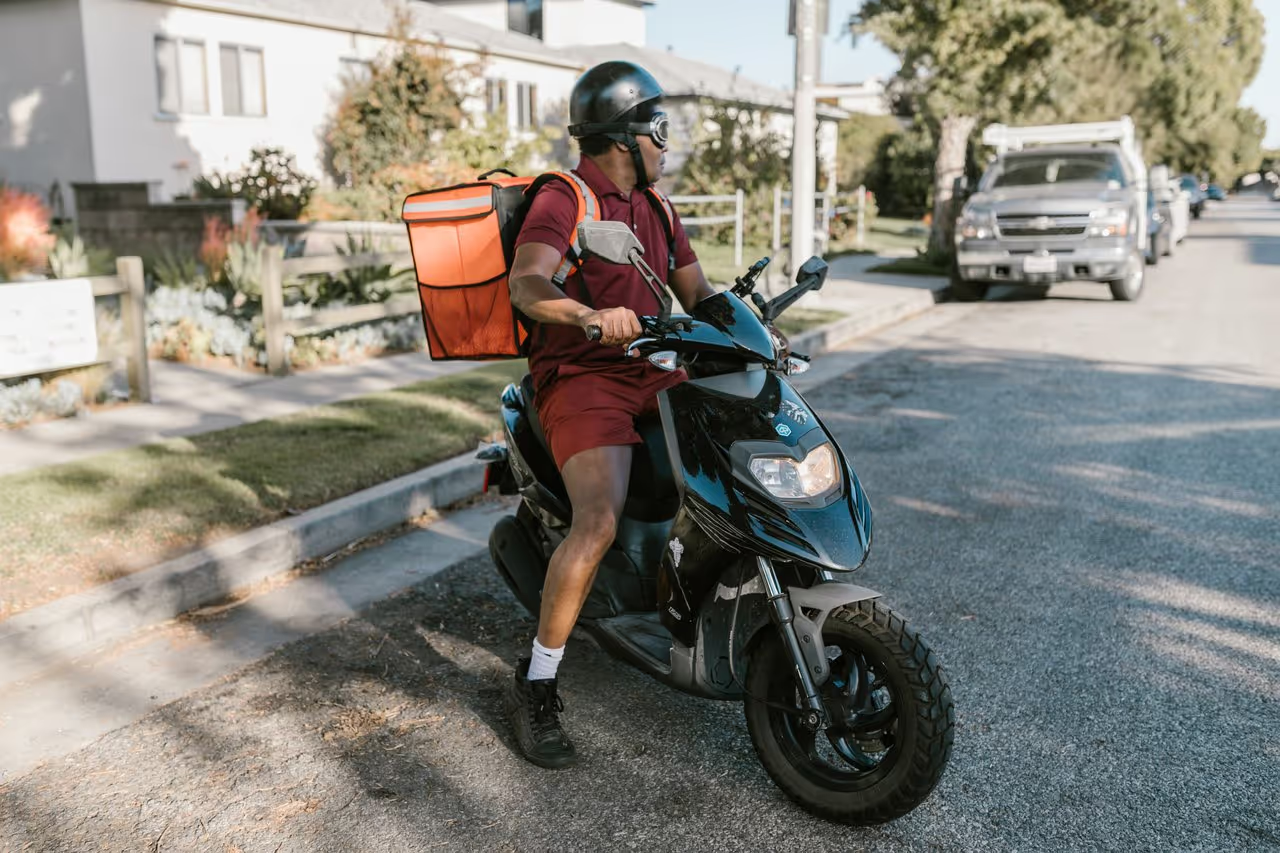


Stop me if this sounds familiar.
You're tired. Work, school, a night out, whatever it was -- it was long. Now you're standing in your kitchen, staring down a fridge full of ingredients you'll need to spend at least 20 minutes assembling into something that resembles a meal, or you can just cave and have a ✨girl dinner✨ of Extra Toasty Cheeze-Its and Diet Coke for dinner again. But you don't want to cook. You want to sit. Veg. Maybe indulge in a little harmless doomscrolling, read the next installment in your favorite book series, or binge something.
And that's when you make eye contact with your phone and the little Door Dash icon living on the home screen.
Ordering delivery feels like a $15 decision, but it's not a $15 decision. It's usually close to $30, and we all know this, but by the time you get to the checkout screen the sticker shock doesn't feel as urgent as your daydreams about that Chipotle burrito or late-night pizza you just dropped in your basket.
But the gap between the price of what you're buying and what you're paying adds up fast. It's designed to be easy to overlook, but even occasionally ordering delivery can actually affect your budget.
To be clear, I'm not trying to tell you whether or not delivery apps are evil or whether you should cook more. I've got a bag of leftovers from the Chinese food place down the street calling to me from the fridge for as soon as I finish writing this, delivered to me last night courtesy of the very DoorDash of which we speak.
We're just here to talk about the math.
In your 20s, there are lots of choices demanding you consider spending your limited dollars on them, whether it's pet insurance or Kindle Unlimited or going back to school for an advanced degree. Your funds are limited. You've gotta pick and choose.
So this is an actual, honest breakdown of what DoorDash costs, what DashPass is worth, and how to figure out if your current delivery habit is a convenient out when you don't feel like turning on the stove or a drain on your budget that's contributing to why things feel tight lately in a way that would surprise you if you ran the numbers.
What a DoorDash Order Actually Costs: The Anatomy of Your Total
Here's the structure of a typical DoorDash order, broken down with all the fees:
Menu price: What you see when you browse. This is sometimes the same as what you'd pay in-store and sometimes slightly higher — some restaurants mark up their DoorDash menu specifically to offset the commission they pay the platform.
Delivery fee: Typically $1.99 to $5.99 for DashPass members, $3.99 to $7.99 without. Waived for DashPass members on orders over $12 from participating restaurants.
Service fee: This is the one people miss most often. It's typically around 15% of your order subtotal and appears as a separate line item. On a $25 order that's $3.75 before you've tipped anyone.
Tip: Presented to you before the food arrives, which is a deliberate design choice. The default suggestion is typically 15–20%. On a $25 order, $4–5.
Expanded pickup fee / small order fee: If your order is below the minimum threshold, an additional small order fee applies.
Add it all up: a $25 food order typically lands between $35 and 42 by the time you check out. That's a 40–70% premium on the menu price.
Is DashPass worth it?
DashPass seems like the saving grace here. The value proposition is simple. Pay a small fee once a month, and save a lot of money on fees every single time you order. Score, right?
DashPass costs $9.99 per month and waives delivery fees on eligible orders over $12. To break even, you need to place roughly two to three qualifying orders per month — enough for the waived delivery fees to add up to $10.
If you order more than that, DashPass pays for itself and then some. If you order once or twice a month, it probably doesn't.
But here's the more honest question: does having DashPass make you order more than you otherwise would? That's exactly what DoorDash is betting on. Subscriptions that reduce the per-order friction are very good at increasing order frequency. If you notice yourself ordering delivery more often since signing up for DashPass, the subscription may be costing you more than the $9.99/month.
How Many Snacks Do You Need to Dash for Your DashPass to Save Cash?
This is where things get interesting. One DoorDash order every couple weeks feels harmless. The math looks different annualized.
At one $30 order per week -- so not unusual for someone who uses DoorDash casually -- you're spending $1,560 a year on delivery. At two orders a week you're at $3,120. That's not including DashPass.
Compare that to what the same food would cost if you picked it up yourself or cooked it. That is a pretty big budget item for most people, but especially for people trying to figure out how and where to budget their money in their 20s, when every dollar has an opportunity cost. If you're spending $3,000 a year on delivery, the $65 Costco membership that makes cooking more convenient starts to look very different. Ordering food means you're not buying new work shoes. Or going out to that event with your friends. Point is, it really starts to eat into the things you would actually call priorities.
How to Use DoorDash Without It Using You
If you're going to order delivery -- and sometimes you are, and that's fine -- a few things make it meaningfully less expensive:
Pick up instead of delivering. DoorDash's pickup option gives you the same app convenience without the delivery fee or the tip expectation. You're still paying the service fee, but the order is typically $5–8 cheaper than delivery for the same food.
Order bigger, order less often. The fees are roughly the same whether you order $20 worth of food or $40. If you're ordering solo regularly, waiting until you can justify a larger order (or sharing with a roommate) makes the fee structure less punishing.
Check the restaurant's own ordering system. Many restaurants have their own apps or websites for delivery or pickup that don't add the DoorDash markup. The food is identical and the restaurant keeps more of the money.
Actually track what you spend. Most people who order delivery frequently are surprised when they add up a month's worth of orders. Knowing the number is the first step to deciding whether it's actually in line with what you want to spend.
The honest answer to "is DoorDash worth it" is that it's a convenience product, and convenience products are always worth it when you genuinely need the convenience and not worth it when you're using convenience as a substitute for a habit you haven't built yet. Both things can be true at different times.