

Leadership is often pictured through the lens of corporate management. It usually looks like someone directing a team toward a clear, controllable business outcome.
Many of the most demanding leadership roles exist entirely outside that setting. Community health management is one example, requiring someone to lead toward outcomes they can influence but never fully control.
That challenge runs against much of what conventional leadership advice assumes. In this article we cover what makes community health management different from conventional organizational leadership. We also cover why leading toward outcomes you can't fully control requires a distinct skill set.
We also cover what this reveals about the limits of standard leadership frameworks. Finally, we cover what any leader can take from how community health managers operate.
What Makes Community Health Management Different From Conventional Organizational Leadership
A community health manager is responsible for improving health outcomes across an entire population. Most of these people the manager will never interact with directly. This differs sharply from managing a defined team working toward a shared internal goal.
This population-level focus changes the entire shape of the job. Success depends on shifting conditions for thousands of people at once, not managing a handful of direct reports.
Success in this role depends on influencing behavior, access, and systems well beyond the manager's direct authority. This stands in sharp contrast to the clearer lines of authority found in most business leadership roles.
A hospital administrator can set policy and expect staff to follow it. A community health manager working to reduce smoking rates has no comparable authority. Thousands of individuals, not the manager, ultimately determine that outcome.
A corporate manager can generally direct her team's daily work. A community health manager has no such lever to pull. Most of the people whose outcomes she is responsible for sit entirely outside her direct authority.
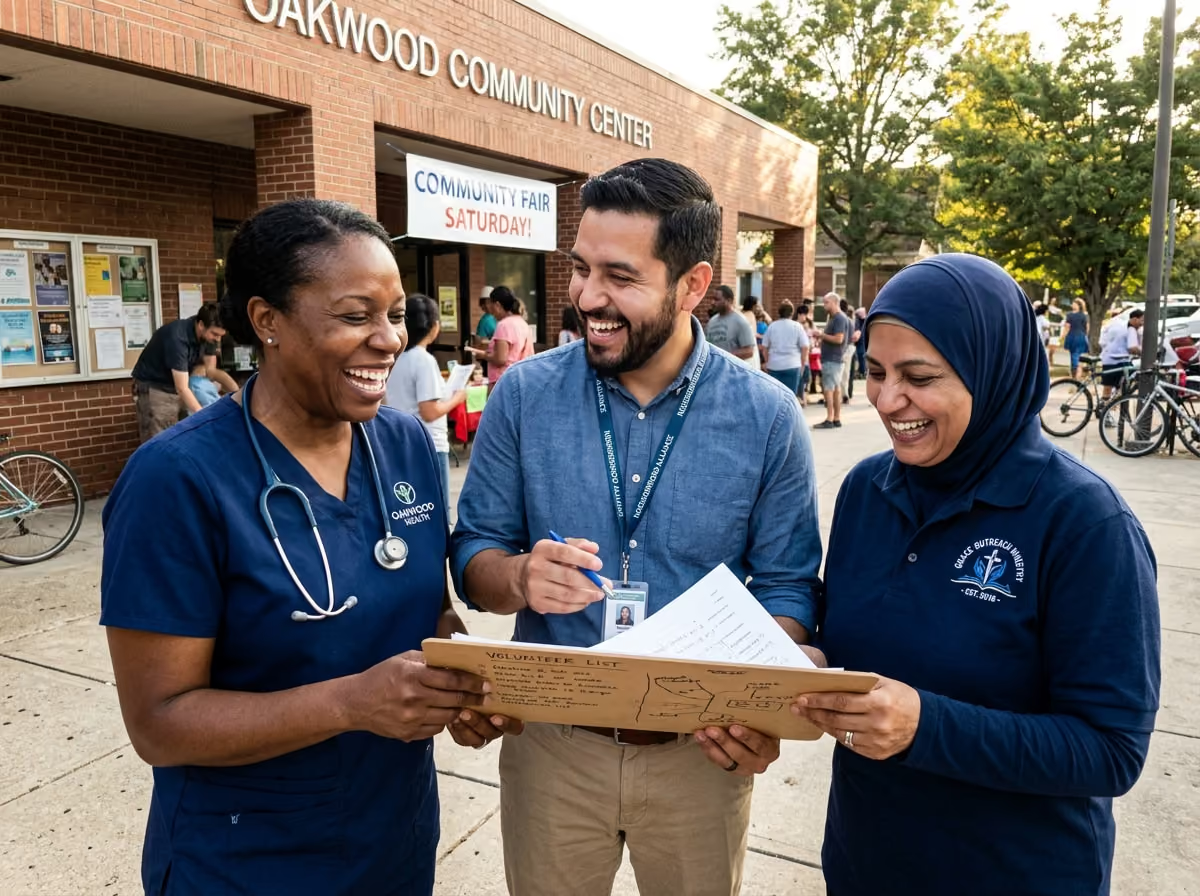
This work requires building and coordinating partnerships across organizations, agencies, and community groups the manager doesn't control. Rather than simply directing employees, she has to negotiate shared goals with partners. Each of those partners carries its own priorities and reporting lines.
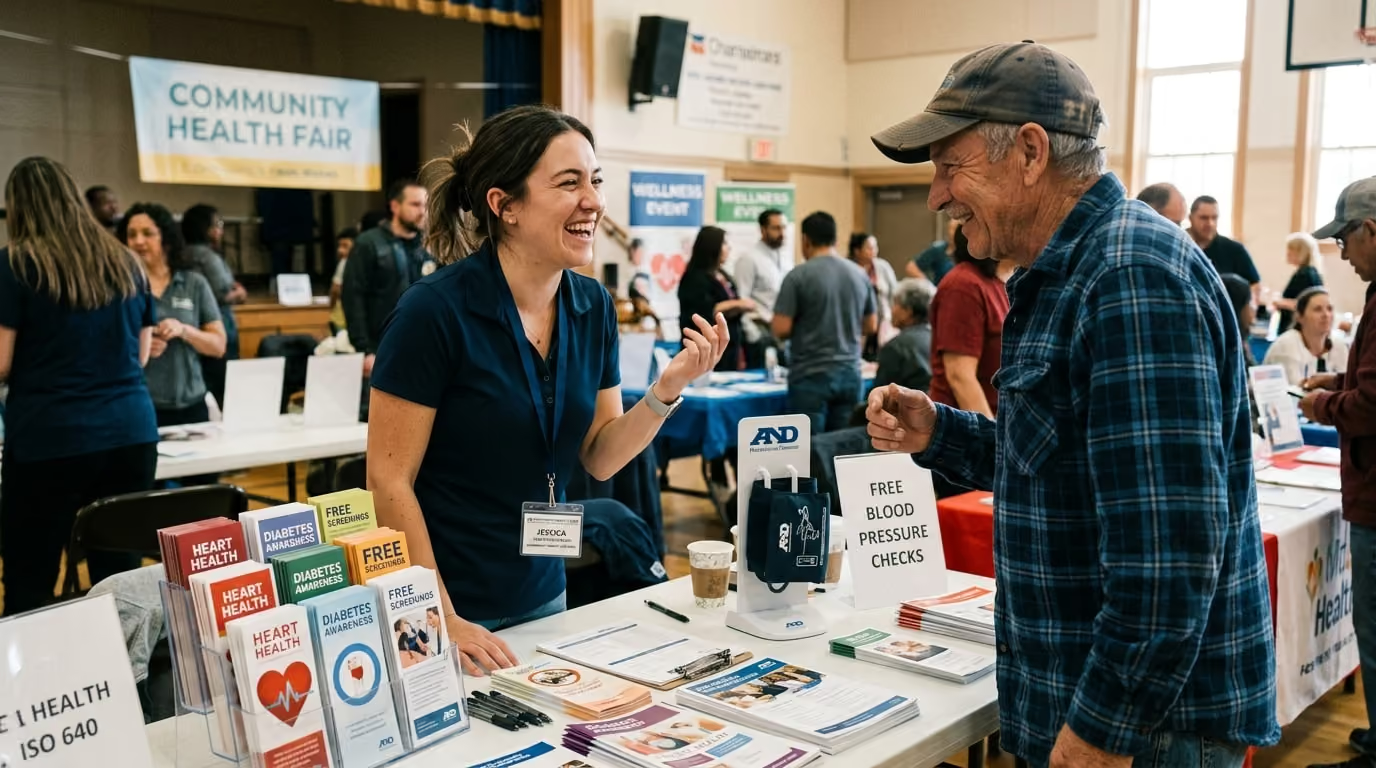
A single vaccination campaign might require coordination among hospitals, schools, faith organizations, and local government offices. None of these groups answer to the health manager directly. Yet the campaign's success depends on all of them working together toward the same goal.
Why Leading Toward Outcomes You Can't Fully Control Requires a Distinct Skill Set
This kind of leadership depends heavily on influence, persuasion, and coalition-building rather than direct authority. Much of the work happens through other organizations and stakeholders who each have their own competing demands.
Community health managers must also tolerate a longer and less certain feedback loop. Population health outcomes shift gradually and get shaped by many factors well beyond any single intervention.
Housing conditions, income levels, and access to transportation all shape health outcomes alongside anything a health manager directly controls. Separating the effect of one program from the effect of these broader conditions is rarely straightforward.
A program aimed at reducing diabetes rates in a community might take years to show measurable results. A manager overseeing that program has to stay motivated and keep partners engaged long before any clear outcome data arrives.
This demands a comfort with ambiguity and incremental progress. That comfort differs sharply from leadership roles built around clear, short-term performance metrics that offer quick feedback.
A sales manager can check weekly numbers and adjust course almost immediately. A community health manager often has to trust her coalition-building work. Results may only show up months or years after today's efforts.
This distinct skill set draws heavily on persuasion over command. John Kotter's classic distinction between leadership and management captures this well. He frames leadership as aligning people around a shared direction, not simply directing tasks.
What This Reveals About the Limits of Standard Leadership Frameworks
Many popular leadership frameworks assume a leader has meaningful control over the people and resources needed to reach a goal. That assumption doesn't hold up in community health work, where most of the relevant resources sit outside the leader's authority.
This mismatch can leave leaders in outcome-oriented but low-control roles feeling stuck. Conventional leadership advice can start to feel like it simply doesn't apply to their actual work.
Books written for corporate executives often assume a kind of authority that simply isn't available in coalition-based work. A leader trying to apply that advice directly may end up frustrated, wondering why proven techniques aren't producing results. Books written for corporate executives often assume a kind of authority that simply isn't available in coalition-based work.
Community health management illustrates a broader category of leadership challenges built around coordination and influence rather than direct command. Nonprofit directors, policy coordinators, and cross-agency project leads all face a similar mismatch. Standard leadership advice rarely accounts for their actual working conditions.
What Any Leader Can Take From How Community Health Managers Operate
Leaders in any setting can benefit from building the kind of coalition and influence skills community health managers rely on. This matters especially as organizations become more interdependent and cross-functional. The lines of direct authority are blurring even in traditional business settings.
Practicing patience with delayed, indirect outcomes can help leaders in any field. It guards against overvaluing short-term, easily measured wins at the expense of more meaningful long-term progress.
Community health management offers a useful model for leadership defined by influence and collaboration rather than control. Leaders willing to study that model may find it applies well beyond the specific context of public health.
Conclusion
Community health management shows that leadership doesn't require direct control over outcomes. It requires the ability to influence people and systems toward a shared goal. That skill matters even without formal authority over most of the people involved.
Leaders who study this model, rather than dismissing it as outside conventional business leadership, may find real lessons in it. Those lessons often apply well beyond public health, especially as more work depends on coordination across organizational lines.