



ccreditation in a Nutshell
When a law school advertises that it is “accredited,” it’s not just a marketing buzzword. But what is the difference between unaccredited and ABA accredited law schools?
Accreditation is a formal, external validation that the school meets a set of minimum standards for curriculum, faculty, facilities, and student services. In the United States, the most widely recognized seal of approval comes from the American Bar Association (ABA). Some schools also hold state‑level accreditation or specialized program recognition, but the ABA stamp is the one that opens doors to the legal profession in most jurisdictions.
The ABA’s Role – Why Its Approval Is the Gold Standard
Since 1923, the ABA’s Council of the Section of Legal Education and Admissions to the Bar has evaluated every law school that wishes to practice in the 50 states and D.C. The association conducts a rigorous, multi‑year review that examines:
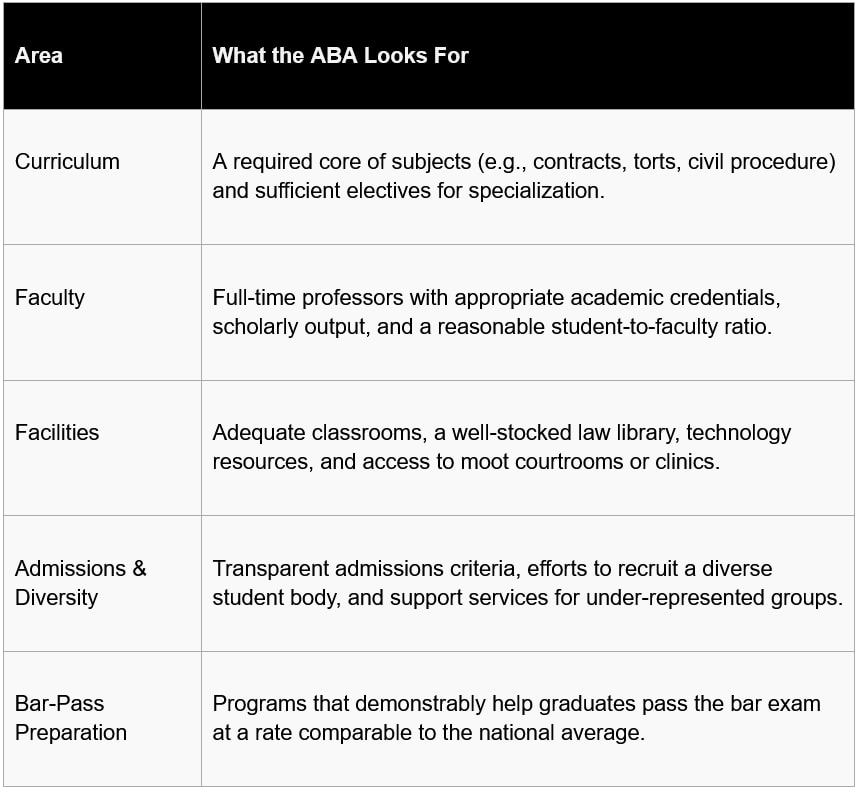
If a school fails to meet any of these benchmarks, it either receives a warning, a probationary status, or outright denial of accreditation. The process is public, and schools must publish annual compliance reports, giving prospective students a transparent view of a school’s health.
3. Not All Accreditations Are Created Equal
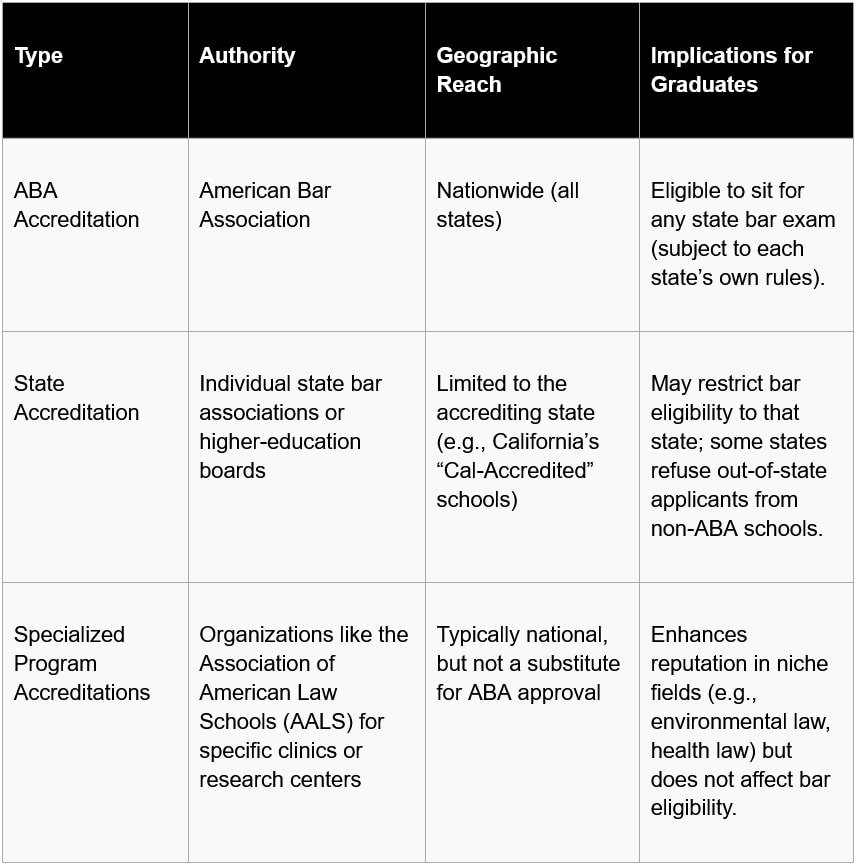
While a state‑accredited school can produce competent lawyers, the ABA’s umbrella of recognition is what most employers, clerkship judges, and graduate‑school committees look for first. In short, ABA accreditation is the passport; other stamps are nice to have, but they won’t get you through immigration.
4. The Real‑World Stakes of Attending a Non‑ABA School
- Bar Exam Access
- ABA‑accredited grads can apply to sit for the bar in any jurisdiction (though some states have additional character‑and‑fitness requirements).
- Non‑ABA grads often find themselves limited to the state that granted the school its approval. For instance, graduates of California‑only accredited schools may sit for the California bar, but many other states either refuse them outright or impose extra hoops—extra coursework, an additional exam, or a “reciprocity” petition.
- Employment Prospects
- Large law firms, federal clerkships, and many public‑sector employers routinely screen applications for ABA accreditation. A lack of this credential can drop a candidate to the bottom of the pile before their résumé is even read.
- Some niche employers (e.g., local government agencies, small boutique firms) are more flexible, but they are the exception rather than the rule.
- Financial Aid and Scholarships
- Federal student aid (FAFSA) eligibility hinges on the school’s participation in Title IV programs, which most ABA‑accredited schools meet. Non‑ABA schools may still qualify, but the pool of grants, loan forgiveness programs, and merit scholarships shrinks dramatically.
- Professional Reputation
- Even if a non‑ABA school boasts stellar faculty, the lack of a national seal can raise doubts among hiring managers. In a field where credibility is currency, that perception can be hard to overcome.
How to Verify a School’s Accreditation Status
- Visit the ABA’s Official Website – The “Law School Search” tool lists every ABA‑accredited program and its latest accreditation status (full, provisional, probation).
- Check State Bar Websites – If you’re eyeing a state‑only school, confirm its status on the relevant state bar’s education or admissions page.
- Read the School’s Accreditation Disclosure – The “A. Accreditation” section of a law school’s prospectus (often found in the “J.D. Admissions” PDF) must detail its accreditation history.
- Ask Directly – Contact the admissions office and request the most recent accreditation report. Legitimate schools are transparent and will gladly share it.
Accreditation Is Your Legal Safety Net
Applying to law school is a high‑stakes gamble. You’re investing time, money, and years of your life in a profession where the stakes are often measured in client outcomes, courtroom victories, and public policy impact. Accreditation is the scaffolding that holds that gamble steady:
- It guarantees you can sit for any state bar exam (provided you meet each jurisdiction’s separate requirements).
- It unlocks the full spectrum of scholarships, federal aid, and loan‑forgiveness programs that can make law school affordable.
- It signals to future employers that you have met nationally recognized educational standards, giving you a competitive edge right out of the gate.
Remember: Accreditation isn’t a bureaucratic footnote; it’s the legal profession’s quality‑control system. When you choose a law school, make sure that system is firmly in place.