


Most people understand speech-language pathology through a narrow lens. They often associate the profession with correcting speech sounds or helping children pronounce words clearly.
That perception is incomplete. Speech-language pathology addresses communication, cognition, swallowing, and the complex systems behind human interaction.
In this article, we take a comprehensive look at what it takes to work in this profession.
What the Knowledge Base Actually Consists Of
Communication depends on neurological systems, anatomy, cognition, development, and social interaction.
An SLP must understand how these systems work together. This allows clinicians to identify where communication breakdowns occur.
A communication disorder may involve language processing, speech production, motor control, or social communication. Each requires different assessment methods and treatment approaches.
The profession also includes swallowing disorders, which many people do not associate with SLPs. Swallowing depends on many of the same structures and neurological pathways involved in speech.
Patients recovering from strokes, neurological diseases, or medical procedures may experience swallowing difficulties. SLPs help evaluate swallowing safety and reduce risks such as aspiration pneumonia.
The breadth of this work requires extensive preparation. Understanding the full range of practice areas is essential for competent care, including the major areas of knowledge in speech-language pathology.
Why Each Domain of Knowledge Is Clinically Necessary
Language and Linguistics
Language is a structured system with many components. SLPs must understand sounds, word formation, sentence structure, meaning, and social communication.
This knowledge allows clinicians to identify specific language disorders. It also helps distinguish different conditions that may appear similar.
A child struggling with communication may have several possible causes. Accurate diagnosis requires understanding how typical language develops.
Without linguistic knowledge, treatment becomes general practice rather than targeted intervention. Effective therapy depends on knowing exactly what needs to change.
Anatomy and Physiology of the Speech Mechanism
Speech depends on coordinated movement throughout the body. The mouth, tongue, vocal system, respiratory system, and nervous system all contribute.
SLPs need detailed anatomical knowledge to evaluate these functions. This knowledge guides treatment decisions for speech, voice, and swallowing disorders.
Medical conditions can disrupt these systems in different ways. A clinician must understand those differences to create appropriate treatment plans.
For swallowing patients, anatomy knowledge directly affects safety decisions. Incorrect recommendations can increase health risks or unnecessarily restrict daily activities.
Neurological Bases of Communication
The brain controls many aspects of communication. Damage to specific areas can create predictable but complex difficulties.
SLPs working with neurological patients must understand these relationships. Conditions such as stroke, Parkinson’s disease, and traumatic brain injury require specialized knowledge.
Neurological understanding helps clinicians adapt treatment as conditions change. It also supports rehabilitation by using principles of recovery and neuroplasticity.
This knowledge is not theoretical. It directly influences clinical decisions every day.
Child Development and Language Acquisition
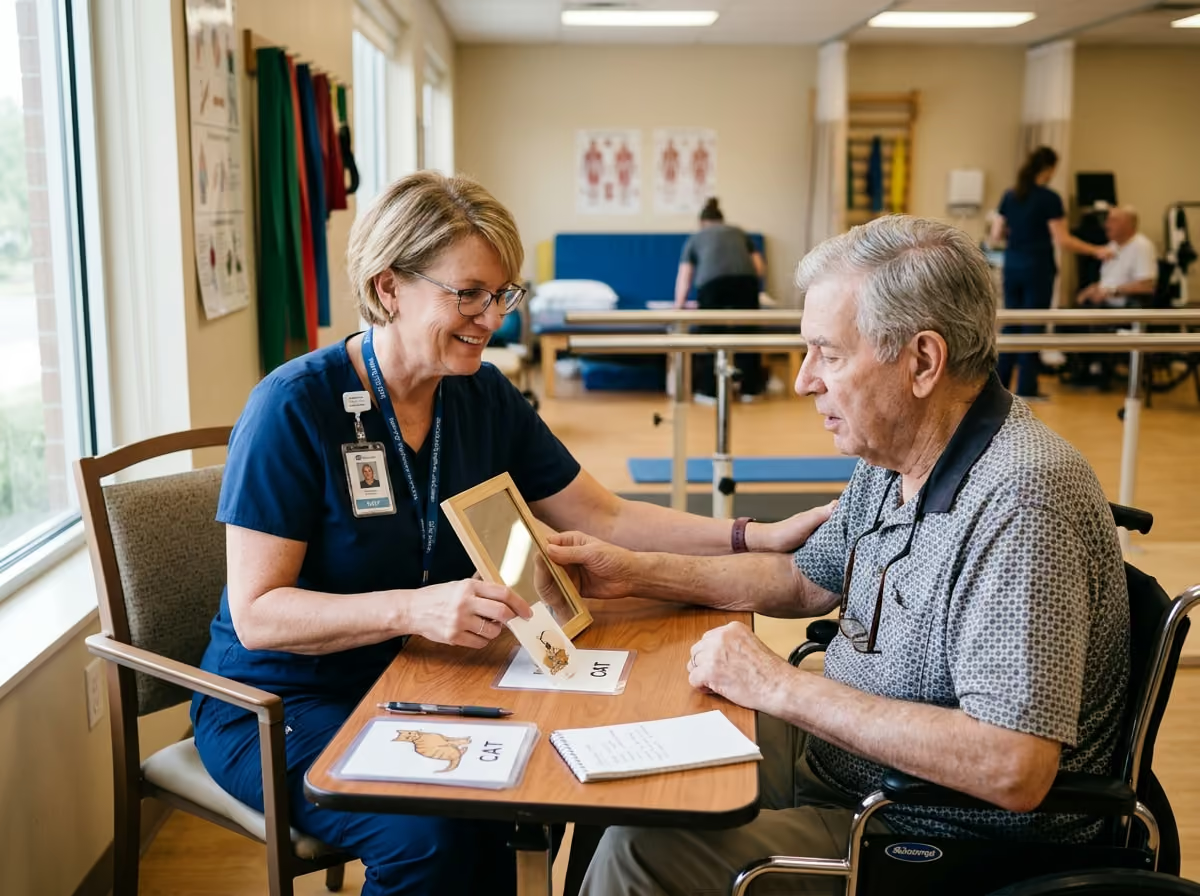
Children develop communication skills through predictable developmental patterns. SLPs must understand these patterns to identify delays and disorders.
Developmental knowledge helps distinguish normal variation from meaningful concerns. This prevents both missed diagnoses and unnecessary intervention.
Pediatric SLPs consider communication alongside cognitive, social, and motor development. These areas influence how children learn and interact.
Effective treatment focuses on underlying developmental needs. It does not simply practice isolated skills.
What This Rigor Actually Does for the People Who Receive SLP Care
The extensive knowledge required in SLP creates more accurate diagnoses. Clinicians can identify differences between conditions that require different treatments.
For example, several speech disorders may look similar externally. However, their causes and effective interventions may differ significantly.
Accurate diagnosis prevents ineffective treatment. It ensures patients receive care designed for their specific needs.
Deep knowledge also creates more precise therapy. SLPs can target the underlying mechanism instead of only addressing visible symptoms.
This distinction matters because meaningful improvement requires skills to transfer beyond therapy sessions. Patients need communication improvements that affect daily life.
In medical settings, SLP expertise also protects patient safety. Swallowing evaluations determine whether patients can safely consume food and liquids.
These decisions can prevent serious complications. They require strong clinical judgment based on anatomy, physiology, and medical knowledge.
What Communication Disorders Actually Do to People
Communication disorders affect far more than speech. They can influence identity, relationships, education, employment, and independence.
Human connection depends heavily on communication. When communication becomes difficult, many areas of life become harder.
A person recovering from a stroke may lose the ability to express thoughts clearly. A child with language difficulties may struggle academically and socially.
These challenges can create emotional consequences. Communication barriers often contribute to isolation, frustration, and reduced confidence.
Untreated communication disorders can create long-term effects. Children may experience academic difficulties and adults may experience reduced participation.
SLP intervention addresses these broader consequences. The goal is not only improved communication but improved quality of life.
Research on communication treatment shows benefits beyond clinical measurements. Improvements often appear in social participation, independence, and emotional wellbeing.
These outcomes demonstrate why SLP training requires significant investment. The knowledge behind treatment creates meaningful changes in people’s lives.
Conclusion
Speech-language pathology requires extensive knowledge because communication is a complex human function. Disorders affecting communication and swallowing require specialized clinical understanding.
The rigor of the profession reflects the importance of the work. SLPs make decisions that influence safety, independence, relationships, and personal identity.
The field demands knowledge across science, medicine, development, and human behavior. That combination allows clinicians to provide effective and individualized care.
For people seeking intellectually challenging healthcare careers, speech-language pathology offers a unique path. The difficulty of the training connects directly to the importance of the outcomes.
The profession requires so much because the people receiving care need so much. The depth of preparation is what makes the impact possible.