
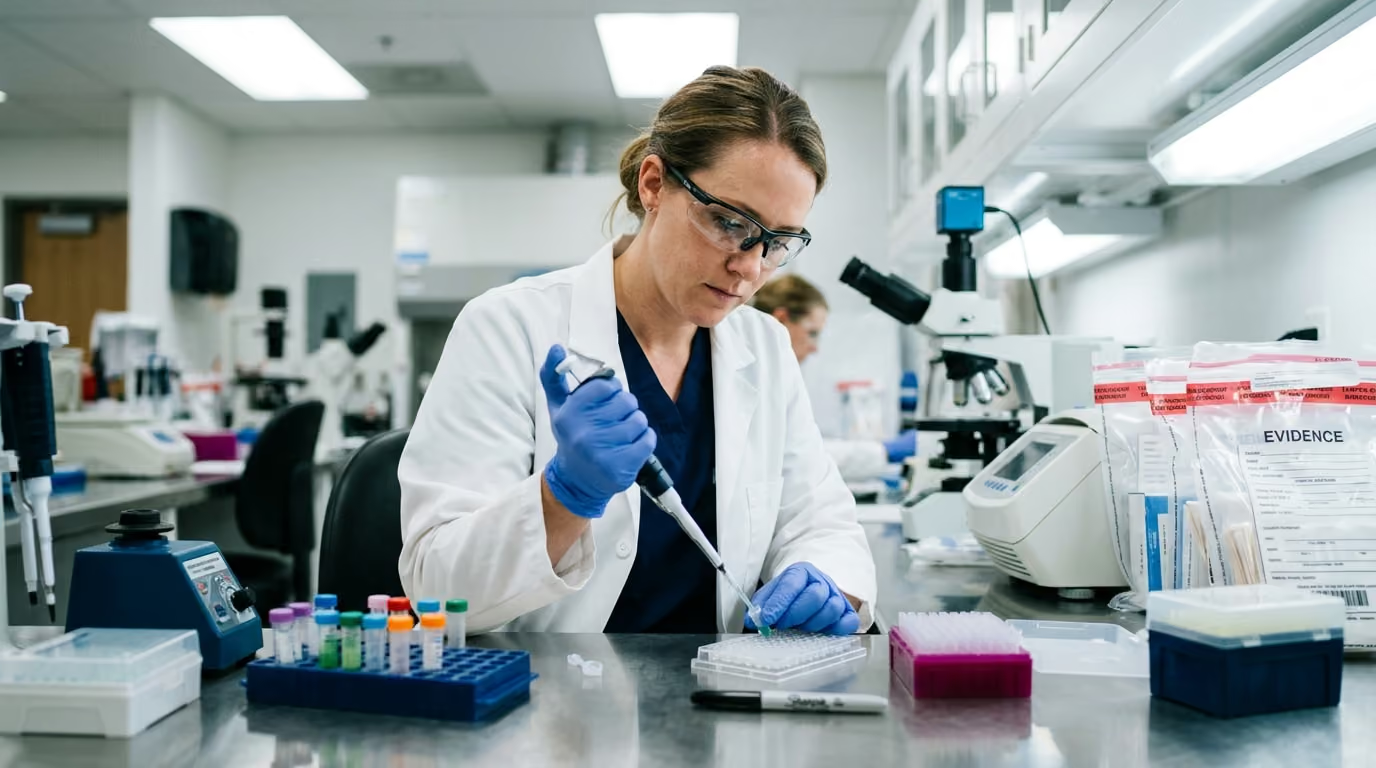


Criminal investigations look very different than they did fifty years ago. Detectives still interview witnesses and follow leads, but scientific evidence now plays a much larger role. DNA testing, toxicology reports, digital records, and medical examinations often shape how cases are investigated and prosecuted.
This shift has improved accuracy throughout the justice system. Scientific evidence has helped convict offenders who once avoided accountability. It has also helped clear people who were wrongly convicted. Along the way, it has created new career paths for professionals with scientific, medical, and technical expertise.
In this article, we take a look at how these roles help explain how modern criminal cases are built and why these careers have become increasingly important.
How the Criminal Justice System Came to Depend on Scientific Evidence
The criminal justice system's reliance on science developed over many decades. DNA evidence is often viewed as the most significant milestone. Since its introduction during the 1980s, DNA testing has transformed how investigators identify suspects and verify evidence.
The broader shift began much earlier. Forensic pathology, toxicology, fingerprint analysis, and trace evidence examination became increasingly sophisticated throughout the twentieth century. Courts also turned more frequently to psychiatric and psychological experts when legal questions involved mental state and criminal responsibility. More recently, digital forensics emerged as electronic devices became a routine source of evidence.
Growing awareness of wrongful convictions pushed this evolution forward. Organizations dedicated to reviewing convictions uncovered numerous cases involving unreliable forensic testimony, mistaken eyewitnesses, and flawed investigative methods. These findings created pressure for stronger scientific standards throughout the justice system.
The 2009 National Academy of Sciences report on forensic science became a major catalyst for reform. The report highlighted reliability concerns across several forensic disciplines. In response, many organizations strengthened training requirements, accreditation standards, and quality assurance procedures. These changes improved evidence reliability while increasing expectations for forensic professionals.
Scientific credibility has also become a valuable asset during litigation. Experts must explain their methods clearly and defend their conclusions under intense scrutiny. Courts increasingly expect opinions to be supported by validated methodologies and peer-reviewed research.
As a result, forensic professionals often pursue advanced certifications and specialized training. Strong credentials can strengthen courtroom testimony and enhance professional opportunities. The demand for highly qualified experts continues to grow across forensic disciplines.
Forensic Science: The Laboratory Side of Criminal Investigation
Many people think of forensic science as a single profession. In reality, it includes numerous specialized disciplines. DNA analysis, toxicology, firearms examination, trace evidence analysis, questioned document examination, fire investigation, and digital evidence analysis all fall under the broader forensic science umbrella.
Each specialty requires its own methods and expertise. A toxicologist studies substances found in the body. A firearms examiner analyzes weapons and ammunition. DNA analysts focus on biological evidence collected from crime scenes. Most professionals develop deep knowledge within one specialty rather than working across many areas.
Crime laboratories remain the most common workplace for forensic scientists. These laboratories operate at federal, state, and local levels. Scientists analyze evidence, document findings, and prepare reports that investigators and attorneys use throughout a case.
Private forensic laboratories also provide employment opportunities. Some work for criminal defense teams, while others assist prosecutors, civil litigants, or insurance companies. Universities and research organizations employ forensic scientists as educators and researchers. These positions help advance forensic methods and improve industry standards.
Many experienced professionals eventually move into consulting roles. Consultants review evidence, evaluate laboratory procedures, and provide expert testimony. Their opinions can influence major decisions during both criminal and civil proceedings.
Quality assurance has become central to forensic science careers. Accredited laboratories must follow strict procedures governing evidence handling and analysis. These standards help ensure consistency and reliability throughout the investigative process.
Professional certification has become increasingly valuable as well. Certification demonstrates expertise and commitment to professional standards. In a field where credibility matters greatly, these credentials can strengthen both career prospects and courtroom effectiveness.
Forensic Nursing: Where Clinical Care and Criminal Evidence Intersect
Forensic nursing combines healthcare expertise with investigative responsibilities. Many people encounter forensic nurses without realizing the specialty exists. These professionals care for patients while also collecting and preserving evidence that may become important during legal proceedings.
Forensic nurses work with victims, suspects, witnesses, and incarcerated individuals. The most widely recognized role is the Sexual Assault Nurse Examiner, often called a SANE. However, forensic nursing extends into death investigations, abuse assessments, correctional healthcare, and legal consulting.

The work involves much more than conducting examinations. Forensic nurses carefully document injuries, collect biological evidence, and maintain chain-of-custody records. Every detail must be recorded accurately because that information may later appear in court.
Their documentation often becomes a critical part of criminal investigations. Medical findings can help establish timelines, support witness statements, and provide evidence regarding the nature of an offense. Small details may become highly significant during legal proceedings.
Many forensic nurses also prepare medical-legal reports. These reports translate complex clinical observations into language attorneys, judges, and jurors can understand. Clear communication is essential because legal audiences rarely have medical training.
Courtroom testimony is another important responsibility. Forensic nurses may explain injuries, discuss evidence collection procedures, or clarify medical findings. This requires confidence, professionalism, and the ability to remain objective under questioning.
Professionals interested in learning more about forensic nursing often discover a field that blends patient care with public service. The specialty demands both clinical skill and strong attention to legal standards.
The quality of a forensic nurse's work can directly affect case outcomes. Proper evidence collection helps ensure evidence remains admissible. Thorough documentation strengthens the credibility of findings presented in court.
This impact is particularly significant in sexual assault investigations. Physical evidence may play a central role in determining whether charges move forward. Because of this responsibility, certification standards and specialized training programs have become increasingly important throughout the profession.
Digital Forensics: The Fastest-Growing Evidence Discipline
Few forensic specialties have expanded as rapidly as digital forensics. Nearly every modern investigation involves electronic evidence. Smartphones, computers, cloud storage systems, surveillance footage, and social media platforms often contain valuable information.
Digital evidence can establish timelines, identify locations, reveal communications, and connect individuals to criminal activity. As technology becomes more integrated into daily life, investigators rely increasingly on digital forensic specialists to recover and analyze data.
This profession barely existed in its current form a generation ago. Today, digital forensic examiners are among the most sought-after specialists in criminal investigations. Demand continues to grow as technology evolves.
Federal law enforcement agencies employ large numbers of digital forensic professionals. These specialists support investigations involving cybercrime, financial crimes, organized crime, and national security concerns. Their expertise helps uncover evidence that traditional investigative methods might miss.
State and local agencies have also expanded digital forensic capabilities. Many departments struggle to hire enough qualified professionals to meet growing demand. This shortage has created strong career opportunities for individuals with technical skills and forensic training.
Private forensic firms provide another major employment sector. These organizations assist criminal defense teams, corporations, insurance companies, and private investigators. Their work often extends beyond criminal cases into internal investigations and civil litigation.
Many corporations now maintain dedicated digital investigation teams. These professionals help investigate data breaches, insider threats, fraud, and cybersecurity incidents. The overlap between digital forensics and information security continues to create new career possibilities.
Forensic Psychology: Mental State, Behavior, and the Law
Forensic psychology applies psychological expertise to legal questions. Professionals in this field evaluate how mental health, behavior, and cognitive functioning relate to legal proceedings. Their work supports courts, attorneys, law enforcement agencies, and correctional systems.
One common responsibility involves competency evaluations. These assessments help determine whether an individual can understand legal proceedings and participate in their own defense. Courts often rely heavily on these evaluations.
Forensic psychologists also conduct criminal responsibility assessments. These evaluations examine how mental health conditions may have affected behavior during an alleged offense. The findings can influence important legal decisions.
Risk assessments represent another significant area of practice. Professionals evaluate the likelihood of future violence, reoffending, or other concerning behaviors. Courts and correctional agencies frequently use these assessments when making decisions about supervision and release.
The field extends beyond criminal courts. Forensic psychologists conduct child custody evaluations, assess psychological damages in civil cases, and assist with threat assessments. Their expertise supports many different areas of the legal system.
A major distinction separates forensic psychology from traditional clinical practice. Clinical psychologists primarily focus on patient wellbeing and treatment goals. Forensic psychologists often serve as objective evaluators whose primary responsibility is providing accurate assessments.
Maintaining objectivity can be challenging within adversarial legal settings. Attorneys on both sides may attempt to challenge findings or emphasize favorable conclusions. Forensic psychologists must remain committed to professional standards regardless of outside pressures.
This balance requires specialized training and ethical discipline. Strong communication skills are equally important because findings must often be explained during depositions, hearings, and courtroom testimony.
What These Careers Have in Common
Although these disciplines differ significantly, they share several important characteristics. Each operates at the intersection of specialized expertise and legal process. Professionals must translate technical findings into information courts can understand and evaluate.
Communication skills are essential across every forensic field. Evidence only becomes useful when investigators, attorneys, judges, and jurors can understand its significance. Professionals must explain complex concepts clearly without sacrificing accuracy.
Documentation is another universal requirement. Evidence must be collected, analyzed, and recorded according to established standards. Thorough documentation helps demonstrate that findings are reliable and trustworthy.
Chain-of-custody procedures play a central role throughout forensic work. Evidence can lose value if handling procedures cannot withstand scrutiny. Careful recordkeeping protects the integrity of investigations and supports courtroom admissibility.
Report writing also carries significant weight. Whether documenting a medical examination, psychological evaluation, laboratory analysis, or digital investigation, professionals must create records that remain clear, accurate, and defensible.
These careers are among the most intellectually demanding within science, healthcare, and criminal justice. They require technical expertise, professional discipline, and a strong understanding of legal standards. For individuals willing to develop all three, forensic careers offer a rare opportunity to contribute directly to the pursuit of justice while applying highly specialized knowledge.