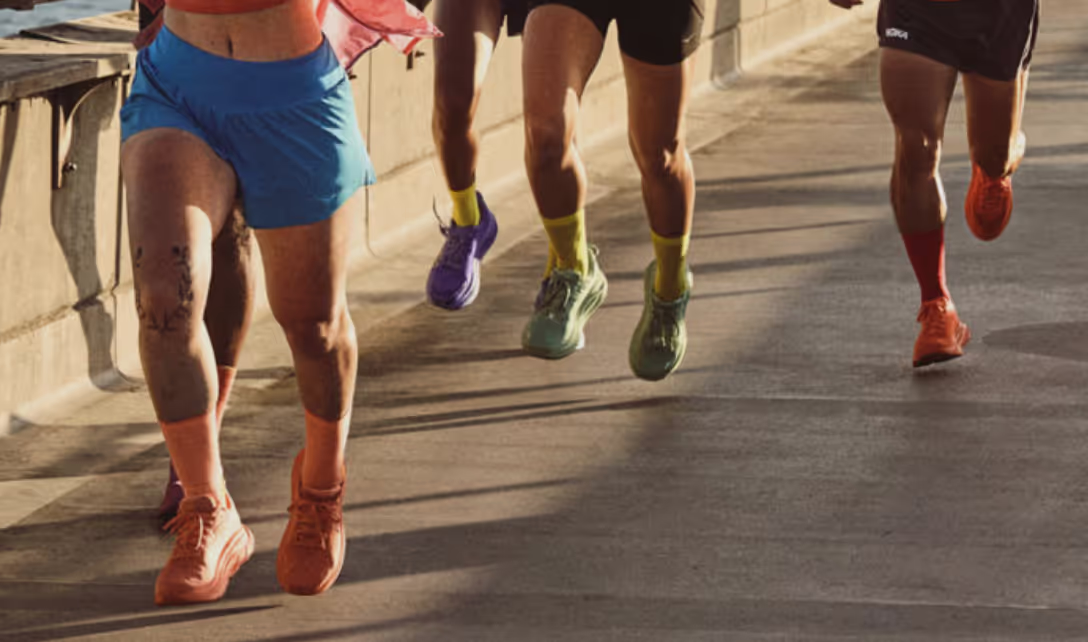


(Main image courtesy of Hoka)
Somewhere in the last few years, Hokas went from being the specialty chunky sneakers that physical therapists recommended to being the shoe that everyone in your office, at the farmer's market, and on every other Instagram reel seems to be wearing.
If you're late to this particular party and trying to figure out whether they're worth the $140–180 price tag -- and if so, which one -- you've probably already discovered that the Hoka website is not always the most helpful. There are roughly forty models, all with names that sound vaguely Scandinavian, all described in the same language about "cushioning" and "geometry" and "meta-rocker technology" that tells you almost nothing about which one will actually be worth shelling out the cash for you.
This is a guide for people who are new to Hoka. Not a gear review for runners who already know the difference between a stability shoe and a neutral shoe, just a plain old regular English breakdown of which Hoka is right for which kind of person, based on what you're actually going to use them for.
The short version before we get into it:
If you want one recommendation without reading the whole thing: definitely start with the Clifton.
It's Hoka's most versatile shoe. Comfortable enough for all-day wear, light enough for running, not so specialized that it's wrong for anything. It's the one most people should try first. So if you're a total Hoka newbie, it's the perfect pick.
Now if you need more than that, keep reading!
The Clifton 👟 start here if you're not sure
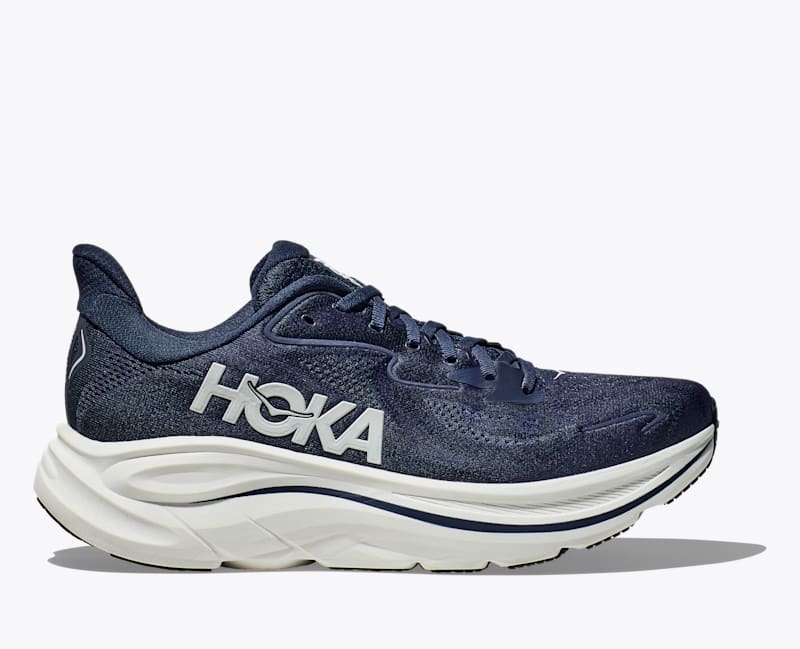
If the shoe fits! Perfect for: runners who want a comfortable daily trainer, walkers who want cushion without bulk, and anyone who's Hoka-curious and wants to see what the fuss is about without committing to the most extreme model.
The Clifton is the shoe that most people should buy first. It's been Hoka's best-seller for years and for good reason: it does a little bit of everything well without being so specialized that it's wrong for any particular use.
It's lighter than most of Hoka's other cushioned models, which makes it feel less like a specialty medical device and more like a shoe you'd actually wear every day. The cushioning is substantial without being extreme. The profile is lower than the Bondi, which means it looks slightly less cartoonishly chunky -- if aesthetics are part of your decision, this matters.
The Bondi 👟 for people who want maximum cushion
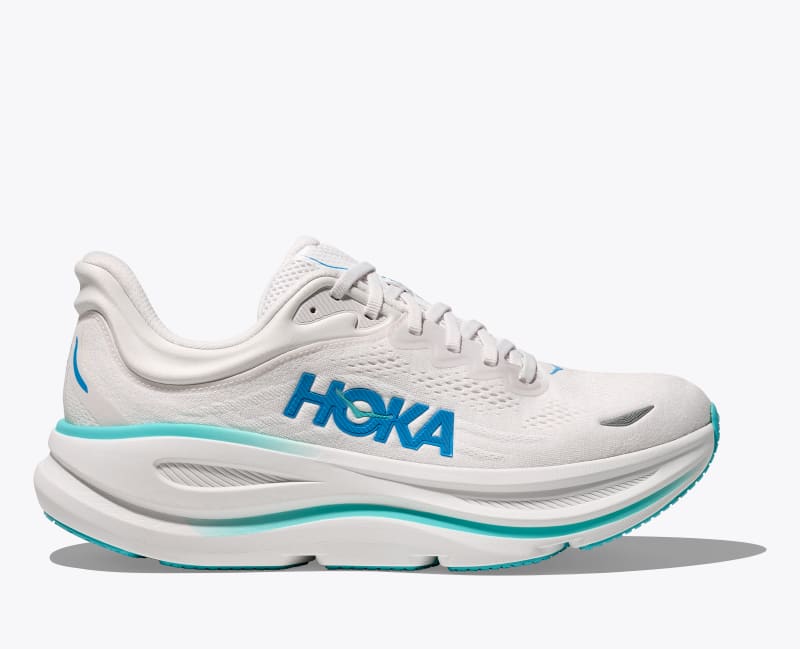
If the shoe fits! Perfect for: people who are on their feet all day, anyone dealing with plantar fasciitis or heel pain who wants cushion as the primary feature, and runners doing recovery or easy miles who want maximum softness underfoot.
The Bondi is Hoka's most cushioned shoe. It's also the one you're most likely to see on healthcare workers, people who deal with foot pain, and the friend who describes their shoes by how much their feet hurt before vs. after switching.
It's heavier than the Clifton and not built for speed — it's not a running shoe in the performance sense, it's a comfort shoe that can also be used for running. The platform is visually substantial and the shoe is not subtle.
The Arahi 👟 for people who overpronate or have flat feet
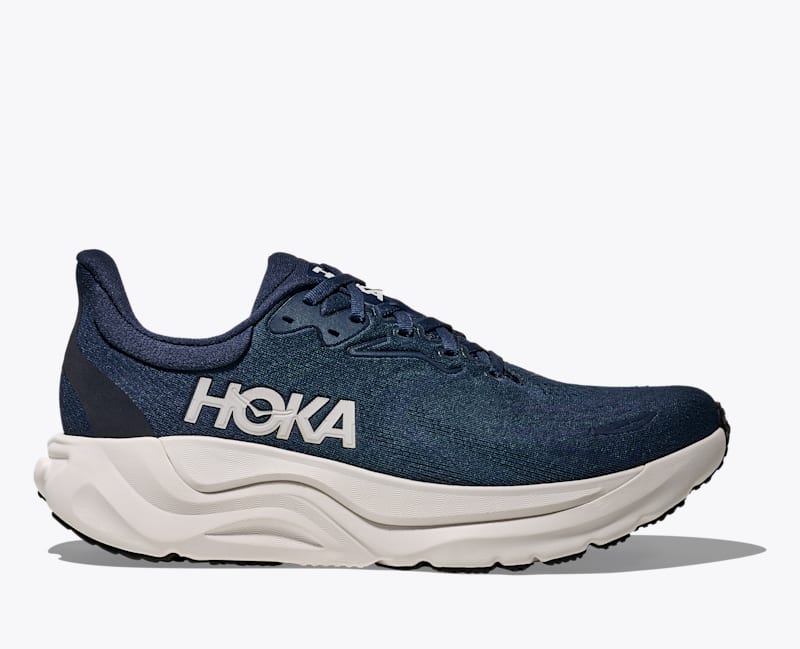
If the shoe fits! Perfect for: runners and walkers who know they overpronate, people who've been told they need a stability shoe, or anyone whose inner ankle or knee aches after long walks.
Most Hoka shoes are neutral — they don't correct your gait, they just cushion it. If you overpronate (your foot rolls inward when you walk or run), a neutral shoe isn't doing anything to address that. The Arahi is Hoka's stability option: it has a J-Frame construction along the medial side that gently guides the foot without the rigid feel of older motion control shoes.
It's lighter than the Bondi and sits between the Clifton and Bondi in cushioning. It doesn't feel corrective in a heavy or clinical way — it just feels stable.
The Gaviota 👟 maximum support and maximum cushion
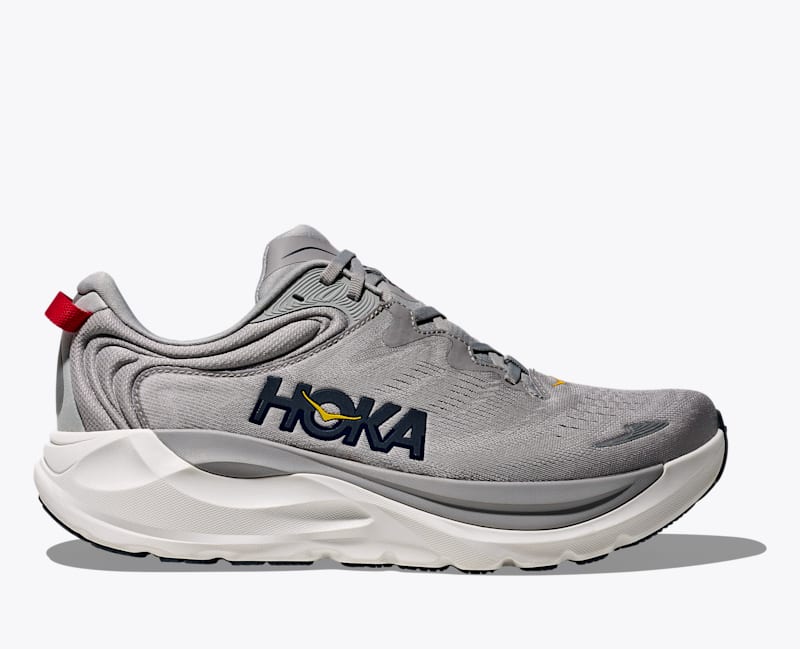
If the shoe fits! Perfect for: people dealing with serious foot issues who need maximum support, or anyone for whom the Arahi felt like it wasn't quite enough correction.
The Gaviota is essentially the Bondi with the Arahi's stability features — Hoka's most supportive shoe. If you're dealing with significant overpronation, flat arches, plantar fasciitis, or you've been specifically told to look for motion control, this is the model to consider.
It's the heaviest in the lineup and not built for running at pace — it's a walking, recovery, and all-day comfort shoe.
The Mach 👟 best for runners who actually run
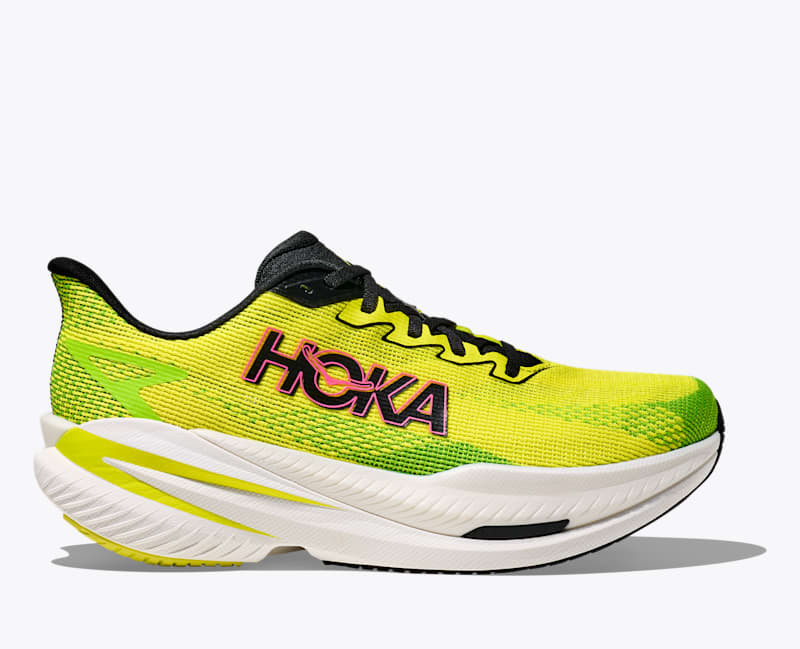
If the shoe fits! Perfect for: runners doing regular training who want a faster, more responsive feel than the Clifton offers.
If you're running regularly and care about performance rather than just comfort, the Clifton and Bondi aren't your best options — they're comfort shoes that happen to be runnable. The Mach is Hoka's everyday performance trainer: lighter, more responsive, with a supercritical foam midsole that returns energy rather than just absorbing it.
It doesn't have the same plush cushion feel as the Clifton or Bondi, which surprises some people. It's a running shoe that feels like a running shoe.
The Speedgoat 👟 best for trails
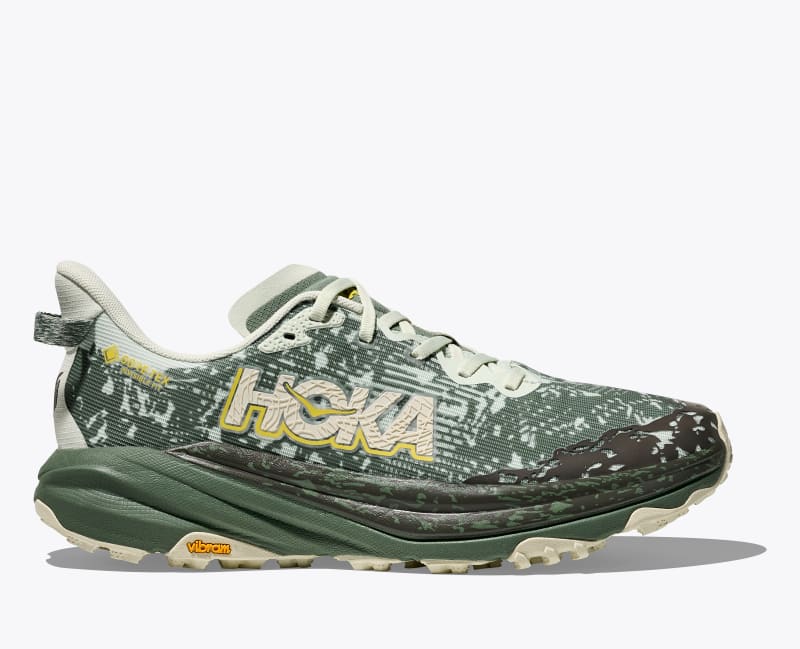
If the shoe fits! Perfect for: trail runners, hikers who want running shoe agility, and anyone who spends time on technical or uneven terrain regularly.
Named after ultrarunner Karl Meltzer, the Speedgoat is Hoka's trail flagship. It has a Vibram Megagrip outsole, aggressive lugs for traction on loose and wet terrain, and protective rock plate for technical ground. It's not a road shoe — the traction pattern is wrong for pavement and it'll wear faster.
How Hoka shoes fit
Hoka shoes generally run true to size but have a narrower midfoot than some brands. If you have wide feet, sizing up half a size is commonly recommended — or look for wide-width versions, which Hoka offers on several models.
The toe box is rounder and more generous than the midfoot, so the fit feels slightly different from what you might expect based on the silhouette. Try them on if you can, or order from somewhere with a generous return policy if you're buying online.
One thing worth knowing: Hoka shoes wear in noticeably over the first few wears. If they feel slightly stiff or less cushioned out of the box, give them a few days before deciding they're not for you.
Are Hokas actually worth $140–180?
For most people, yes -- with a caveat about how important it is to find the right model.
The cushioning technology in Hoka shoes is genuinely different from most shoes at the price point. The meta-rocker geometry (the curved sole that rolls your foot forward rather than just cushioning the impact) reduces fatigue in a way that's noticeable if you're on your feet for long periods. People who switch to Hokas and work in healthcare, retail, or any standing-heavy job tend to be fairly evangelical about them for this reason.
The caveat is that the wrong model is money wasted. Buying a Speedgoat for city walking or a Bondi for speed training is an expensive mistake that'll make you think Hokas are overrated when really you just bought the wrong shoe. The model matters as much as the brand.
If you're on the fence: check whether Hoka has a trial period on their site, or buy from a retailer with a solid return window. Wearing them for a week around the house before committing is the most reliable way to know whether they're right for you.
And if you end up deciding that they just aren't your think but you love the look, there are also some affordable alternatives out there that don't have the premium cushioning and geometry but keep the chunky, colorful look.